
Treatment Overview
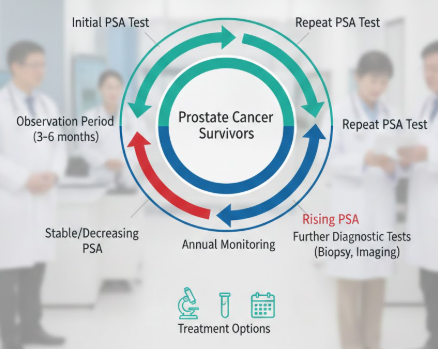
Repeat PSA Monitoring is a follow-up blood test strategy used to track prostate-specific antigen (PSA) levels over time. This method helps assess prostate health, monitor prostate cancer progression, and guide timely intervention if PSA levels rise or change.
In Korea, repeat PSA monitoring is conducted in advanced laboratories and hospitals with high-precision immunoassays. International patients benefit from fast testing, professional interpretation, and coordinated follow-up care.
Purpose & Benefits
The purpose of repeat PSA monitoring is to:
- Track PSA trends to detect early signs of prostate cancer recurrence or progression
- Evaluate the effectiveness of treatment (surgery, radiation, or therapy)
- Guide decisions on additional testing or interventions
Benefits include:
- Early detection of changes in prostate health
- Minimally invasive with simple blood draws
- Supports personalized care plans based on PSA trends
- Reduces unnecessary procedures by monitoring before biopsy
- Quick and reliable results for both domestic and international patients
Ideal Candidates
Repeat PSA monitoring is recommended for men who:
- Have elevated or borderline PSA levels
- Are post-treatment patients (surgery, radiation, or medication)
- Are on active surveillance for low-risk prostate cancer
- Have a family history of prostate cancer
- Require international-standard follow-up after prior testing or treatment
Korean urologists review prior PSA results and patient history to design an appropriate monitoring schedule.
Possible Risks & Complications
Repeat PSA monitoring is very safe. Possible considerations include:
- Mild discomfort or bruising from blood draws
- Anxiety while awaiting results
- Slight variability in PSA due to recent infection, ejaculation, or prostate manipulation
- Rare false-positive results requiring further investigation
Techniques & Technology Used
Korean hospitals use advanced laboratory techniques for repeat PSA monitoring:
- High-precision immunoassays for total PSA measurement
- Free PSA testing for additional risk assessment
- Integration with PHI or 4Kscore tests for high-risk patients
- Certified laboratories with quality control standards
- Electronic reporting systems for international patients
These technologies ensure accurate tracking of PSA trends over time.
Treatment Process in Korea
- Consultation & Assessment – Review previous PSA results and clinical history
- Blood Sample Collection – Venipuncture performed under sterile conditions
- Laboratory Analysis – PSA levels measured with high-precision assays
- Result Interpretation – Urologist evaluates trends and clinical significance
- Follow-Up Recommendations – Guidance on imaging, biopsy, or continued monitoring
Medical tourism coordinators assist international patients with scheduling, translation, and follow-up planning.
Recovery & After-Care
- No significant recovery required
- Resume normal activities immediately after blood draw
- Mild soreness or bruising at the puncture site may occur
- Maintain a record of PSA results for future consultations
Results & Interpretation
Repeat PSA monitoring provides:
- Serial PSA values indicating trends over time
- Early warning of potential prostate cancer recurrence or progression
- Support for treatment effectiveness evaluation
- Guidance for further testing, imaging, or intervention
Accurate monitoring allows timely decision-making and improves long-term prostate outcomes.
Why Korea Is a Top Destination
- High-precision laboratories with international standards
- Experienced urologists for trend analysis and interpretation
- Fast and efficient testing for international patients
- Integration with PHI, 4Kscore, and imaging for comprehensive evaluation
- English-language support and medical tourism coordination
- Cost-effective and high-quality care compared to Western countries
Cost Range
Typical costs for repeat PSA monitoring in Korea:
₩100,000 – ₩300,000 KRW (~$80–$230 USD)
Costs vary depending on:
- Hospital or clinic grade
- Additional tests (Free PSA, PHI, 4Kscore)
- Consultation fees
Popular Clinics in Korea
- Seoul National University Hospital – Prostate Monitoring & Follow-Up
- Samsung Medical Center – Urology Diagnostics & PSA Monitoring
- Asan Medical Center – Laboratory & Follow-Up Services
- Gangnam Severance Hospital – International Patient Prostate Care
- Korea University Anam Hospital – PSA Monitoring & Prostate Health
- JK Urology & Men’s Health Clinics – Repeat PSA Testing & International Support


