
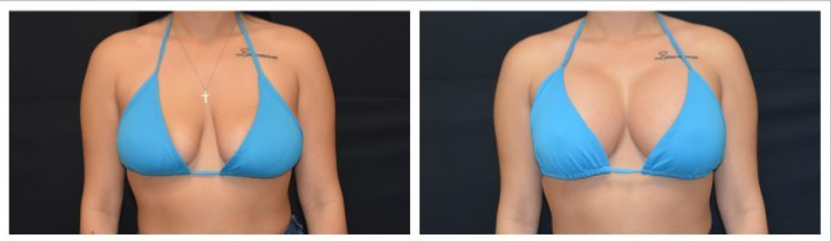
Understanding Capsular Contracture, Aesthetic Changes, and Personal Goals
Breast augmentation can be a highly satisfying and confidence-boosting procedure—but like all surgeries, results may evolve over time. Whether due to natural changes, complications, or a shift in aesthetic preferences, some patients choose to undergo revision breast augmentation to enhance or correct their original outcome.
In this guide, we’ll explore the most common reasons patients seek revision surgery, what to expect, and how to decide if it’s the right step for you.
What Is Revision Breast Augmentation?
Revision breast augmentation is a secondary surgery performed to:
- Correct complications from a previous breast augmentation
- Adjust implant size, shape, or position
- Replace old implants due to age or rupture
- Update the aesthetic appearance of the breasts
Unlike the initial procedure, revision surgery often requires more detailed planning and surgical expertise due to scar tissue, anatomical changes, or previous implant placements.
Common Reasons for Revision Breast Augmentation
1. Capsular Contracture
One of the most common complications after breast augmentation.
- What it is: The formation of excessive scar tissue (capsule) around the implant that contracts, causing firmness, discomfort, or distortion.
- Symptoms:
- Breasts feel hard or painful
- Misshapen or elevated breast
- Tightness around the implant
- Surgical solution: Capsulectomy (removal of scar tissue) and implant replacement or repositioning.
2. Implant Rupture or Leakage
Implants aren’t lifetime devices and can rupture over time.
- Saline rupture: Quickly noticeable due to deflation.
- Silicone rupture: Often silent and detected via MRI or ultrasound.
- Surgical solution: Removal of the damaged implant and replacement with new implants—often an opportunity to update size or type.
3. Implant Malposition or Shifting
Implants can move over time due to gravity, muscle action, or surgical technique.
- Types of malposition:
- Bottoming out: Implant drops too low
- Lateral displacement: Implant shifts outward
- Symmastia: Implants move too close together (“uniboob”)
- Surgical solution: Repositioning implants, reinforcing tissue with internal sutures or mesh.
4. Size or Style Change
Patient preferences evolve—what felt right 10 years ago may not match your current lifestyle or aesthetic.
- Reasons for change:
- Desire for larger or smaller implants
- Switching from saline to silicone (or vice versa)
- Wanting a more natural or enhanced look
- Surgical solution: Implant exchange, often with adjustments to the pocket for optimal fit.
5. Aesthetic Aging or Sagging (Ptosis)
Aging, pregnancy, weight changes, or breastfeeding can affect breast appearance.
- Common changes:
- Implants sitting too high or too low
- Natural breast tissue sagging over implants
- Surgical solution: Implant revision with or without a breast lift (mastopexy) to restore youthful contour.
6. Rippling or Visibility
Visible rippling or wrinkling of the implant under the skin, especially in patients with thin tissue coverage.
- Causes:
- Saline implants in subglandular placement
- Low body fat or thin breast tissue
- Surgical solution: Implant replacement with a different fill or profile, change in placement (e.g., submuscular), or use of fat grafting for added coverage.
When Is the Right Time for Revision Surgery?
There is no strict timeline, but here are general guidelines:
- Implant age: Most implants last 10–20 years. Routine monitoring is essential.
- Symptoms: Pain, distortion, or aesthetic dissatisfaction are signs to consult your surgeon.
- Life events: Major body changes (pregnancy, weight loss) may prompt reevaluation of your implants.
What to Expect During Revision Surgery
Consultation
- In-depth evaluation of your concerns and surgical history
- Review of original implant type, placement, and size
- Imaging (ultrasound or MRI) if rupture is suspected
Surgery
- Performed under general anesthesia
- More complex than primary augmentation due to scar tissue and altered anatomy
- May include implant removal, replacement, capsule work, and tissue support
Recovery
- Similar to initial augmentation, though possibly longer if extensive corrections are made
- Bruising and swelling expected for 2–3 weeks
- Light activity after 7–10 days; full recovery in 4–6 weeks
Choosing a Surgeon for Revision Breast Augmentation
Revision surgery demands greater expertise than a first-time augmentation. Choose a board-certified plastic surgeon who:
- Has extensive experience in revision breast surgeries
- Understands complex aesthetic and structural corrections
- Offers before-and-after examples of revision cases
Final Thoughts
Revision breast augmentation is an opportunity to correct complications, enhance aesthetics, or align your appearance with evolving goals. Whether you’re experiencing physical discomfort or simply ready for a change, today’s advanced techniques offer safe, effective solutions tailored to your needs.
Your body evolves—and your aesthetic vision can too. The right revision can restore your confidence and deliver the results you originally hoped for.


