
Treatment Overview
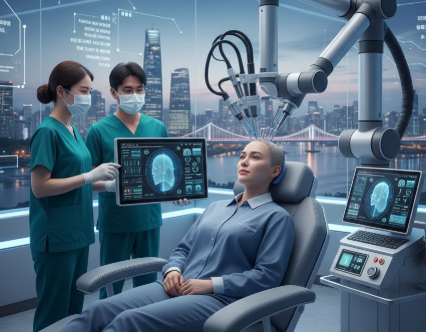
Robotic female hairline transplant using ARTAS or NeoGraft is a state-of-the-art, minimally invasive procedure designed to restore a natural-looking hairline for women experiencing thinning or hair loss. This technique combines robotic precision with advanced follicular unit extraction (FUE) technology, allowing surgeons to harvest and implant hair follicles with unmatched accuracy. Unlike traditional hair transplants, robotic assistance ensures consistent graft quality, minimal scarring, and optimal placement for a soft, feminine hairline.
Purpose & Benefits
The primary purpose of robotic female hairline transplantation is to recreate a naturally dense hairline that complements a woman’s facial structure. Benefits include:
- Highly precise follicle extraction and placement with minimal human error
- Reduced risk of visible scarring and faster healing
- Customized hairline design tailored to individual facial features
- Increased graft survival rate due to precise robotic handling
- Minimal downtime compared to traditional surgical hair transplants
Women can achieve a youthful, balanced appearance while maintaining natural hair density and texture.
Ideal Candidates
Robotic female hairline transplant is ideal for:
- Women experiencing receding or thinning hairlines
- Those who want precise and aesthetically pleasing hairline restoration
- Patients with sufficient donor hair for transplantation
- Individuals seeking minimal scarring and faster recovery
- Women desiring a natural hairline shape without visible surgical marks
Patients with severe scalp disorders, insufficient donor hair, or active infections may not be suitable candidates. Consultation with a Korean clinic is essential to determine eligibility.
Possible Risks & Complications
Although robotic hair transplants are safe, some potential risks include:
- Mild scalp redness, swelling, or tenderness at the transplant site
- Temporary shock loss of some existing hair (usually regrows)
- Rare infection or folliculitis if strict hygiene is not followed
- Slight discomfort during or after the procedure
Most side effects are mild and resolve within a few days. Choosing a highly reputable clinic in Korea minimizes the risk of complications.
Techniques & Technology Used
Korean clinics use advanced robotic systems for maximum efficiency and precision:
- ARTAS Robot: Computer-assisted FUE system that identifies and extracts the healthiest follicles
- NeoGraft System: Automated FUE device designed for gentle extraction and implantation
- Customized hairline mapping: Ensures natural-looking hair direction and density
- Combination with PRP or growth factor therapy to enhance graft survival
- Strict sterilization protocols and advanced imaging technologies for optimal results
These innovations allow surgeons to perform highly detailed, patient-specific hairline restoration with minimal human error.
Treatment Process in Korea
The robotic female hairline transplant process generally includes:
- Initial consultation and detailed scalp and donor area assessment
- Hairline design tailored to the patient’s facial structure and aesthetic goals
- Follicular unit extraction using ARTAS or NeoGraft
- Precise implantation into the recipient hairline
- Post-operative instructions and follow-up care
The procedure usually lasts 4–6 hours, depending on the number of grafts required, and Korean clinics provide thorough care to ensure comfort and optimal results.
Recovery & After-Care
Recovery after robotic hairline transplant is relatively quick:
- Mild swelling, redness, or tenderness may occur for a few days
- Small scabs around graft sites typically heal within 7–10 days
- Avoid washing hair aggressively and refrain from direct sunlight for the first week
- Follow-up visits to monitor healing and hair growth progress
Patients can usually resume normal activities within a few days, making this an attractive option for international medical tourists.
Results & Longevity
Visible hair growth often begins 3–4 months post-procedure, with full results achieved around 9–12 months. Robotic precision ensures natural hair direction, density, and hairline contour. Transplanted hair is permanent, and ongoing maintenance or complementary therapies like PRP can further enhance longevity and hair quality.
Why Korea Is a Top Destination
Korea is a world leader in robotic and female-specific hairline transplant procedures. Advantages for international patients include:
- Access to cutting-edge ARTAS and NeoGraft technologies
- Highly skilled surgeons specialized in female hairline aesthetics
- State-of-the-art clinics with international patient support
- Competitive pricing and transparent treatment packages
- High success rates with personalized, patient-centered care
These factors make Korea an ideal destination for women seeking advanced hairline restoration with minimal downtime.
Cost Range
The cost of robotic female hairline transplant in Korea typically ranges from $3,500 to $7,000, depending on the clinic, number of grafts, and combination therapies used. Many clinics offer packages that include PRP or post-op care for international patients.
Popular Clinics in Korea
Some leading clinics for robotic female hairline transplant include:
- ID Hospital, Seoul – Specialists in robotic FUE and female hairline design
- JK Plastic Surgery & Dermatology, Seoul – Advanced NeoGraft procedures with customized hairline planning
- The GONG Hospital, Seoul – Offers robotic-assisted hair restoration combined with regenerative therapy
- Medi-Peel Clinic, Seoul – Focuses on precise robotic extraction and aesthetic hairline restoration


