
Treatment Overview
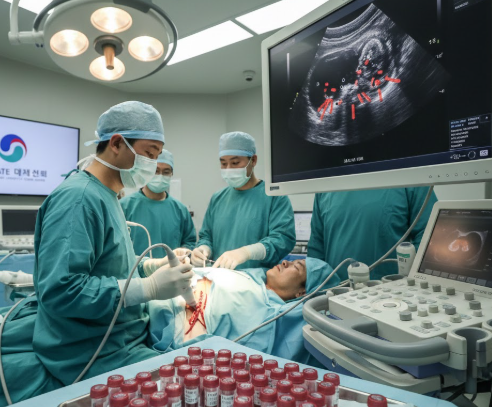
A Saturation Prostate Biopsy is an advanced diagnostic procedure designed to detect prostate cancer by collecting a large number of tissue samples from the prostate—often 20–50 cores in a single session. This method provides the most comprehensive sampling possible and is particularly useful in patients with persistently elevated PSA levels but prior negative biopsies.
In Korea, saturation biopsies are performed in state-of-the-art urology centers using high-resolution transrectal or transperineal ultrasound guidance. Advanced hospitals employ sterile techniques, experienced urologists, and, in many cases, MRI or fusion guidance to target suspicious areas, ensuring maximum diagnostic accuracy for both domestic and international patients.
Purpose & Benefits
The purpose of a saturation prostate biopsy is to detect cancers that may be missed by standard or systematic biopsies. Benefits include:
- High diagnostic accuracy, especially for patients with prior negative biopsies.
- Comprehensive coverage of the entire prostate, including anterior and apical zones.
- Improved treatment planning, providing detailed tumor mapping.
- Low risk of missing clinically significant cancers.
- Safe and precise, particularly when combined with MRI or fusion guidance in Korean hospitals.
Ideal Candidates
Saturation prostate biopsy is ideal for:
- Patients with persistently elevated PSA levels despite prior negative biopsies.
- Individuals with inconclusive MRI findings.
- Men at higher risk due to family history or genetic factors.
- Patients needing highly accurate mapping before focal therapy or robotic surgery.
- Older patients or those with complex prostate anatomy that may hide tumors.
Korean hospitals provide personalized assessment to determine whether saturation biopsy is the most appropriate approach.
Possible Risks & Complications
Although generally safe, saturation biopsy carries some risks due to the large number of tissue samples:
- Mild bleeding in urine, semen, or stool
- Temporary urinary discomfort or retention
- Pain or soreness in the biopsy area
- Infection (minimized in Korea due to strict sterile protocols and prophylactic antibiotics)
- Rare complications such as sepsis or significant bleeding
Korean centers use transperineal approaches to further reduce infection risk and improve patient safety.
Techniques & Technology Used
Korea uses advanced tools to ensure precise and safe saturation biopsies:
- Transperineal or transrectal ultrasound guidance
- Template-guided sampling for systematic coverage
- MRI–ultrasound fusion guidance for targeting suspicious lesions
- High-resolution 3D imaging to map the prostate accurately
- Local anesthesia or sedation for patient comfort
- Automated spring-loaded biopsy guns for consistent sampling
These technologies enable urologists to take more cores without increasing patient discomfort or complications.
Treatment Process in Korea
The saturation biopsy process for international patients in Korea is efficient and patient-friendly:
- Consultation & Pre-Evaluation – Review of PSA, MRI, and medical history
- Preparation – Antibiotics and local anesthesia or light sedation
- Procedure – Multiple cores (20–50) collected via transperineal or transrectal approach
- Observation & Recovery – Short monitoring period in the hospital
- Pathology & Results – Detailed biopsy report available within 3–5 days
Medical tourism coordinators assist with appointment scheduling, English interpretation, and follow-up.
Recovery & After-Care
- Mild soreness or bruising in the biopsy area for 1–2 days
- Temporary blood in urine or semen
- Drink plenty of fluids to aid recovery
- Avoid strenuous activity and sexual activity for 48 hours
- Take prescribed antibiotics and follow post-procedure instructions
- Contact the hospital if fever, severe pain, or urinary retention occurs
Korean hospitals provide clear after-care guidance and remote consultation for international patients.
Results & Longevity
Saturation biopsy results include Gleason score, tumor location, grade group, and extent of cancer involvement. This comprehensive information helps guide:
- Active surveillance
- Focal therapies
- Robotic or open prostatectomy
- Radiation planning
Results are reliable for long-term monitoring, unless PSA levels rise or new symptoms develop.
Why Korea Is a Top Destination
- Expert urologists specializing in complex prostate diagnostics
- Advanced imaging and biopsy technology
- Very low complication rates due to strict infection control
- Fast scheduling and pathology reporting
- English-language support for international patients
- Affordable pricing compared to Western countries
Korea combines technology, expertise, and patient-centered care, making it ideal for medical tourists seeking saturation prostate biopsy.
Cost Range
The typical cost for saturation prostate biopsy in Korea is:
₩2,000,000 – ₩4,500,000 KRW (~$1,500–$3,500 USD), depending on:
- Number of cores sampled
- MRI or fusion guidance
- Hospital type (private vs. university hospital)
- Additional pre-biopsy tests or consultations
Popular Clinics in Korea
- Seoul National University Hospital – Urology Department
- Samsung Medical Center – Advanced Prostate Clinic
- Asan Medical Center – Prostate Cancer Division
- Gangnam Severance Hospital – Fusion & Saturation Biopsy Program
- Korea University Anam Hospital – Template-Guided Biopsy Unit
- JK Urology & Men’s Health Clinics – International Patient Services


