
Treatment Overview
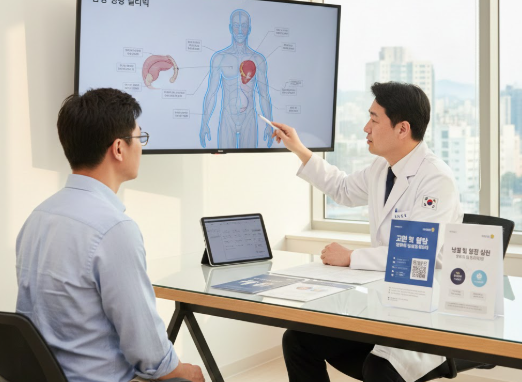
Scrotal and testicular health consultation in Korea focuses on diagnosing, preventing, and treating conditions affecting the testes, epididymis, and surrounding scrotal structures. Common issues include testicular pain, swelling, varicocele, hydrocele, epididymitis, torsion, infertility, and tumors. Korean urology clinics combine advanced imaging, laboratory testing, and minimally invasive treatments to ensure accurate diagnosis and effective management.
Medical tourists benefit from Korea’s fast and comprehensive evaluation system, which allows same-day testing, specialist consultation, and clear treatment planning. Clinics prioritize privacy and discretion while providing world-class care.
Purpose & Benefits
The primary purpose of scrotal and testicular consultation is to detect abnormalities early, relieve symptoms, and prevent complications such as infertility or cancer.
Key benefits include:
- Accurate diagnosis using advanced imaging and lab tests
- Early detection of tumors or infections
- Treatment for varicocele, hydrocele, epididymitis, or torsion
- Access to minimally invasive surgery
- Improved fertility outcomes for men with reproductive concerns
- Pain relief and improved testicular function
- Discreet, professional care for international patients
Korea’s approach ensures patients receive thorough care with minimal discomfort and maximum accuracy.
Ideal Candidates
Scrotal and testicular consultation is suitable for men who:
- Experience scrotal or testicular pain, swelling, or lumps
- Have a history of varicocele or hydrocele
- Are experiencing infertility or abnormal semen analysis
- Have trauma or injury to the testicles
- Seek regular check-ups for cancer prevention
- Experience testicular torsion symptoms such as sudden pain
- Want expert evaluation as international medical tourists
Early consultation is essential to prevent serious complications and preserve reproductive health.
Possible Risks & Complications
Without timely evaluation, scrotal or testicular issues may lead to:
- Testicular torsion causing loss of the testicle
- Infertility from varicocele or chronic epididymitis
- Recurrent infections
- Chronic pain or discomfort
- Delayed detection of testicular cancer
Diagnostic procedures themselves are safe, though minor discomfort may occur during ultrasound, blood tests, or physical examination. Korean clinics emphasize patient comfort and safety throughout the evaluation.
Techniques & Technology Used
Korea is known for advanced diagnostics and minimally invasive treatments for scrotal and testicular health:
- High-Resolution Ultrasound: evaluates testicular structure, blood flow, and masses
- Doppler Studies: assess varicocele or vascular abnormalities
- CT or MRI: detailed imaging for complex cases or tumors
- Semen Analysis: evaluates fertility parameters
- Hormonal Profiling: testosterone, LH, FSH, and prolactin
- Minimally Invasive Surgery: varicocelectomy, hydrocelectomy, and torsion correction
- Microsurgical Techniques: for infertility-related varicocele repair or sperm retrieval
- Cancer Screening & Biopsy: early detection of testicular tumors
Advanced technology ensures precise diagnosis and targeted, effective treatment.
Treatment Process in Korea
- Initial Consultation
A private discussion with a urologist covering symptoms, medical history, trauma, and reproductive concerns. - Diagnostic Evaluation
May include:
- Physical examination
- Ultrasound and Doppler studies
- Blood tests and hormone analysis
- Semen analysis for fertility assessment
- CT/MRI if tumor or complex pathology is suspected
- Diagnosis & Treatment Plan
The specialist develops a personalized plan, which may include:
- Medication for infections or inflammation
- Minimally invasive surgery for varicocele, hydrocele, or torsion
- Sperm retrieval for infertility
- Cancer treatment if malignancy is detected
- Treatment Implementation
Korean clinics perform procedures with high precision, often with same-day or short hospital stays. - Follow-Up & Monitoring
Patients receive scheduled follow-ups to monitor recovery, prevent complications, and ensure fertility and reproductive health.
Recovery & After-Care
Recovery depends on treatment type:
- Medication therapy: minimal recovery time
- Minimally invasive surgeries: 1–2 weeks of light activity, full recovery within 4–6 weeks
- Sperm retrieval procedures: mild discomfort for 2–3 days
- Post-surgical care: includes rest, avoiding strenuous activity, wearing supportive garments, and following hygiene guidelines
Korean hospitals provide detailed instructions and remote follow-up support for international patients.
Results & Longevity
With advanced diagnosis and treatments, patients can expect:
- Relief from pain and swelling
- Improved fertility and sperm parameters
- Long-term correction of varicocele or hydrocele
- Preservation of testicular function
- Early detection and effective management of tumors
Results are durable when patients adhere to follow-up schedules and lifestyle recommendations.
Why Korea Is a Top Destination
Korea is a preferred destination for scrotal and testicular health consultations because of:
- Expert urologists and microsurgeons
- Advanced imaging and minimally invasive technologies
- Efficient evaluation for international patients
- High success rates in fertility and surgical outcomes
- Privacy and confidential care
- Affordable pricing compared to Western countries
- Multilingual support for medical tourists
These factors make Korea an ideal choice for men seeking reliable, high-quality testicular care.
Cost Range
Typical costs for scrotal and testicular evaluation and treatment in Korea:
- Consultation: USD 30–70
- Ultrasound & Doppler study: USD 80–200
- Hormone testing: USD 50–150
- Semen analysis: USD 40–80
- Minimally invasive surgery: USD 1,500–4,000
- Microsurgical procedures: USD 2,500–6,000
- Cancer biopsy or treatment: USD 3,000–10,000
Medical tourists can plan for USD 200–4,000 depending on evaluation and treatment.
Popular Clinics in Korea
Some of the leading clinics and hospitals include:
- Seoul National University Hospital – Urology Department
- Asan Medical Center – Male Reproductive & Urology Clinic
- Samsung Medical Center – Urology and Microsurgery
- Yonsei Severance Hospital – Male Health Center
- CHA Bundang Medical Center – Urology Specialty
- HU Urology Clinic (Gangnam)
- Wooridul Hospital – Urology Division
- Himchan Urology Clinic, Seoul
These clinics are recognized for precise diagnosis, expert surgical care, and patient-friendly international services.


