
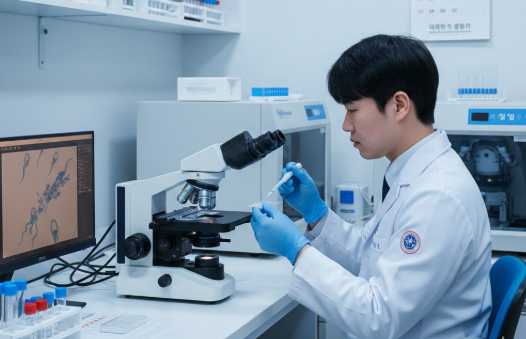
Treatment Overview
Semen analysis is a diagnostic test that evaluates male fertility by examining the quantity and quality of sperm. This includes parameters such as sperm count, motility, morphology, and overall semen volume. Clinics in Korea provide advanced testing services for men seeking fertility evaluation, family planning, or treatment for reproductive health issues.
Purpose & Benefits
The main purposes of semen analysis are:
- Assessing male fertility potential
- Identifying causes of infertility
- Guiding treatment plans such as lifestyle modifications, medical therapy, or assisted reproductive technologies (ART)
Benefits include:
- Early detection of fertility issues
- Personalized guidance for improving reproductive health
- Support for family planning and assisted conception strategies
Ideal Candidates
Semen analysis is recommended for:
- Men experiencing difficulty conceiving after 6–12 months of unprotected intercourse
- Individuals with a history of reproductive issues, hormonal imbalance, or low libido
- Patients undergoing fertility treatments or hormone therapy
- Men concerned about age-related fertility decline
Possible Risks & Complications
Semen analysis is a non-invasive test with minimal risks:
- Slight discomfort or anxiety during sample collection
- Rare psychological stress related to test results
There are no physical complications associated with the procedure.
Techniques & Technology Used
Korean clinics use advanced techniques for accurate semen evaluation:
- Standard semen analysis: Measures volume, concentration, motility, and morphology
- Sperm DNA fragmentation testing: Assesses genetic integrity of sperm
- Computer-assisted sperm analysis (CASA): Provides precise evaluation of motility and morphology
- Hormonal assessments: Optional tests for testosterone, FSH, LH, and prolactin to complement fertility evaluation
These methods ensure a comprehensive understanding of male reproductive health.
Treatment Process in Korea
The semen analysis process generally includes:
- Consultation: Review of medical and reproductive history
- Sample Collection: Collected via masturbation in a private clinic room or through home collection with proper transport
- Laboratory Testing: Analysis of sperm parameters, volume, and motility using advanced techniques
- Results & Consultation: Detailed report provided with medical interpretation and recommendations
- Follow-Up: Optional fertility counseling or further testing if abnormalities are detected
Recovery & After-Care
No recovery period is required. After-care involves:
- Following medical guidance based on results
- Maintaining healthy lifestyle habits to support sperm quality
- Scheduling follow-up tests if needed
Results & Longevity
Results provide insight into fertility status:
- Determine sperm count, motility, and morphology
- Identify potential causes of infertility
- Guide personalized fertility improvement strategies
Results are generally valid for a short time and may need repeat testing if there are lifestyle or medical changes.
Why Korea Is a Top Destination
Korea is a leading destination for semen analysis due to:
- Advanced laboratory facilities with precise testing technology
- Experienced reproductive endocrinologists and urologists
- Confidential, patient-friendly, and English-friendly services
- Integration with fertility treatments and hormone therapy programs
- Competitive pricing compared to Western countries
Cost Range
Semen analysis in Korea typically costs $80 to $200 USD, depending on the complexity of the testing and any additional hormonal or genetic assessments. Comprehensive fertility packages may cost more.
Popular Clinics in Korea
Some top clinics for semen analysis include:
- Banobagi Medical Group – Full male fertility assessment with counseling
- Grand Seoul Hospital – Advanced laboratory testing and reproductive health programs
- JK Plastic Surgery & Medical Clinic – Integrated fertility and hormone evaluation
- ID Hospital – International patient-friendly fertility testing and consultation


