
Treatment Overview
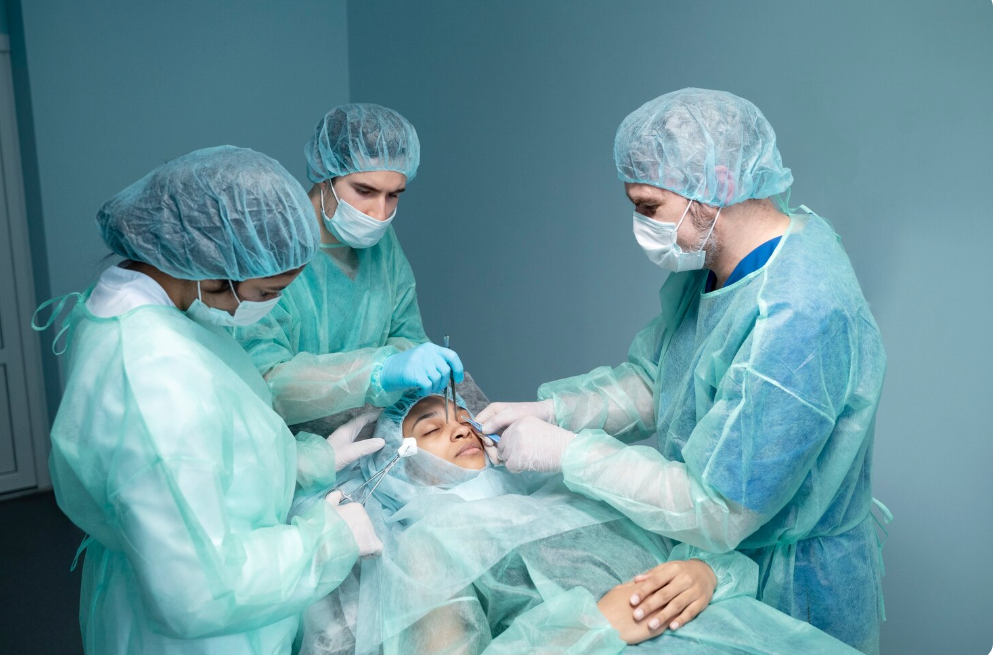
Septal perforation repair in revision rhinoplasty is a specialized procedure aimed at closing a hole (perforation) in the nasal septum that often results from prior nasal surgeries, trauma, or complications from infection. A septal perforation can cause symptoms such as whistling sounds when breathing, frequent nosebleeds, crusting, chronic dryness, or even collapse of nasal structure.
In Korea, this surgery is highly advanced, as it requires both functional reconstruction and aesthetic refinement. Korean surgeons are internationally recognized for their precision in reconstructive rhinoplasty, often combining cartilage grafting, flap techniques, and revision rhinoplasty approaches to restore both nasal health and appearance.
Purpose & Benefits
The primary goal of septal perforation repair during revision rhinoplasty is to restore nasal structure and function while also improving cosmetic outcomes. Benefits include:
- Closing the septal hole to restore proper nasal airflow.
- Reducing dryness, crusting, and frequent nosebleeds.
- Correcting whistling sounds during breathing.
- Strengthening nasal structure with grafts or flaps.
- Improving aesthetics if the perforation has caused deformity.
- Preventing further collapse or complications in future.
Ideal Candidates
This procedure in Korea is suitable for individuals who:
- Have undergone prior rhinoplasty or nasal surgery and developed a septal perforation.
- Experience breathing issues, whistling, bleeding, or dryness due to the perforation.
- Have aesthetic concerns such as tip drooping or saddle nose caused by septal damage.
- Require simultaneous correction of function and appearance in revision rhinoplasty.
- Are in good health and can undergo cartilage grafting or flap reconstruction if necessary.
Possible Risks & Complications
Although success rates in Korea are high, possible risks include:
- Persistent or recurrent perforation if the tissue does not heal fully.
- Scar tissue formation from prior surgeries.
- Infection at graft or flap donor site (ear or rib cartilage).
- Temporary breathing difficulties during recovery.
- Longer healing time due to the complexity of revision cases.
Surgical Techniques Used
Korean surgeons utilize a combination of advanced reconstructive and cosmetic methods, such as:
- Local Flap Closure: Using adjacent nasal mucosa to cover the perforation.
- Interposition Grafts: Placing cartilage or fascia between mucosal layers for closure.
- Cartilage Grafting: Using septal (if available), ear, or rib cartilage to restore structure.
- External or Endonasal Approach: Depending on the size and location of the perforation.
- Simultaneous Rhinoplasty Refinement: Addressing cosmetic concerns (tip, bridge, or symmetry) during the same procedure.
Recovery & Aftercare
- Swelling & Bruising: Typically lasts 1–2 weeks, but overall healing takes longer than standard rhinoplasty.
- Splints & Dressings: Internal splints may be used to support septal healing for 1–2 weeks.
- Downtime: Most patients return to daily activities within 10–14 days.
- Final Results: Septal healing takes several months; cosmetic refinements stabilize by 9–12 months.
- Aftercare in Korea: Clinics provide saline irrigation, scar prevention care, anti-swelling therapy, and regular imaging to monitor septal closure.
Results & Longevity
Successful septal perforation repair offers permanent closure in most cases, restoring both function and aesthetics. Korean surgeons prioritize structural reinforcement, which ensures long-term stability and prevents recurrence. Patients typically enjoy lifelong improvements in breathing comfort, nasal health, and appearance.
Treatment Process in Korea
1. Consultation
- Nasal endoscopy and 3D imaging performed to assess perforation size.
- Patients discuss both functional concerns and aesthetic goals.
2. Pre-Surgery Care
- Medical evaluation, nasal CT scan, and blood work.
- Donor site planning (ear or rib cartilage) for grafts if required.
3. Surgery
- Performed under general anesthesia.
- Duration: 3–5 hours, depending on complexity and perforation size.
- Combines functional septal repair with aesthetic revision rhinoplasty.
4. Immediate Post-Surgery Care
- Patients monitored in recovery rooms for a few hours.
- Splints or internal supports applied to protect septum.
5. Follow-Up & Aftercare
- Regular check-ups with nasal endoscopy to ensure closure.
- Post-op care includes saline sprays, swelling reduction therapies, and scar management.
- International patients often receive tailored aftercare programs with translators and transport services.
Why Korea?
- High Success Rates: Korean surgeons are among the most skilled globally in treating complex revision cases.
- Functional + Aesthetic Expertise: Both breathing and cosmetic improvements are addressed simultaneously.
- Advanced Grafting & Flap Techniques: Ensures stable closure and natural results.
- Comprehensive Medical Tourism Support: Clinics provide premium aftercare, translators, and recovery packages for international patients.
Cost Range
The cost of septal perforation repair in revision rhinoplasty depends on perforation size, grafting needs, and clinic expertise.
- General Price Range: ₩12,000,000 – ₩25,000,000 KRW (approx. $9,500 – $19,800 USD).
- Basic Packages Include: Surgeon’s fee, anesthesia, septal repair, and follow-up care.
- Premium Packages May Include:
- Rib cartilage harvesting (if required)
- 3D simulation consultations
- Scar tissue management and anti-swelling therapy
- VIP recovery suites & concierge services
Popular Clinics
- Banobagi Plastic Surgery (Seoul): Specialized in complex revision cases with septal perforation repair.
- ID Hospital (Seoul): Known for advanced reconstructive techniques combining function and aesthetics.
- JW Plastic Surgery Clinic: Strong focus on septal repair with grafting methods.
- View Plastic Surgery Clinic: Popular with international patients for high success rates and aftercare.
- MINE Plastic Surgery Clinic: Expertise in complex revision and perforation closure with natural outcomes.


