
Treatment Overview
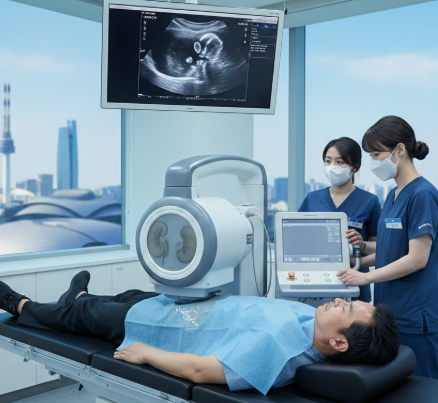
Shockwave Lithotripsy (SWL) is a non-invasive procedure used to treat kidney and ureteral stones by using high-energy shock waves to break stones into small fragments that can pass naturally through urine. Unlike surgical procedures like PCNL, SWL does not require incisions, making it pain-free, quick, and minimally disruptive.
Korean hospitals are renowned for advanced lithotripsy technology, highly skilled urologists, and exceptional patient outcomes, making Korea a top destination for international patients seeking safe, effective, and non-invasive kidney stone treatment.
Purpose & Benefits
The main purpose of Shockwave Lithotripsy is to fragment kidney and ureteral stones so they can pass naturally, reducing pain, obstruction, and the risk of infections.
Key benefits include:
- Non-invasive procedure with no incisions
- Quick treatment with minimal discomfort
- High success rate for stones smaller than 2 cm
- Outpatient procedure with short recovery time
- Reduced risk of complications compared to surgical options
- Preservation of kidney function
Korean urology centers focus on precision, patient comfort, and maximum stone clearance during SWL.
Ideal Candidates
Shockwave Lithotripsy is suitable for patients who:
- Have kidney or ureteral stones smaller than 2 cm
- Cannot pass stones naturally or experience recurrent pain
- Prefer a non-invasive, outpatient treatment
- Are in good overall health and suitable for sedation or anesthesia
- Have stones located in accessible regions of the kidney or ureter
Korean hospitals provide personalized evaluation and treatment plans for both local and international patients.
Possible Risks & Complications
Although SWL is generally safe, potential risks include:
- Mild discomfort or pain during the procedure
- Hematuria (blood in urine) for a few days
- Temporary bruising on the back or flank
- Incomplete stone fragmentation requiring repeat treatment
- Rare injury to surrounding tissues
- Infection or urinary tract inflammation
Korean hospitals minimize risks using high-precision imaging and targeted shockwave delivery.
Techniques & Technology Used
Korean hospitals use advanced Shockwave Lithotripsy technology to ensure safety and efficacy:
- High-Resolution Imaging (Ultrasound or X-ray/Fluoroscopy): Accurately locates stones
- Focused Shockwave Machines: Deliver precise energy to fragment stones
- Electromagnetic and Piezoelectric Lithotripters: Advanced systems for effective fragmentation
- Real-Time Monitoring: Ensures accurate targeting and minimizes impact on surrounding tissue
- Pain Management and Sedation: Provides a comfortable experience for patients
These technologies allow high success rates and minimal discomfort for patients undergoing SWL.
Treatment Process in Korea
International patients experience a structured SWL pathway:
1. Consultation and Evaluation
Urologists assess stone size, location, and composition using imaging studies and lab tests.
2. Preoperative Preparation
Patients are advised on hydration, fasting (if sedation is needed), and medications. Translation support and hospital admission assistance are provided.
3. Procedure
- Performed under sedation or light anesthesia
- Patient lies on a treatment table, and high-energy shockwaves are focused on the stone
- The stone fragments into small pieces that pass naturally through urine
- The procedure typically lasts 30–60 minutes
4. Postoperative Monitoring
Patients are observed for pain, hematuria, or discomfort. Most patients can go home the same day.
5. Follow-Up Care
Follow-up imaging ensures stone clearance. Patients receive instructions for hydration, activity, and medications to facilitate stone passage. Telemedicine follow-up is available for international patients.
Recovery & After-Care
Recovery after SWL is usually straightforward and comfortable:
- Mild discomfort or pain in the back or flank
- Temporary hematuria for a few days
- Avoid strenuous activity for 1–2 days
- Maintain high fluid intake to help pass stone fragments
- Follow dietary and medication guidance to prevent recurrence
- Attend follow-up appointments for imaging and evaluation
Korean hospitals provide comprehensive discharge instructions and remote support for international patients.
Results & Longevity
Shockwave Lithotripsy provides effective results for suitable stones:
- Immediate relief from obstruction and pain
- High success rate for stones smaller than 2 cm
- Non-invasive with minimal trauma and no scars
- Rapid return to daily activities
- Long-term kidney and urinary tract health with preventive care
- Reduced risk of complications compared to invasive surgery
Korean urologists ensure high patient satisfaction and durable outcomes.
Why Korea Is a Top Destination
Korea is a leading destination for Shockwave Lithotripsy due to:
- Expert urologists specializing in minimally invasive stone treatment
- Advanced shockwave machines with precise targeting
- State-of-the-art hospitals with strict infection control
- Short outpatient procedure times and convenient follow-up care
- Multilingual support for international medical tourists
- Competitive and transparent cost structures
- Comprehensive pre- and post-operative care, including telemedicine follow-up
These factors make Korea ideal for safe, efficient, and high-quality SWL procedures.
Cost Range
Estimated costs for Shockwave Lithotripsy in Korea:
- Consultation and imaging: USD 100–200
- Procedure: USD 1,500–3,000
- Postoperative care and medications: USD 100–200
- Total estimated package: USD 1,700–3,400
Costs vary depending on stone size, number of sessions required, hospital, and additional services. International patient packages are available.
Popular Clinics in Korea
Top hospitals and clinics providing Shockwave Lithotripsy include:
- Seoul National University Hospital – Urology Department
- Asan Medical Center – Stone Treatment Unit
- Samsung Medical Center – Urology & Lithotripsy
- Severance Hospital – Minimally Invasive Stone Clinic
- Korea University Hospital – Endourology and Lithotripsy
- Bundang CHA Medical Center – Urology & Stone Clinic
These centers are known for expert surgeons, advanced technology, and comprehensive patient care, making them ideal for international medical tourists.


