
Treatment Overview
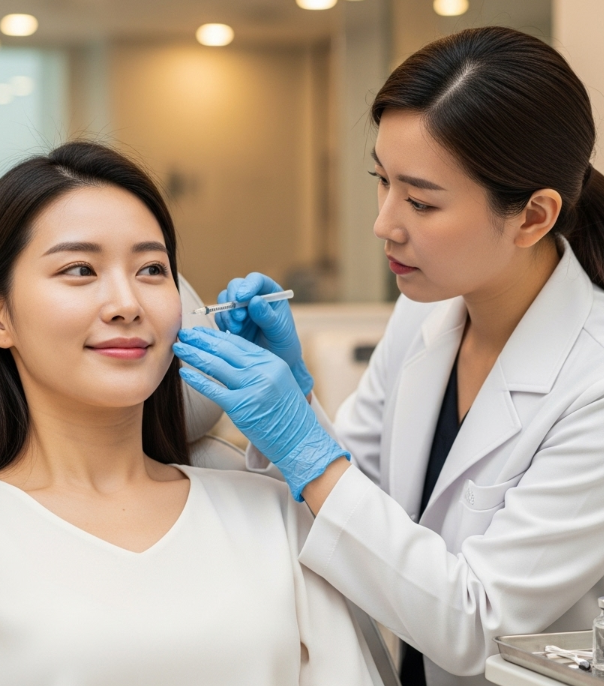
The Skin Healing Injection is a breakthrough non-surgical anti-aging and regenerative treatment in Korea, designed to repair damaged skin, restore hydration, and stimulate collagen production. Unlike fillers, which simply add volume, these injections—such as Rejuran Healer, Juvelook, and Nucleofill—work at the cellular level to regenerate skin tissue, smooth wrinkles, and improve overall texture.
Korean dermatology clinics have perfected skin healing protocols, using advanced micro-injection and multi-layer mapping techniques to deliver natural results for patients seeking to repair scars, reduce signs of aging, and achieve healthier, more resilient skin.
Purpose & Benefits
- Skin Repair: Heals micro-damage and improves skin health.
- Collagen Stimulation: Strengthens dermal structure for long-term elasticity.
- Wrinkle Reduction: Smooths fine lines and softens deeper folds.
- Scar Refinement: Reduces acne scars and uneven texture.
- Hydration & Glow: Boosts natural moisture and radiance.
- Non-Surgical Alternative: No incisions, no downtime, safe for all skin types.
- Long-Lasting Results: Effects continue for up to 12 months.
Ideal Candidates
The Skin Healing Injection is suitable for:
- Adults in their 20s–60s with wrinkles or loss of elasticity.
- Patients with acne scars, enlarged pores, or skin texture damage.
- Men and women seeking non-invasive rejuvenation.
- Individuals with sun-damaged or dull skin.
- Younger patients who want preventive anti-aging care.
Possible Risks & Complications
Skin healing injections are safe in Korean dermatology clinics, though mild, temporary side effects may occur:
- Redness or Swelling: Common, fades in 1–3 days.
- Small Bumps: Appear at injection sites, disappear in 24–48 hours.
- Bruising or Tenderness: May last up to a week.
- Very Rare Risks: Infection, uneven texture, or allergic reaction (minimized with expert technique).
Surgical Techniques Used
While the Skin Healing Injection is a non-surgical treatment, Korean dermatologists use advanced protocols that rival surgical precision:
- Micro-Injection Delivery: Boosters placed directly into the dermis.
- Multi-Layer Injection Mapping: Ensures even distribution across skin layers.
- Collagen & Tissue Regeneration: Polynucleotides and PDLA microspheres activate fibroblasts for healing.
- Customized Treatment Zones: Targeted injections for scars, wrinkles, or under-eye healing.
- Combination Care: Often paired with Shurink HIFU, Thermage FLX, or exosome therapy for stronger skin repair.
Recovery & Aftercare
- Immediately After: Mild swelling, bumps, or redness.
- 1–3 Days: Skin calms; hydration and texture improvements visible.
- 2–4 Weeks: Wrinkles soften and scars begin to fade.
- 2–6 Months: Maximum healing and collagen regeneration.
- Downtime: Minimal—patients resume daily activities almost immediately.
Aftercare Tips:
- Avoid alcohol, saunas, and strenuous activity for 48 hours.
- Use hydrating and repairing creams.
- Drink water to support collagen growth.
- Always apply SPF sunscreen to protect results.
Results & Longevity
- Immediate: Subtle hydration and smoother skin.
- Short-Term (2–4 Weeks): Wrinkles soften, scars improve, skin looks brighter.
- Medium-Term (2–3 Months): Stronger elasticity and healing effects.
- Long-Term: Results last 6–12 months; maintenance recommended yearly.
Treatment Process in Korea
Consultation & Skin Analysis – Dermatologist evaluates wrinkles, scars, and overall skin condition to create a personalized healing plan.
Preparation – Skin cleansing and numbing cream for comfort.
Injection Procedure – Micro-injections placed into the dermis using multi-layer Korean techniques for even, natural results.
Soothing Care – Cooling masks, LED therapy, or exosome boosters applied to enhance healing.
Follow-Up – A course of 3 sessions spaced 3–4 weeks apart is typically recommended, followed by yearly maintenance.
Why Korea is a Top Destination –
- World leaders in regenerative skin injectables like Rejuran and Juvelook.
- Advanced Korean protocols for precise, natural results.
- Integration with K-Beauty methods for comprehensive anti-aging care.
- Affordable yet premium-quality care, trusted worldwide.
- Seoul’s reputation as a global hub for skin repair and rejuvenation.
Cost Range
The price of Skin Healing Injection in Korea varies by clinic, treatment area, and number of sessions:
- Single Session: USD 300 – 650
- 3-Session Full-Face Package: USD 900 – 1,800
- Targeted Scar/Under-Eye Healing: USD 350 – 700 per session
- Advanced Healing Package (Injection + HIFU / Thermage): USD 2,000 – 3,800
- Luxury Regeneration Programs (Injection + Threads + Exosome Therapy): USD 3,500 – 5,500
Additional Costs in Korea:
- Consultation fee: USD 30 – 100
- Numbing cream: USD 20 – 50
- Aftercare skincare (healing serums, collagen creams, SPF): USD 50 – 200
💡 Most dermatologists recommend 3 sessions initially, then maintenance once or twice yearly for continuous skin healing.
Popular Clinics
- Banobagi Dermatology (Seoul): Specialists in Rejuran Healer and skin repair treatments.
- Oracle Skin Clinic (Nationwide): Affordable skin healing injection programs.
- View Clinic (Seoul): Known for healing injection + HIFU regeneration packages.
- ID Dermatology (Seoul): Experts in acne scar repair and wrinkle rejuvenation.
- Chaum Wellness Center (Seoul): Luxury holistic programs for skin healing and anti-aging.


