
Treatment Overview
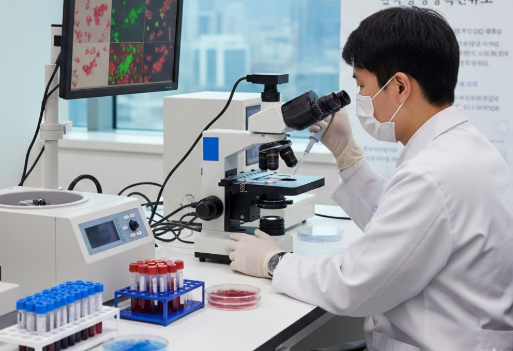
Sperm chromatin integrity testing evaluates the quality and stability of DNA within sperm cells. While traditional semen analysis focuses on count, motility, and morphology, chromatin integrity testing examines genetic damage—one of the most important factors influencing fertilization, embryo development, and pregnancy success.
In Korea, this advanced fertility test is widely offered in top-tier andrology labs and reproductive medicine centers. Korean clinics use cutting-edge diagnostic technologies such as TUNEL assay, SCSA (Sperm Chromatin Structure Assay), and Comet assay to precisely measure DNA fragmentation levels. This helps identify hidden causes of infertility that standard semen analysis cannot detect.
Purpose & Benefits
Sperm chromatin integrity testing provides deeper insights into male reproductive health. Key benefits include:
- Identifying DNA fragmentation: Detects breaks or abnormalities in sperm DNA that may impair fertilization or embryo development.
- Improving ART outcomes: Helps specialists tailor IVF or ICSI strategies for higher success rates.
- Detecting hidden male infertility: Essential when semen parameters appear normal yet pregnancy does not occur.
- Guiding targeted treatment: Supports decisions on lifestyle changes, medications, antioxidants, varicocele repair, or sperm retrieval techniques.
- Predicting miscarriage risk: High DNA fragmentation is linked to repeated implantation failure and recurrent pregnancy loss.
- Enhancing reproductive planning: Helps couples choose the most effective and timely treatment options.
Ideal Candidates
Sperm chromatin integrity testing is recommended for:
- Men experiencing unexplained infertility
- Couples with repeated IVF or ICSI failure
- Couples facing recurrent miscarriages
- Men over the age of 40
- Individuals with varicocele or a history of testicular trauma
- Men with lifestyle risks such as smoking, stress, or toxin exposure
- Those with previous chemotherapy or radiation treatment
- Men with normal semen analysis but continued difficulty conceiving
This test is particularly valuable when couples want clear genetic-level insight into fertility potential.
Possible Risks & Complications
Sperm chromatin integrity testing is a laboratory-based diagnostic procedure and does not involve any physical risks. Potential issues may include:
- Variability in sample quality due to inconsistent abstinence periods
- Stress, illness, or fever temporarily impacting DNA fragmentation
- Delayed sample processing that may influence results
- Environmental exposure affecting sperm DNA on the day of testing
There are no medical complications, making the test completely safe and suitable for all men undergoing fertility evaluation.
Techniques & Technology Used
Korea is known for using highly advanced and globally standardized techniques to assess sperm DNA quality. Common methods include:
- SCSA (Sperm Chromatin Structure Assay): Uses flow cytometry to analyze DNA fragmentation with high accuracy.
- TUNEL assay: Directly labels fragmented DNA strands to determine the percentage of damaged sperm.
- Comet assay: Measures DNA damage by analyzing the “tail length” of fragmented DNA under microscopy.
- HALO test: Evaluates DNA fragmentation by observing the dispersion patterns of chromatin halos.
- CASA systems: Complement integrity tests by providing detailed semen analysis data.
- WHO-standard protocols: Ensure global accuracy and reproducibility of results.
These advanced technologies allow Korean fertility centers to offer some of the most precise chromatin testing in the world.
Treatment Process in Korea
The diagnostic process for sperm chromatin integrity testing in Korea is highly organized and optimized for accuracy.
- Initial Consultation
You meet with a urologist or fertility specialist who discusses your medical history, infertility concerns, and previous test results. - Semen Sample Collection
Samples are collected in private, hygienic rooms. Korean clinics offer comfortable environments to ensure reliable collection. - Laboratory Testing
Based on the clinic, tests such as SCSA, TUNEL, or Comet assay are performed using automated and microscopic techniques. - Complementary Evaluations
Chromatin testing is often paired with hormone profiling, morphology analysis, or genetic testing when necessary. - Doctor Consultation for Results
Specialists explain:- DNA fragmentation index (DFI)
- High DNA stainability (HDS) percentage
- Levels of chromatin condensation abnormalities
- Implications for natural and assisted conception
- Personalized Treatment Plan
Recommendations may include:- Antioxidant therapy
- Lifestyle modifications
- Varicocele correction
- Infection or inflammation treatment
- Hormonal balancing
- Using testicular sperm extraction for IVF/ICSI to lower DNA fragmentation
Korean facilities provide swift turnaround times, often delivering results within 24–72 hours.
Recovery & After-Care
Since this is a diagnostic test, no medical recovery is needed. However, after-care and follow-up play crucial roles in improving DNA integrity:
- Follow lifestyle improvements such as reducing alcohol, smoking, and stress.
- Improve diet with antioxidants or supplements prescribed by specialists.
- Treat underlying infections or inflammation promptly.
- Maintain regular sleep and exercise routines.
- Avoid exposure to heat, radiation, or toxins.
- Follow up with repeat chromatin testing after 2–3 months to measure improvement.
Consistency in after-care often leads to significant improvements in fertility outcomes.
Results & Longevity
Normal chromatin integrity indicates strong fertilization potential, reduced miscarriage risk, and higher chances of successful ART treatments.
If results show high DNA fragmentation:
- Mild cases often improve with lifestyle changes and antioxidant therapy.
- Moderate to severe cases may require advanced fertility interventions such as ICSI or testicular sperm retrieval (TESE/TF-ICSI).
- Varicocele-related issues often improve long-term after varicocele repair.
With proper treatment and lifestyle adaptation, improvements in sperm DNA integrity can remain long-lasting.
Why Korea Is a Top Destination
Korea has become a leading global hub for male fertility diagnostics due to:
- State-of-the-art andrology laboratories equipped with SCSA and TUNEL testing systems
- Highly trained reproductive specialists with global experience
- Reliable and affordable testing packages compared to Western countries
- Fast turnaround times, ideal for medical tourists
- World-class IVF and ICSI programs linked directly to diagnostic labs
- Comprehensive medical tourism support, including English interpretation and concierge services
- Strong medical regulations ensuring accuracy, safety, and transparency
Korea combines advanced technology with exceptional patient care, making it a trusted choice for fertility-related diagnostics.
Cost Range
The cost of sperm chromatin integrity testing in Korea generally ranges from:
- ₩150,000 to ₩350,000 KRW
Costs depend on the testing method (SCSA, TUNEL, Comet), clinic reputation, and whether the test is bundled with a full analysis package.
Popular Clinics in Korea
Leading Korean clinics offering sperm chromatin integrity testing include:
- CHA Fertility Center Seoul
- Seoul National University Hospital – Andrology Unit
- Samsung Medical Center – Reproductive Medicine Department
- Hamchoon Women’s & Male Fertility Clinic
- Mirae Andrology Laboratory
- Create Fertility Clinic Seoul
These centers are highly respected for diagnostic precision, advanced technology, and commitment to patient-focused care.


