
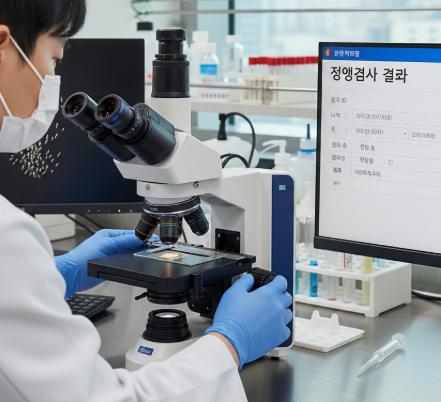
Treatment Overview
A Sperm DNA Fragmentation Test is an advanced diagnostic tool that evaluates the integrity of the genetic material inside sperm. While standard semen analysis measures sperm count, motility, and morphology, it does not assess DNA quality. The DNA Fragmentation Test provides deeper insight into sperm health, helping identify causes of infertility that may not appear in routine testing.
In Korea, fertility centers use advanced technologies such as SCSA (Sperm Chromatin Structure Assay), TUNEL assay, and COMET assay to measure DNA fragmentation with high precision. This test is particularly important for couples experiencing recurrent pregnancy loss, repeated IVF failure, or unexplained infertility. With Korea’s world-class fertility infrastructure, patients receive internationally standardized results and personalized fertility strategies.
Purpose & Benefits
The main purpose of a sperm DNA fragmentation test is to measure the percentage of sperm cells with damaged or fragmented DNA. High fragmentation levels can interfere with fertilization, embryo development, implantation, and healthy pregnancy.
Key benefits include:
- Detecting hidden infertility issues that a standard semen analysis cannot identify
- Assessing embryo quality potential for IVF and ICSI
- Determining the cause of recurrent miscarriages
- Guiding treatment options such as antioxidants, lifestyle changes, varicocele repair, or use of testicular sperm
- Improving success rates of IVF/ICSI programs by using targeted strategies
Korean clinics provide high-accuracy testing using cutting-edge laboratory systems, making diagnosis and treatment planning highly reliable.
Ideal Candidates
The test is recommended for men who:
- Have experienced repeated IVF or ICSI failures
- Have unexplained infertility despite normal semen analysis
- Have partners who experienced recurrent miscarriages
- Are over the age of 40
- Have a varicocele or previous testicular injury
- Have been exposed to toxins, smoking, heat, or oxidative stress
- Lead lifestyles with high stress, irregular sleep, or poor diet
- Have infections or chronic inflammation affecting reproductive health
Couples considering assisted reproduction can benefit greatly from DNA fragmentation evaluation to optimize treatment outcomes.
Possible Risks & Complications
A sperm DNA fragmentation test is non-invasive and carries no physical risks since it involves semen analysis only.
Potential considerations include:
- Emotional stress related to receiving results
- Need for repeat testing after lifestyle or medical interventions
- Variability in results due to temporary factors such as fever, stress, or medication
Korean laboratories follow strict protocols to minimize variability and ensure results are as accurate as possible.
Techniques & Technology Used
Korea is well known for using some of the world’s most advanced fertility testing technologies. Common techniques for assessing DNA fragmentation include:
- TUNEL Assay (Terminal dUTP Nick-End Labeling): Measures DNA breaks within sperm cells with high sensitivity
- SCSA (Sperm Chromatin Structure Assay): Uses flow cytometry to evaluate chromatin stability and fragmentation
- COMET Assay: Identifies DNA breaks by observing sperm under electrophoresis patterns
- SCD Test (Sperm Chromatin Dispersion): A simple yet accurate method for analyzing DNA damage
- Computer-assisted sperm analysis (CASA) for enhanced accuracy
Korean laboratories integrate AI-powered imaging, laser technology, and automated classification to ensure reliable test results with minimal human error.
Treatment Process in Korea
The testing process is efficient, confidential, and designed for medical tourists seeking clear and fast fertility insights.
- Initial Consultation: A fertility specialist reviews medical history, previous test results, and reproductive challenges.
- Sample Collection: Patients provide a semen sample after 2–5 days of abstinence. Collection takes place in a private room within the clinic to ensure sample quality.
- Laboratory Analysis: Depending on the method, sperm DNA fragmentation is measured using flow cytometry, fluorescence microscopy, or electrophoresis-based systems.
- Detailed Reporting: Results include the DNA Fragmentation Index (DFI), oxidative stress indicators, and recommendations.
- Follow-Up Consultation: Specialists explain results and suggest appropriate treatment steps, including lifestyle modifications, medications, or advanced fertility procedures.
Many Korean clinics offer same-day or next-day results, making the process convenient for international patients.
Recovery & After-Care
Since the test is non-invasive, no physical recovery is needed. However, improving sperm DNA quality often requires lifestyle and medical interventions. After-care may include:
- Reducing alcohol and quitting smoking
- Increasing whole foods, antioxidants, omega-3 rich diet
- Taking supplements such as Vitamin C, Vitamin E, CoQ10, zinc, and selenium
- Managing stress and improving sleep patterns
- Avoiding heat exposure (saunas, hot baths, laptop on lap)
- Treating underlying conditions such as varicocele or infections
Korean fertility specialists often provide personalized male fertility improvement programs based on DNA fragmentation levels.
Results & Longevity
Results typically include:
- DNA Fragmentation Index (DFI): Percentage of sperm with fragmented DNA
- HDS (High DNA Stainability): Measures immature sperm cells
- Interpretation of fertility impact
- Recommended treatment (IVF, ICSI, ICSI with testicular sperm, antioxidant therapy, varicocele surgery, etc.)
DNA fragmentation can improve significantly after lifestyle changes or medical treatment. Korean clinics often recommend retesting after 8–12 weeks to track improvement, as this represents one full sperm production cycle.
Why Korea Is a Top Destination
Korea is recognized globally for its excellence in reproductive medicine, offering world-class fertility diagnostics and treatments. Reasons medical tourists choose Korea include:
- Highly advanced fertility laboratories with strict international quality control
- State-of-the-art diagnostic systems like SCSA, TUNEL, COMET with AI support
- High treatment success rates in IVF/ICSI
- Experienced urologists and reproductive endocrinologists
- English-speaking patient coordinators for smooth medical tourism
- Affordable costs compared to Europe, the US, or Australia
- Fast results and efficient care system
Korea’s fertility industry is globally respected for innovation, accuracy, and patient-centered care.
Cost Range
The typical cost of a sperm DNA fragmentation test in Korea is:
₩150,000 – ₩350,000 KRW
(Approximately $110 – $260 USD depending on the clinic and type of test)
Advanced assays such as SCSA or COMET may cost slightly higher.
Popular Clinics in Korea
Some leading clinics offering advanced sperm DNA fragmentation testing include:
- CHA Fertility Center Seoul
- Seoul National University Hospital (SNUH) Fertility Center
- Samsung Medical Center
- Mirae Andrology & Urology Clinic
- HIM Male Clinic
- Create Fertility Center Seoul
- Da Vinci Fertility Center
These facilities are recognized for high-end genetic testing technologies and excellent international patient support.


