
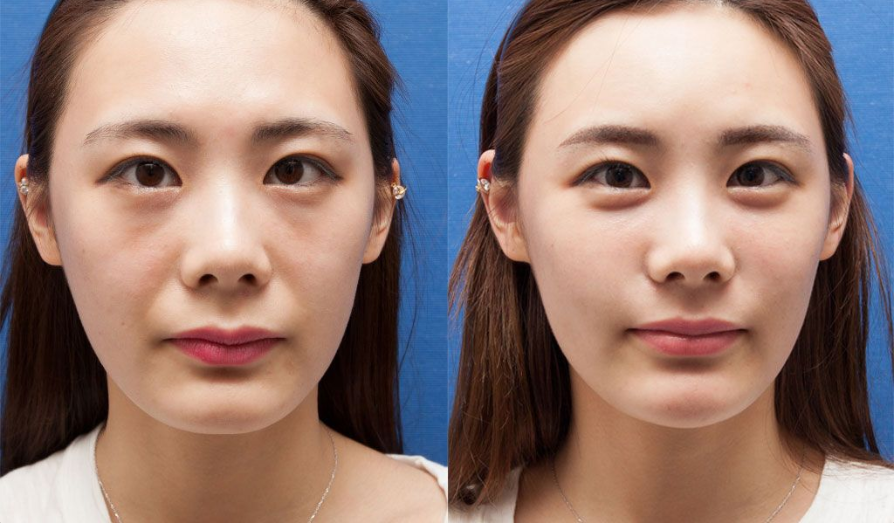
Treatment Overview
Submalar Implants are specialized facial implants designed to enhance and restore volume to the hollow or sunken midface area beneath the cheekbones. Unlike high malar implants, which emphasize cheekbone projection, submalar implants specifically target the area below the zygomatic arch (the mid-cheek region) to correct sagging, deflation, and early signs of aging.
In Korea, surgeons use advanced surgical planning and 3D-designed implants to ensure that submalar augmentation looks natural, harmonious, and age-appropriate. This procedure is often performed for patients with gaunt, flat, or aging midfaces, making the face appear more youthful, lifted, and refreshed.
Purpose and Benefits
The purpose of submalar implants is to restore youthful fullness and support to the midface while maintaining natural proportions.
Key benefits include:
- Rejuvenates a tired or sunken midface.
- Reduces the appearance of deep nasolabial folds.
- Provides natural cheek support without over-projection.
- Restores youthful roundness and balance.
- Long-lasting results compared to fillers or fat grafting.
- Can be combined with facelifts or eyelid surgery for comprehensive rejuvenation.
Ideal Candidates
Submalar implants are best suited for patients who:
- Have flat, hollow, or sunken midfaces due to genetics or aging.
- Experience deep smile lines or sagging midface tissue.
- Do not want overly sharp cheekbones but prefer natural fullness.
- Have previously tried fillers or fat transfer but want a permanent solution.
- Are in good overall health and have realistic expectations.
This procedure is especially popular among patients in their 30s to 50s who are noticing midface aging and volume loss.
Possible Risks and Complications
Like all surgical procedures, submalar implants carry some risks:
- Temporary swelling, bruising, and mild discomfort.
- Numbness or tightness around the cheeks.
- Implant displacement or asymmetry (rare with proper fixation).
- Infection or delayed healing.
In Korea, surgeons use endoscopic-assisted placement, micro-fixation, and customized implant designs, significantly lowering these risks.
Surgical Techniques in Korea
Korean surgeons are internationally recognized for their expertise in natural-looking midface enhancement. Techniques include:
- Endoscopic Placement – Small incisions inside the mouth or lower eyelid allow implants to be inserted with minimal scarring.
- Custom 3D Implants – Using CT scanning and 3D printing, surgeons design implants tailored to each patient’s bone structure.
- Secure Fixation – Implants are anchored with micro-screws or fixation methods to prevent shifting.
- Combination Procedures – Often paired with fat grafting, facelift, or eyelid surgery for full midface rejuvenation.
Recovery and Aftercare
Recovery from submalar implant surgery is typically 1–2 weeks. Swelling and bruising are most noticeable during the first 7–10 days, but patients usually return to normal routines within 10–14 days.
In Korea, aftercare includes:
- Swelling reduction therapies (cooling masks, lymphatic massage).
- LED light therapy to promote healing.
- Scar management if any external incisions were used.
- Regular follow-ups to monitor implant stability.
Most patients notice natural improvements within 2–3 weeks, with final results visible after a few months.
Results and Longevity
Submalar implants deliver long-lasting, often permanent results:
- Restored fullness and lift in the midface.
- Smoother transition between the lower eyelids and cheeks.
- Reduced deep nasolabial folds.
- Natural, youthful appearance without an “overdone” look.
Unlike fillers, which dissolve, implants provide stable and durable results that can last decades.
Treatment Process in Korea
Korea is considered one of the top destinations for submalar implant surgery due to its advanced technology and artistic approach.
The process usually follows these steps:
- Consultation & 3D Imaging – Surgeons perform a detailed analysis using 3D scans to evaluate bone structure and plan implant size, shape, and position.
- Customized Design – Many clinics create patient-specific implants for the most natural look.
- Surgery – Performed under local anesthesia with sedation or general anesthesia. Endoscopic techniques allow precise implant placement with minimal incisions.
- Aftercare & Recovery – Korean clinics provide intensive post-op care, including swelling reduction, scar prevention, and healing therapies.
- Follow-Up Support – International patients often receive translation assistance, medical coordinators, and full recovery packages to ensure a smooth experience.
This comprehensive system makes Korea one of the most trusted destinations for natural-looking midface rejuvenation.
Cost Range in Korea
The price of submalar implant surgery in Korea varies depending on the clinic, surgeon, and whether implants are custom-designed.
- Standard Submalar Implants: ₩6,000,000 – ₩9,000,000 KRW ($4,500 – $7,000 USD)
- Custom 3D-Printed Implants: ₩9,000,000 – ₩13,000,000 KRW ($7,000 – $10,000 USD)
- Combined procedures (e.g., facelift or fat grafting) may increase the overall cost.
Although pricier than temporary fillers, the long-lasting results make it cost-effective over time.
Popular Clinics in Korea for Submalar Implants
Some of the most well-known clinics for midface implant surgeries include:
- ID Hospital – Korea’s largest plastic surgery hospital, specializing in facial bone and implant surgery.
- Banobagi Plastic Surgery – Famous for natural midface rejuvenation and patient-centered care.
- View Plastic Surgery – Advanced implant customization with state-of-the-art imaging technology.
- Nana Plastic Surgery – Popular among international patients for its personalized treatment plans.
- GNG Hospital – Expert in endoscopic techniques for midface lifting and implant placement.


