
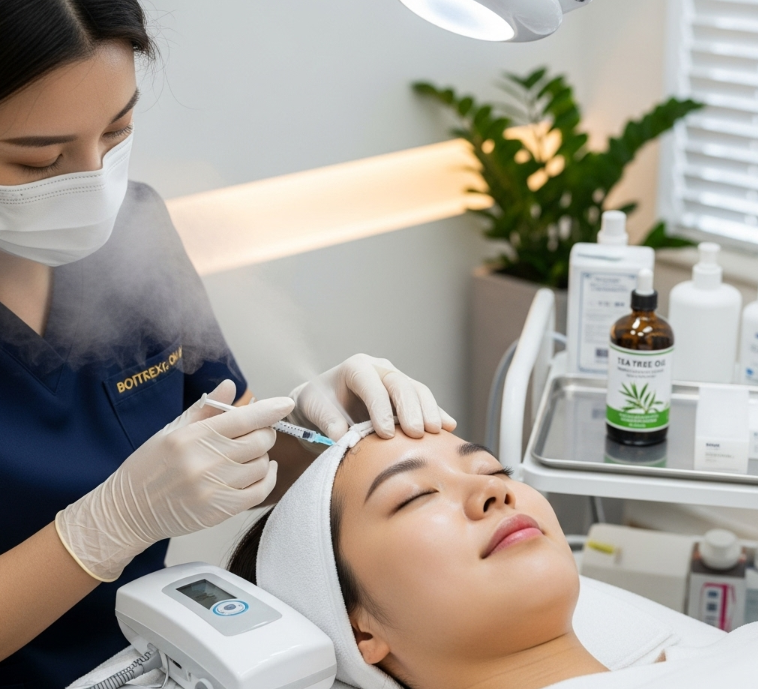
Treatment Overview
Tea Tree Skin Botox involves injecting diluted micro-Botox into the superficial dermal layers across the face, while simultaneously infusing tea tree extract serums. Botox works to refine pores, control sebum, and soften fine lines, while tea tree extract soothes inflammation, purifies pores, and prevents breakouts.
The result is smoother, clearer, and calmer skin—making it ideal for patients who struggle with both aging concerns and sensitive or acne-prone skin.
Purpose and Benefits
- Wrinkle Softening: Reduces fine lines on forehead, crow’s feet, and smile lines.
- Pore Refinement: Tightens enlarged pores for a smooth finish.
- Sebum & Oil Control: Balances oily skin and minimizes shine.
- Anti-Acne Effect: Tea tree extract helps reduce breakouts and irritation.
- Calming Relief: Soothes redness and sensitivity for balanced skin.
- Radiance Boost: Enhances clarity and creates a fresh, refined glow.
- Preventive Anti-Aging: Stops fine lines from deepening.
Ideal Candidates
- Adults with oily or acne-prone skin.
- Individuals with fine lines, enlarged pores, and excess shine.
- Patients struggling with sensitive or inflamed skin.
- First-time Botox patients who want gentle, natural results.
- Anyone seeking a dual-effect treatment for both aging and acne-prone concerns.
Possible Risks and Complications
- Mild redness, swelling, or small bumps at injection points (temporary).
- Rare sensitivity to tea tree extract (clinics screen for allergies).
- Slight tightness in the skin for 1–2 days.
- Very rare asymmetry or uneven results (minimized in Korean dermatology clinics).
Surgical Techniques Used
- Micro-Botox Injections: Ultra-diluted Botox injected superficially with ultra-fine needles.
- Tea Tree Infusion Therapy: Application or co-injection of tea tree serum for purification.
- Glow Mapping: Even distribution across cheeks, forehead, chin, and jawline.
- Cryo-Calming Step: Cooling therapy or mask applied to reduce redness.
- Optional Add-ons: LED therapy, exosomes, or hydrating boosters for extra glow and balance.
Recovery and Aftercare
- Immediately After: Minor redness or swelling, usually fading within hours.
- 1–3 Days: Skin feels smoother, pores begin to tighten, and oil production balances.
- 1–2 Weeks: Wrinkles soften, acne calms, and glow appears.
- Downtime: Minimal to none.
Aftercare Tips
- Avoid heavy exercise, alcohol, and saunas for 24 hours.
- Do not rub or massage treated areas for 4–6 hours.
- Use gentle, non-comedogenic skincare to support healing.
- Apply sunscreen daily to protect results.
Results and Longevity
- Immediate: Fresher, calmer skin within a few days.
- Short-Term (1–2 Weeks): Wrinkles soften, acne and oil reduce, skin clarity improves.
- Medium-Term (3–5 Months): Results maintained with smooth texture and refined pores.
- Long-Term: Regular treatments every 3–6 months help maintain balance and prevent premature aging.
Treatment Process in Korea
- Consultation & Skin Analysis
Dermatologist evaluates wrinkles, oil production, and acne concerns. - Preparation
Cleansing, light exfoliation, and optional numbing cream. - Tea Tree Skin Botox Application
Micro-Botox injected across the skin, combined with tea tree serum infusion. - Calming Mask Step
Cooling tea tree or herbal mask applied to soothe irritation. - Finishing Care
Hydrating moisturizer and SPF applied before leaving the clinic. - Follow-Up
Maintenance sessions recommended every 3–6 months.
Why Korea is a Top Destination
- Korean dermatologists are experts in skin Botox and acne-friendly treatments.
- Unique integration of tea tree botanicals with advanced Botox mapping.
- Focus on natural refinement and skin harmony instead of artificial stiffness.
- More affordable than Western medispas while maintaining luxury standards.
- Clinics in Seoul and nationwide cater to international patients with multilingual support.
Cost Range
The cost of Tea Tree Skin Botox in Korea varies by clinic, Botox brand, and whether additional boosters are included.
- Small Area (forehead, eyes, or cheeks only): USD 100 – 180
- Full-Face Tea Tree Skin Botox: USD 200 – 400
- Premium Package (Botox + Tea Tree infusion + LED therapy): USD 500 – 900
- Three-Session Packages: USD 800 – 1600 total
- Luxury Skin Renewal Programs: USD 2000 – 3500, combining Botox with lasers, exosomes, and herbal boosters
Additional Costs
- Dermatology consultation: USD 20 – 70
- Aftercare skincare (tea tree serums, hydrating creams, SPF): USD 50 – 200
Popular Clinics in Korea
- Gangnam Dermatology Clinics – Experts in acne-friendly Botox and pore refinement.
- Banobagi Dermatology Seoul – Premium anti-aging and skin-balancing Botox.
- Oracle Skin Clinic (Nationwide) – Affordable options for acne-prone and oily skin.
- View Clinic Seoul – Combines Botox with exosomes, tea tree care, and brightening boosters.
- Chaum Wellness Center Seoul – Luxury skin Botox programs with herbal and holistic care.


