
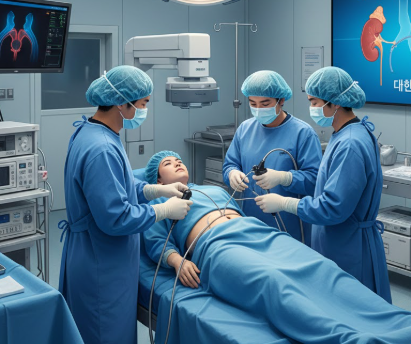
Treatment Overview
Temporary ureteral stent placement is a minimally invasive urological procedure designed to maintain urine flow from the kidney to the bladder when the ureter is obstructed. Ureteral obstruction can occur due to kidney stones, strictures, tumors, surgical trauma, or post-procedural swelling. The stent is a thin, flexible tube inserted into the ureter to bypass the obstruction and prevent kidney damage.
In Korea, this procedure is performed using advanced endoscopic and imaging technology to ensure precise placement and minimal patient discomfort. It is typically completed under local anesthesia with sedation or general anesthesia, depending on the patient’s condition and preference. Korean urology centers are globally recognized for their expertise, rapid procedural scheduling, and excellent care for medical tourists.
Purpose & Benefits
The primary goal of temporary ureteral stent placement is to relieve obstruction and protect kidney function while facilitating urine drainage. The key benefits include:
- Immediate relief of ureteral blockage and pain
- Prevention of hydronephrosis and renal damage
- Reduced risk of urinary tract infections
- Preservation of ureteral integrity post-surgery or procedure
- Minimally invasive, no external incisions required
- Quick procedure and short recovery time
- Supports healing after laser treatment, dilation, or ureteral surgery
Temporary stents also allow clinicians to monitor patient recovery before definitive interventions, making the procedure a safe bridge treatment.
Ideal Candidates
Temporary ureteral stent placement is appropriate for patients who:
- Have ureteral obstruction caused by stones, strictures, or tumors
- Need protection after ureteral surgery or laser treatment
- Experience severe flank pain or recurrent hydronephrosis
- Are awaiting definitive procedures such as ureteroscopy or ureteral reconstruction
- Require temporary urine flow restoration during recovery
Both adult and pediatric patients benefit from this procedure, and international patients often choose Korea due to the high safety standards and skilled urologists.
Possible Risks & Complications
Although considered safe, temporary ureteral stent placement may involve some risks:
- Mild pain, urinary urgency, or frequency
- Hematuria (blood in urine)
- Urinary tract infection
- Stent migration or displacement
- Encrustation if left in place for too long
- Rare ureteral injury during insertion
- Bladder irritation or spasms
Korean hospitals minimize risks through high-definition imaging, careful endoscopic placement, and timely follow-up care.
Techniques & Technology Used
Korean urology centers use advanced techniques and devices to ensure safe and effective stent placement:
- Flexible or rigid cystoscopy for ureter access
- Guidewire-assisted stent placement
- Fluoroscopic guidance for precise positioning
- Dual-J or single-J stents depending on clinical requirements
- Biodegradable or temporary polymer stents for specific cases
- High-definition digital endoscopes for better visualization
These technologies allow accurate placement, reduce discomfort, and support optimal ureteral healing.
Treatment Process in Korea
Korean hospitals provide a structured process for temporary ureteral stent placement, ensuring efficiency and patient comfort:
- Consultation & Evaluation
Patients undergo a thorough assessment including medical history, ultrasound, CT urography, or intravenous urography to confirm the obstruction and suitability for stenting. - Pre-Procedure Preparation
Instructions are provided on fasting, antibiotic prophylaxis, and anesthesia options. - Stent Placement Procedure
- Performed under local anesthesia with sedation or general anesthesia
- Cystoscope is inserted through the urethra into the bladder
- A guidewire is advanced through the ureter to the obstruction
- Stent is placed with one end in the kidney and the other in the bladder
- Position is confirmed using fluoroscopy or endoscopic visualization
- Post-Procedure Observation
Patients are monitored for a few hours or overnight depending on risk factors and comfort. - Stent Removal & Follow-Up
The temporary stent is typically removed 1–6 weeks later in an outpatient visit, depending on the patient’s condition and treatment plan. Follow-up imaging ensures proper ureteral function.
Recovery & After-Care
Recovery after stent placement is fast and uncomplicated. Korean hospitals provide clear guidance:
- Drink plenty of fluids to prevent infection and stent encrustation
- Expect mild urinary frequency, urgency, or discomfort
- Take prescribed antibiotics or analgesics as advised
- Avoid heavy lifting or strenuous activity for a few days
- Report severe pain, fever, or unusual urinary symptoms promptly
Most patients can resume normal daily activities within 1–2 days. Stent removal marks the completion of the treatment cycle.
Results & Longevity
Temporary ureteral stents provide immediate relief from obstruction and preserve kidney function. In Korea, procedural success rates are very high due to precise imaging, advanced endoscopy, and experienced urologists.
While stents are temporary and not a definitive solution for strictures or stones, they effectively manage obstruction, relieve symptoms, and protect renal function until further interventions are performed. Long-term durability depends on the underlying condition and follow-up treatments.
Why Korea Is a Top Destination
Korea is a leading destination for temporary ureteral stent placement due to:
- Highly trained urologists with international experience
- State-of-the-art endoscopic and imaging facilities
- Efficient scheduling and minimal waiting times for international patients
- Comprehensive medical tourism support, including translation, transport, and accommodation
- Competitive pricing compared to the US and Europe
- High safety and hygiene standards with low complication rates
Patients worldwide trust Korea for prompt, minimally invasive urologic care with excellent outcomes.
Cost Range
The cost for temporary ureteral stent placement in Korea ranges from USD 1,200 to USD 3,500, depending on:
- Hospital tier and location
- Type of stent used (standard, polymer, or biodegradable)
- Duration of hospital stay or anesthesia
- Additional imaging or tests required
Korea provides high-quality care at cost-effective rates for medical tourists.
Popular Clinics in Korea
- Seoul National University Hospital (SNUH)
- Asan Medical Center
- Samsung Medical Center
- Severance Hospital – Yonsei University Health System
- Korea University Anam Hospital
- Wooridul Urology Clinic
- Gangnam Severance International Clinic
These hospitals are recognized for minimally invasive urology procedures, advanced technology, and patient-focused care for international visitors.


