
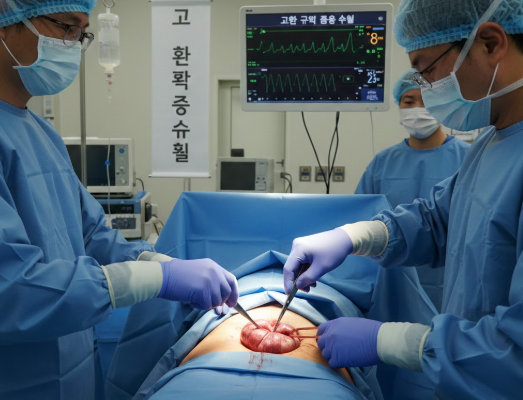
Treatment Overview
Testicular compartment syndrome (TCS) is a rare but serious urological condition caused by elevated pressure within the tunica albuginea of the testicle. This pressure compromises blood flow and can lead to ischemia, tissue necrosis, and permanent testicular damage if not treated urgently. Testicular compartment syndrome surgery is performed to relieve pressure, restore perfusion, and preserve testicular function.
Korea is recognized globally for advanced emergency urology care. Hospitals employ state-of-the-art diagnostic imaging, including Doppler ultrasound and MRI, to assess testicular perfusion accurately. The surgical approach typically involves tunica albuginea fasciotomy or decompression procedures to relieve pressure, often combined with orchiopexy to secure the testicle and prevent future complications. For international patients, Korean hospitals provide comprehensive emergency services, fast diagnostic protocols, and multilingual support, making it an ideal destination for urgent testicular care.
Purpose & Benefits
The main purpose of testicular compartment syndrome surgery is to prevent irreversible testicular damage by reducing pressure within the testicle and restoring proper blood flow.
Key benefits include:
- Preservation of fertility through timely intervention
- Prevention of testicular atrophy and necrosis
- Minimally invasive or targeted surgical approach depending on severity
- High accuracy using Doppler imaging and real-time blood flow assessment
- Rapid recovery facilitated by Korea’s advanced surgical techniques
Early intervention significantly reduces long-term complications such as chronic pain, hormonal imbalances, or loss of testicular function.
Ideal Candidates
Testicular compartment syndrome surgery is indicated for patients experiencing:
- Sudden testicular pain, swelling, or tenderness
- Reduced testicular perfusion detected via Doppler ultrasound
- History of trauma, torsion, or vascular compromise
- Postoperative or post-infection testicular complications
- Adolescents and adults at high risk for compartment syndrome
- Patients seeking urgent, specialized surgical care abroad
International patients with acute scrotal symptoms are ideal candidates, as Korea’s hospitals are equipped to provide immediate and precise care.
Possible Risks & Complications
While highly effective, testicular compartment syndrome surgery carries certain risks:
- Infection or hematoma at the surgical site
- Persistent pain or swelling
- Testicular atrophy if intervention is delayed
- Reduced fertility in severe ischemic cases
- Recurrent vascular compromise or compartment pressure increase
- Rare complications related to anesthesia or underlying conditions
Korean hospitals maintain strict sterile protocols and utilize advanced surgical techniques to minimize these risks.
Techniques & Technology Used
Korean urologists utilize a combination of advanced techniques and technology for optimal outcomes:
- Doppler Ultrasound: To assess testicular blood flow and confirm ischemia
- MRI and High-Resolution Imaging: To visualize tissue viability and compartment pressure
- Tunica Albuginea Fasciotomy: Surgical decompression of the testicle
- Microsurgical Tools: For precise incision and tissue preservation
- Orchiopexy: To secure the testicle after decompression and prevent future torsion
- Intraoperative Perfusion Monitoring: Ensures immediate restoration of blood flow
These technologies ensure the procedure is precise, minimally invasive when possible, and highly effective in salvaging testicular function.
Treatment Process in Korea
The treatment process for medical tourists in Korea is systematic and efficient:
1. Emergency Assessment
Upon arrival, a urologist performs a physical examination and immediate Doppler ultrasound to confirm reduced perfusion or compartment pressure.
2. Surgical Planning
Once TCS is diagnosed, surgery is scheduled promptly. Korean hospitals have dedicated emergency urology units to accommodate urgent cases.
3. Decompression Surgery
A small scrotal incision is made, and the tunica albuginea is carefully released to relieve pressure. Surgeons assess tissue viability in real-time.
4. Orchiopexy
The testicle is secured to prevent torsion or recurrent pressure issues.
5. Postoperative Monitoring
Patients are observed for restored blood flow and wound stability. Follow-up Doppler ultrasounds confirm successful perfusion.
Most surgeries take 60–90 minutes, and patients are typically discharged within 1–2 days depending on recovery.
Recovery & After-Care
Postoperative care in Korea emphasizes comfort, monitoring, and rapid recovery:
- Mild pain managed with analgesics
- Avoid heavy physical activity or sexual activity for 2–4 weeks
- Keep the incision area clean and dry
- Follow-up Doppler ultrasound to confirm continued blood flow
- Monitoring for swelling, bruising, or infection
Korean clinics provide clear instructions and virtual follow-up options for international patients after discharge.
Results & Longevity
With prompt surgical intervention, testicular compartment syndrome surgery in Korea offers excellent outcomes:
- Restored blood circulation and preserved testicular function
- Prevention of testicular atrophy
- Long-term fertility preservation
- Low recurrence rates with proper decompression and fixation
- High patient satisfaction due to fast recovery and minimal scarring
Most patients regain full functionality and experience no further complications.
Why Korea Is a Top Destination
Korea is a preferred destination for emergency urology procedures due to:
- Advanced imaging and diagnostic technology for accurate assessment
- 24/7 availability of urology specialists
- High success rates in testicular salvage procedures
- Rapid admission and treatment protocols for international patients
- Cost-effective healthcare compared to Western countries
- Multilingual support and patient coordinators for medical tourists
These factors ensure timely, precise, and reliable treatment for testicular emergencies.
Cost Range
Estimated costs in Korea:
- Diagnostic Doppler Ultrasound: USD 80–150
- Emergency Surgery: USD 2,500–5,000
- Hospital Stay (1 night): USD 200–400
- Total Treatment Package: USD 3,000–5,500
Insurance coverage may apply to international patients depending on policies.
Popular Clinics in Korea
Leading hospitals and clinics providing TCS surgery include:
- Seoul National University Hospital – Urology Department
- Asan Medical Center – Emergency Urology Unit
- Samsung Medical Center – Men’s Health and Urology
- Severance Hospital – Urology and Emergency Services
- Wooridul Urology Clinic, Seoul
- Korea University Hospital – Emergency Urology Division
These facilities are renowned for advanced technology, rapid intervention, and high surgical success rates.


