
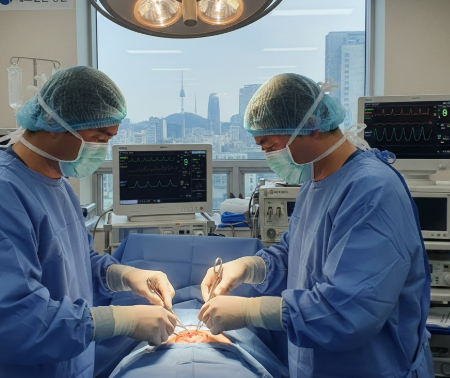
Treatment Overview
Testicular Torsion Repair Under Local Anesthesia in Korea is a minimally invasive urological procedure designed to correct testicular torsion without the need for general anesthesia. This procedure involves untwisting the spermatic cord, restoring blood flow to the testicle, and performing orchidopexy (surgical fixation) to prevent recurrence, all while the patient remains awake and comfortable.
Korean urologists employ precise microsurgical techniques and advanced local anesthesia protocols to ensure pain-free surgery, quick recovery, and preservation of fertility. This approach is particularly suitable for adult patients or those with contraindications for general anesthesia.
Purpose & Benefits
The primary goals of testicular torsion repair under local anesthesia are to save the affected testicle, relieve acute pain, and prevent future torsion.
Key benefits include:
- Immediate restoration of blood flow to prevent testicular loss
- Relief from severe scrotal pain and swelling
- Minimally invasive procedure with local anesthesia for reduced risks
- Preservation of fertility and hormonal function
- Short recovery time and same-day discharge in many cases
- Reduced anesthesia-related complications compared to general anesthesia
- High precision through microsurgical techniques
- Lower hospital costs and shorter hospitalization
Korean hospitals specialize in ensuring patient safety, comfort, and optimal outcomes.
Ideal Candidates
This procedure is suitable for patients who:
- Experience sudden testicular pain due to torsion
- Have confirmed or suspected testicular torsion via clinical assessment or imaging
- Prefer or require local anesthesia due to medical conditions or anesthesia risk
- Are adult patients with stable vital signs
- Desire rapid recovery, minimal hospital stay, and fertility preservation
- Seek high-quality surgical care in Korea without general anesthesia
Prompt intervention is critical; surgery performed within 6 hours of torsion onset offers the highest chance of testicular salvage.
Possible Risks & Complications
While generally safe, potential risks include:
- Mild discomfort, swelling, or bruising at the surgical site
- Infection at the incision site
- Bleeding or hematoma formation
- Rare recurrence of torsion if orchidopexy is not properly performed
- Testicular atrophy if blood flow was compromised for an extended period
- Rare injury to spermatic cord structures
- Inadequate pain control (rare, managed intraoperatively)
Korean microsurgical expertise and precise anesthesia techniques minimize these risks, ensuring effective outcomes.
Techniques & Technology Used
Korean hospitals utilize advanced techniques for testicular torsion repair under local anesthesia:
Local Anesthesia Protocols
Carefully administered local anesthetics ensure patient comfort while maintaining awareness.
Microsurgical Detorsion
High-magnification techniques allow precise untwisting of the spermatic cord and assessment of testicular viability.
Orchidopexy (Testicular Fixation)
Both testicles may be fixed to prevent recurrence.
High-Resolution Ultrasound
Preoperative and intraoperative imaging confirms torsion and evaluates testicular blood flow.
Minimally Invasive Approach
Small incisions and delicate tissue handling reduce recovery time and scarring.
Rapid Intervention Protocols
Korean hospitals are equipped for immediate surgery, maximizing testicular salvage rates.
Treatment Process in Korea
The treatment process for testicular torsion repair under local anesthesia is designed for efficiency and safety:
Evaluation & Diagnosis
Patients presenting with acute scrotal pain undergo immediate physical examination and Doppler ultrasound to confirm torsion.
Preoperative Preparation
Local anesthesia suitability is assessed, and the surgical area is prepped. No general anesthesia is required, making the procedure faster.
Surgical Procedure
Under local anesthesia, the spermatic cord is untwisted, and the testicle is evaluated for viability. Orchidopexy is performed to stabilize one or both testicles. Surgery typically lasts 30–60 minutes.
Postoperative Observation
Patients are monitored briefly for pain, swelling, or bleeding. Many can be discharged the same day.
Follow-Up
Follow-up appointments assess wound healing, testicular function, and fertility potential. Telemedicine follow-ups are available for international patients.
Recovery & After-Care
Recovery after testicular torsion repair under local anesthesia is typically rapid:
Recommended after-care includes:
- Wearing supportive underwear or a scrotal support garment
- Keeping the incision site clean and dry
- Taking prescribed pain or anti-inflammatory medications
- Avoiding heavy lifting, strenuous activity, and sexual activity for 1–3 weeks
- Monitoring for swelling, redness, bleeding, or infection
- Attending follow-up appointments to ensure testicular viability
Most patients resume normal activities within a few days, with full recovery and fertility assessment in 4–6 weeks.
Results & Longevity
Testicular torsion repair under local anesthesia in Korea provides high success rates and lasting outcomes:
Expected results include:
- Immediate relief from severe scrotal pain
- Preservation of the affected testicle
- Prevention of future torsion through orchidopexy
- Minimal scarring and rapid recovery
- Maintenance of fertility and hormonal function
- Short hospital stay and quick return to daily activities
Early intervention and experienced microsurgical techniques ensure optimal testicular preservation.
Why Korea Is a Top Destination
Korea is a preferred destination for this procedure due to:
- Highly skilled urologists experienced in microsurgical emergency procedures
- Advanced imaging and minimally invasive techniques for precision
- Short hospital stays and fast recovery
- Low complication and recurrence rates
- Comprehensive international patient services, including translators, transport, and coordinators
- Affordable, high-quality care compared to Western countries
- Thorough postoperative monitoring and fertility preservation support
Medical tourists choose Korea for safe, effective, and comfortable testicular torsion repair without general anesthesia.
Cost Range
The cost of testicular torsion repair under local anesthesia in Korea varies depending on urgency and complexity:
- Standard local anesthesia torsion repair: $3,500 – $6,000
- Complex or delayed cases: $6,000 – $9,000
Costs typically include consultation, imaging, anesthesia, surgery, medications, and follow-up care. Many hospitals provide medical tourism packages.
Popular Clinics in Korea
Some of the top hospitals and clinics for testicular torsion repair under local anesthesia include:
- Seoul National University Hospital – Urology & Male Fertility Center
- Asan Medical Center – Emergency Urology & Andrology Division
- Samsung Medical Center – Microsurgery & Andrology Clinic
- Severance Hospital (Yonsei University) – Urology & Andrology Center
- Korea University Hospital – Male Fertility & Urology Center
- Wooridul Urology Clinic
- Hana Urology Clinic (Seoul)
These facilities are known for advanced emergency urology care, microsurgical expertise, and international patient support.


