
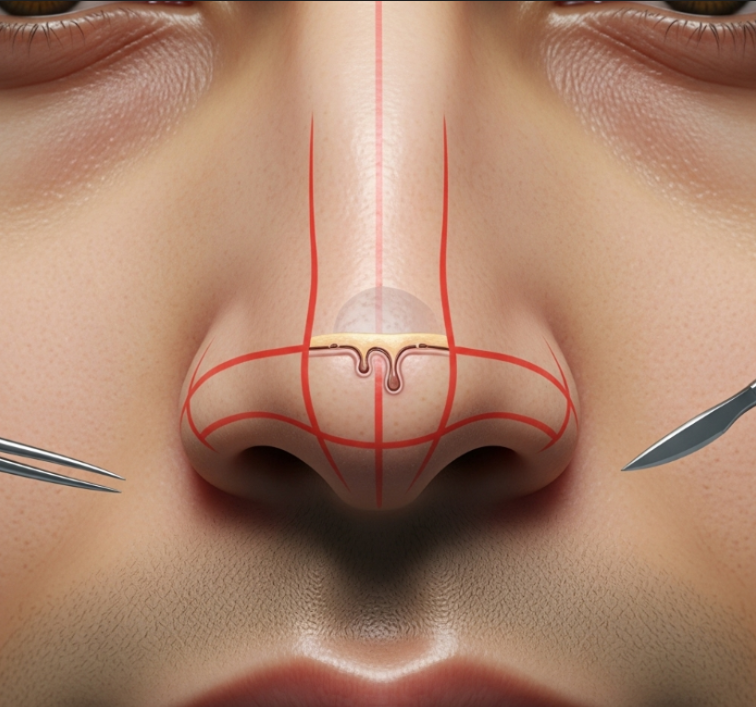
Treatment Overview
Tip Defatting is a specialized surgical technique in rhinoplasty that involves removing excess soft tissue and fat from the nasal tip to create a slimmer, more refined appearance. It is particularly common in patients with a bulbous or thick nasal tip, where cartilage work alone cannot achieve the desired definition.
In Korea, surgeons often combine tip defatting with cartilage reshaping, suturing techniques, or grafting for long-lasting structural support and natural results. This makes it an essential procedure in both primary rhinoplasty and revision cases, especially for Asian and ethnic patients who commonly present with thicker nasal tip skin.
Purpose & Benefits
- Reduces bulkiness in the nasal tip caused by fat or fibrous tissue
- Enhances tip definition and contour
- Creates a slimmer, more elegant tip shape
- Improves results of shield grafts, dome sutures, and cartilage grafting
- Helps balance overall facial harmony
Ideal Candidates
- Patients with a bulbous or round nasal tip
- Individuals with thick nasal skin and soft tissue
- Those seeking a sharper, more refined nasal tip
- Patients combining defatting with other tip rhinoplasty techniques
Possible Risks & Complications
- Temporary swelling and bruising
- Over-defatting can cause visible cartilage edges
- Asymmetry if removal is uneven
- Rare infection or scarring under thick skin
- Prolonged swelling in patients with very fibrous nasal tissue
Surgical Techniques Used
- Open Rhinoplasty Approach – allows direct access to the tip soft tissue
- Soft Tissue Removal – precise trimming of fat and fibrous layers
- Often combined with:
- Dome Binding Sutures – for narrowing tip cartilage
- Shield Graft – for tip projection and definition
- Columella Strut Graft – for support and stability
- Alar Cartilage Reshaping – for contour improvement
- Careful balancing to avoid over-resection and maintain natural outcomes
Recovery & Aftercare
- Downtime: 7–10 days before returning to daily activities
- Stitch Removal: 5–7 days after surgery
- Swelling: Noticeable improvement in 2–3 weeks; subtle swelling may last months
- Final Results: Seen after 6–12 months when all swelling subsides
- Aftercare: Avoid pressure on the nose, wear splints if prescribed, and follow post-op guidelines
Results & Longevity
- Produces a more sculpted and elegant nasal tip
- Long-lasting results as excess tissue does not typically regenerate
- Enhanced balance and proportion with other nasal features
- Results remain stable if performed conservatively and combined with structural support
Treatment Process in Korea
Korean rhinoplasty clinics follow a systematic and personalized approach for tip defatting procedures:
- Initial Online/Virtual Consultation – international patients can send photos for pre-evaluation
- In-Person Consultation – 3D analysis and assessment of tip skin thickness
- Customized Surgery Plan – deciding the extent of defatting and possible cartilage work
- Pre-Surgery Preparation – health check, anesthesia planning, and skin evaluation
- Surgery (1.5–2.5 hours) – soft tissue removed, combined with grafts or sutures if needed
- Post-Surgery Care – splint/taping applied to protect the nose
- Follow-Up Visits – stitch removal and swelling management
- Final Results – slimmer, more defined tip visible after healing
Cost Range in Korea
The cost of Tip Defatting Surgery in Korea depends on skin thickness, complexity, and whether additional techniques are required:
- Simple Tip Defatting (soft tissue removal only):
₩3,500,000 – ₩5,000,000 KRW ($2,600 – $3,800 USD) - Tip Defatting + Cartilage Sutures/Grafts:
₩5,000,000 – ₩7,500,000 KRW ($3,800 – $5,700 USD) - Revision Rhinoplasty with Tip Defatting (complex cases):
₩7,500,000 – ₩11,000,000 KRW ($5,700 – $8,400 USD)
💡 Some clinics also provide all-inclusive packages for international patients, including surgery, aftercare, translation, and accommodation assistance.
Popular Clinics for Tip Defatting in Korea
- ID Hospital (Gangnam, Seoul) – leading in Asian and ethnic rhinoplasty
- Banobagi Plastic Surgery – expertise in bulbous tip correction
- View Plastic Surgery – popular for soft tissue reshaping with natural outcomes
- JW Plastic Surgery – skilled in complex tip refinement and revision cases
- DA Plastic Surgery – offers international patient services with English support
- April31 Plastic Surgery – known for creating elegant, refined tip definition


