
Treatment Overview
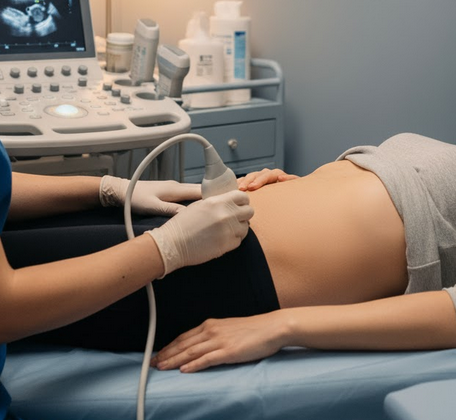
Transabdominal Pelvic Ultrasound in Korea is a non-invasive imaging procedure that provides a comprehensive view of the pelvic organs, including the uterus, ovaries, bladder, and surrounding structures. It is a standard diagnostic method widely used in women’s health to assess pelvic anatomy and detect potential abnormalities.
Korea is recognized for using the latest high-resolution ultrasound systems in transabdominal pelvic evaluation. These systems often integrate 3D and 4D imaging, color Doppler technology, and AI-assisted interpretation, offering exceptional diagnostic accuracy. The procedure is an important part of women’s health care under Korea’s OBGYN specialty, enabling precise evaluation for gynecologic conditions, infertility issues, and pelvic pain.
This technique is suitable for a wide range of patients, from routine pelvic health screening to more specialized assessments, such as preconception evaluation, pregnancy monitoring, and pelvic pain diagnosis.
Purpose & Benefits
The purpose of transabdominal pelvic ultrasound is to provide a broad, high-quality image of the pelvic region to support diagnosis, treatment planning, and ongoing monitoring.
Key benefits include:
- Non-invasive and safe with no exposure to ionizing radiation.
- Detailed imaging of pelvic organs to detect structural anomalies.
- Assessment of uterine and ovarian health, including fibroids, cysts, and polyps.
- Evaluation of the bladder and pelvic floor structures.
- Monitoring of pregnancy and fetal growth when needed.
- Comfortable and generally painless for patients.
- Quick results with immediate availability of diagnostic findings.
In Korea, this procedure is widely recognized for its accuracy and efficiency, with advanced systems providing superior image quality compared to conventional ultrasound equipment.
Ideal Candidates
Transabdominal pelvic ultrasound is suitable for a wide variety of women, including:
- Women undergoing routine pelvic health screening.
- Patients experiencing pelvic pain or abnormal menstrual cycles.
- Women with suspected ovarian cysts, fibroids, or polyps.
- Patients preparing for fertility treatments or preconception screening.
- Pregnant women requiring routine pregnancy monitoring.
- Women with a history of pelvic surgery or reproductive health issues.
Korean clinics tailor ultrasound protocols to each patient’s health status and medical requirements, ensuring a personalized and effective diagnostic process.
Possible Risks & Complications
Transabdominal pelvic ultrasound is considered one of the safest diagnostic tools in gynecology. It uses sound waves rather than radiation, making it safe for repeated use and suitable for pregnant patients.
Possible minor issues may include:
- Slight discomfort due to pressure from the transducer.
- Mild need to hold a full bladder during the procedure.
- Short-lived anxiety if abnormal findings are detected.
Korean clinics take special care to ensure patient comfort, with skilled sonographers guiding patients through the process.
Techniques Used
Korea’s transabdominal pelvic ultrasound incorporates advanced imaging techniques:
- High-Resolution Ultrasound Imaging: Produces clear, detailed images of pelvic organs.
- 3D/4D Ultrasound: Offers volumetric and dynamic imaging for more accurate assessment.
- Color Doppler Ultrasound: Measures blood flow in pelvic organs, assisting in diagnosing vascular or functional issues.
- AI-Assisted Image Analysis: Enhances precision by identifying subtle changes or abnormalities.
- Digital Imaging and Archiving: Allows for future comparison and longitudinal monitoring.
These techniques ensure the most thorough and accurate assessment possible, making Korea a leader in pelvic ultrasound evaluation.
Recovery & Aftercare
Since transabdominal pelvic ultrasound is a non-invasive procedure, no recovery time is required. Patients can resume their normal activities immediately after the examination.
Aftercare may include:
- A review of ultrasound findings with a gynecologist.
- Recommendations for further testing if abnormalities are detected.
- Follow-up ultrasound scans to monitor any findings over time.
- Lifestyle recommendations for overall pelvic health.
Korean clinics ensure thorough patient education after the procedure so that individuals understand their results and next steps.
Results & Longevity
Results from a transabdominal pelvic ultrasound are typically available immediately after the procedure. Patients receive:
- Detailed imaging reports of pelvic organs.
- Measurements of organ size and structure.
- Evaluation of any detected abnormalities such as cysts, fibroids, or polyps.
- Recommendations for further treatment or follow-up monitoring.
The longevity of the results depends on the patient’s condition and whether follow-up assessments are needed. In many cases, transabdominal ultrasound is repeated periodically for ongoing monitoring.
Treatment Process in Korea
The process for transabdominal pelvic ultrasound in Korea is efficient and patient-friendly:
- Initial Consultation: Review of medical history and reason for the scan.
- Preparation: Patients may be asked to drink water before the scan for better imaging.
- Ultrasound Examination: Performed with advanced equipment by skilled sonographers.
- Image Analysis: Enhanced with AI and reviewed by specialized radiologists or gynecologists.
- Follow-Up Consultation: Results are explained, and recommendations are given.
Korean clinics emphasize a smooth process and patient-centered care, ensuring comfort, accuracy, and clarity throughout the procedure.
Cost Range
The cost of transabdominal pelvic ultrasound in Korea typically ranges:
- Standard ultrasound: ₩150,000–₩300,000 KRW ($120–$240 USD).
- Advanced imaging with 3D/4D or Doppler: ₩400,000–₩800,000 KRW ($320–$640 USD).
Many hospitals offer packages that include the ultrasound and consultations for comprehensive pelvic health assessment.
Popular Clinics
- Seoul National University Hospital (OBGYN Department) – Known for precision pelvic ultrasound services.
- CHA Fertility Center Seoul – Offers advanced transabdominal pelvic ultrasound as part of women’s health packages.
- Banobagi Women’s Clinic – Specializes in personalized gynecologic ultrasound programs.
- Samsung Women’s Health Clinic – Uses AI-assisted transabdominal imaging for enhanced diagnostic accuracy.
- Mirae Women’s Hospital – Offers comprehensive pelvic health evaluations.
- Ewha Womans University Medical Center – Combines advanced technology with patient-focused care.


