
Treatment Overview
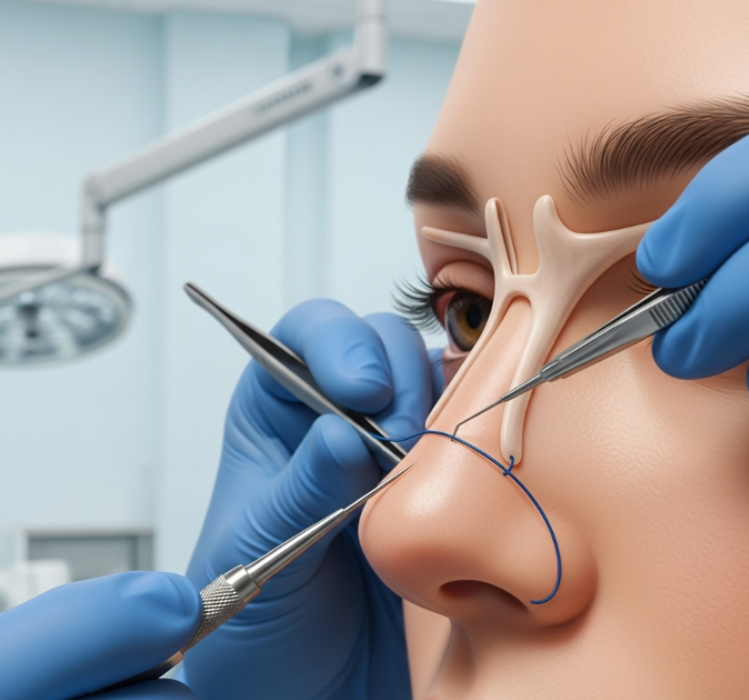
The Transdomal Suture Technique is a widely used rhinoplasty method that refines the nasal tip by reshaping and narrowing the domes of the lower lateral cartilages. Instead of removing tissue, this technique uses sutures to bring the two domes closer together, creating a more defined, symmetrical, and elegant nasal tip.
In Korea, surgeons perform this procedure with microsurgical precision, ensuring natural contouring without an artificial or pinched look. It is often performed alone for subtle tip refinement or in combination with grafting and other suture techniques for comprehensive nasal reshaping.
Purpose & Benefits
The main purpose of the transdomal suture is to refine tip shape without aggressive cartilage removal. Benefits include:
- Creates a slimmer, more defined nasal tip.
- Improves symmetry between the tip cartilages.
- Provides tip refinement for thick-skinned or bulbous noses.
- Reduces the need for extensive cartilage excision.
- Preserves nasal function while enhancing aesthetics.
- Can be combined with dome-binding, interdomal, or shield graft techniques for optimal results.
Ideal Candidates
This technique is suitable for patients who:
- Have a bulbous or wide nasal tip.
- Desire a more refined and defined nose tip without drastic changes.
- Have adequate lower lateral cartilage strength to support reshaping.
- Want a natural-looking refinement rather than an overdone look.
- Are in good overall health with realistic expectations.
Possible Risks & Complications
Although the transdomal suture is safe and conservative, potential risks include:
- Temporary swelling and stiffness of the nasal tip.
- Over-tightening of sutures, leading to a pinched appearance.
- Asymmetry if sutures loosen or heal unevenly.
- Rare risk of cartilage distortion or irregularities.
- Minor scar tissue formation around the sutures.
Surgical Techniques Used
Korean surgeons are globally recognized for refining this method with advanced precision. Techniques include:
- Cartilage Exposure: Accessing the lower lateral cartilages through an open or closed approach.
- Suture Placement: Fine sutures are placed across the domes to narrow and refine their angle.
- Combined Refinements: Often paired with interdomal sutures, dome-binding sutures, or shield grafts for enhanced tip definition.
- Microsurgical Tools: Used to ensure accuracy and minimize trauma.
- Scar-Minimizing Incisions: Usually placed along natural creases or inside the nostrils.
Recovery & Aftercare
- Mild swelling and bruising subside within 1–2 weeks.
- Stitches (if external incisions are made) are typically removed within 5–7 days.
- Most patients resume normal activities within 7–10 days.
- Final definition of the nasal tip becomes visible after 2–3 months, once swelling reduces.
- Korean clinics offer LED therapy, anti-swelling treatments, and scar management as part of aftercare.
Results & Longevity
The results of the transdomal suture are long-lasting, as the reshaped cartilages maintain their new structure. Patients can expect a slimmer, more elegant, and natural nasal tip that balances well with their facial features. Properly executed, this technique provides refinement without compromising breathing.
Treatment Process in Korea
Korea is renowned for its expertise in advanced suture techniques, including the transdomal method.
Consultation
- Surgeons analyze nasal anatomy with 3D imaging and simulations to plan the most suitable approach.
Pre-Surgery Care
- Medical evaluations and personalized surgical planning ensure patient safety and realistic outcomes.
Surgery
- Typically performed under local anesthesia with sedation or general anesthesia.
- Procedure time: 1–2 hours, depending on whether combined with other tip refinement methods.
Post-Surgery Care
- Korean clinics provide advanced therapies such as scar treatment, swelling reduction care, and frequent follow-ups to ensure symmetry and healing.
Why Korea?
- Korean rhinoplasty is world-famous for natural, subtle refinement that avoids the overdone look.
- Clinics are equipped with cutting-edge technology, English-speaking staff, and tailored medical tourism services for international patients.
Cost Range
The cost of Transdomal Suture Technique in Korea depends on whether it is done as a standalone refinement or combined with full rhinoplasty.
- General Price Range: ₩3,000,000 – ₩6,500,000 KRW (approx. $2,300 – $5,200 USD).
- Basic Packages Include: Consultation, anesthesia, surgery, and standard postoperative care.
- Premium Packages May Include: Extended scar management, LED therapy, swelling control treatments, translator services, and VIP recovery options.
Compared to Western countries, Korea offers more competitive pricing with advanced results, making it a global hub for rhinoplasty.
Popular Clinics
- Banobagi Plastic Surgery Clinic (Seoul): Experts in advanced suture techniques for refined tips.
- ID Hospital (Seoul): Offers transdomal sutures as part of comprehensive rhinoplasty packages.
- JW Plastic Surgery Clinic: Specialized in natural tip reshaping for thick-skinned patients.
- View Plastic Surgery Clinic: Known for scar-minimizing methods and balanced results.
- MINE Plastic Surgery Clinic: Popular among international patients seeking subtle nasal refinement.


