
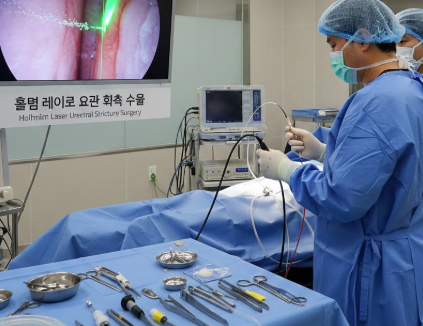
Treatment Overview
Transurethral Resection of the Prostate (TURP) in Korea is a minimally invasive surgical procedure used to treat moderate to severe Benign Prostatic Hyperplasia (BPH). TURP remains the global gold standard for prostate enlargement treatment because it effectively removes excess prostate tissue obstructing the urinary tract.
In Korea, TURP is performed using state-of-the-art medical technologies, including bipolar and plasmakinetic resection systems that reduce bleeding and enhance surgical precision. Korean urologists are internationally recognized for outstanding expertise in endoscopic prostate surgery, providing excellent outcomes for both domestic and international patients.
Purpose & Benefits
The primary purpose of TURP is to relieve urinary obstruction caused by an enlarged prostate. BPH can significantly reduce quality of life by causing difficulty urinating, incomplete bladder emptying, and frequent nighttime urination. TURP addresses these symptoms by safely removing obstructive prostate tissue.
Key benefits include:
- Fast and reliable improvement in urinary flow
- Relief from urinary urgency, dribbling, and hesitancy
- High success rate with long-lasting results
- Minimally invasive (no external incisions)
- Reduced postoperative pain
- Short hospital stay and rapid recovery
- Lower risk of complications with modern bipolar systems
- Significant improvement in bladder function
Korea’s advanced equipment further enhances safety and precision, leading to faster recovery and minimal bleeding.
Ideal Candidates
TURP is recommended for individuals experiencing moderate to severe symptoms of prostate enlargement, especially those who have not responded to medication. Ideal candidates include:
- Men diagnosed with Benign Prostatic Hyperplasia (BPH)
- Patients with frequent urination, especially at night
- Men with weak urinary stream or sensation of incomplete emptying
- Individuals suffering urinary retention or recurrent infections
- Patients experiencing bladder stones or bleeding due to BPH
- Men who require long-term catheterization because of obstruction
TURP is typically suitable for prostates of small to medium size. Patients with very large prostates may be recommended for laser enucleation or robotic prostate surgery.
Possible Risks & Complications
Although TURP is considered safe and highly effective, certain risks may occur, including:
- Temporary burning sensation during urination
- Bleeding during or after surgery
- Urinary tract infection
- Short-term difficulty controlling the bladder
- Retrograde ejaculation (common but harmless)
- Rarely, narrowing of the urethra or scar formation
- TURP syndrome (extremely rare with modern bipolar systems)
Korean hospitals maintain strict safety protocols to keep complication rates among the lowest globally.
Techniques & Technology Used
Korea integrates the most advanced TURP technologies available today. Common systems include:
- Bipolar TURP System: Uses saline irrigation, significantly lowering the risk of electrolyte imbalance and bleeding.
- Plasmakinetic Resection: Allows precise removal of tissue with minimal thermal damage.
- High-Definition Endoscopic Visualization: Provides clear views of the prostate during resection.
- Continuous Flow Resection Systems: Maintain steady visualization and reduce surgical time.
- Modern Electrosurgical Generators: Improve precision, control, and safety.
These high-precision systems ensure superior outcomes with fewer complications.
Treatment Process in Korea
Korea offers an efficient, structured care pathway for international patients undergoing TURP.
- Initial Consultation:
Evaluation includes ultrasound, PSA testing, uroflowmetry, cystoscopy if needed, and medical history review. - Preoperative Planning:
Korean urologists conduct detailed prostate assessments to determine the ideal surgical technique. - Procedure Day:
- Performed under spinal or general anesthesia.
- A small endoscope is inserted through the urethra, and excess tissue is shaved away using a bipolar or plasmakinetic loop.
- No external incision is required.
- Postoperative Monitoring:
A catheter is usually placed for 1–2 days to assist urine drainage and reduce bleeding. - Short Hospitalization:
Most patients are discharged within 1–3 days. - Follow-Up:
Includes virtual or in-person consultation, depending on the patient’s location and travel plans.
Recovery & After-Care
Recovery after TURP in Korea is generally smooth and fast, supported by advanced postoperative care systems. Typical guidelines include:
- Catheter removal after 24–48 hours
- Returning to normal activities within 5–7 days
- Avoiding heavy lifting, strenuous exercise, and sexual activity for 3–4 weeks
- Drinking plenty of water to flush the bladder
- Expecting mild burning or small blood clots for a short time
- Taking prescribed medication to reduce inflammation
- Attending follow-ups to assess urinary function
Most patients report significant improvement in urinary flow within days, with continued improvement over several weeks.
Results & Longevity
TURP delivers reliable, long-lasting outcomes that significantly enhance quality of life. Long-term results include:
- Stronger urinary stream
- Reduced frequency and urgency
- Better bladder emptying
- Lower risk of urinary retention
- Long-lasting symptom relief (10–15 years or more)
- High patient satisfaction and improved daily functioning
Korea’s precision techniques ensure exceptional durability of results with minimal recurrence.
Why Korea Is a Top Destination
Korea has become a global hub for endoscopic urologic surgery due to:
- Highly experienced urologists performing thousands of TURP procedures annually
- Advanced bipolar and plasmakinetic technology
- Internationally accredited medical centers
- Short or no waiting times
- Cost-effective packages for medical tourists
- English-speaking coordinators and seamless assistance
- High surgical success rates with low complication risks
Korea’s medical system is specifically designed to support international patients with world-class care and affordability.
Cost Range
TURP in Korea is significantly more affordable compared to the United States, Europe, or Japan. Typical prices range:
- USD 3,500 – 7,500 for standard bipolar TURP
- USD 5,000 – 9,000 for advanced plasmakinetic TURP
- Includes tests, procedure, surgeon fees, anesthesia, hospital stay, and postoperative care
Prices vary depending on hospital type (private vs. university hospital) and case complexity.
Popular Clinics in Korea
Leading medical centers known for TURP include:
- Asan Medical Center
- Seoul National University Hospital
- Samsung Medical Center
- Severance Hospital (Yonsei University)
- Seoul St. Mary’s Hospital
- Kangbuk Samsung Hospital
- Konkuk University Medical Center
- Top private urology specialty hospitals in Seoul and Busan
These facilities offer high-precision TURP using cutting-edge technology and internationally trained specialists.


