
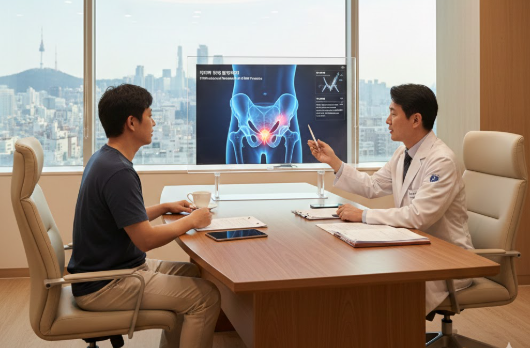
Treatment Overview
Transurethral surgery is a minimally invasive procedure performed through the urethra to treat conditions affecting the bladder, prostate, or urethra without external incisions. Common procedures include transurethral resection of the prostate (TURP), transurethral resection of bladder tumors (TURBT), and laser-assisted interventions. A transurethral surgery consultation in Korea provides detailed evaluation, advanced imaging, and personalized treatment planning.
Korean urology clinics utilize modern endoscopic equipment, laser technology, and high-resolution imaging to ensure precise treatment with minimal complications. Medical tourists benefit from expert consultations, streamlined procedures, and comprehensive follow-up care.
Purpose & Benefits
The main goal of a transurethral surgery consultation is to evaluate urological conditions and determine the most suitable minimally invasive treatment.
Key benefits include:
- Accurate diagnosis and staging of bladder or prostate conditions
- Minimally invasive procedures with no external incisions
- Reduced pain, faster recovery, and shorter hospital stay
- High success rates for conditions like benign prostatic hyperplasia (BPH) or bladder tumors
- Preservation of urinary function
- Comprehensive pre- and post-operative care
- Safe and confidential treatment for international patients
Korean clinics combine precision technology with patient-centered care for optimal outcomes.
Ideal Candidates
Transurethral surgery consultation is recommended for individuals who:
- Have lower urinary tract symptoms (LUTS) due to enlarged prostate
- Suffer from bladder tumors or hematuria (blood in urine)
- Require minimally invasive correction of urethral strictures
- Have not responded to medications for BPH or other urological conditions
- Are seeking expert evaluation as international medical tourists
- Want fast recovery with minimal disruption to daily life
Early consultation improves surgical outcomes and prevents long-term complications.
Possible Risks & Complications
Transurethral procedures are generally safe, but potential risks include:
- Mild bleeding or hematuria post-surgery
- Temporary urinary urgency or frequency
- Infection at the surgical site
- Rare complications: urethral strictures or bladder perforation
- Possible temporary erectile dysfunction (rare in TURP)
Korean hospitals minimize these risks through advanced technology, experienced surgeons, and strict post-operative protocols.
Techniques & Technology Used
Korean urology clinics utilize advanced tools for precise transurethral interventions:
- Endoscopic Visualization: High-resolution cystoscopes for accurate evaluation
- TURP (Transurethral Resection of Prostate): Gold standard for BPH treatment
- TURBT (Transurethral Resection of Bladder Tumors): Removes bladder lesions safely
- Laser-Assisted Surgery: Holmium or GreenLight laser for prostate or urethral treatment
- Electrosurgical Techniques: For precise tissue removal with minimal bleeding
- Urodynamic Testing: Pre-surgical evaluation of bladder function
- Robotic and Computer-Assisted Guidance: For enhanced precision in complex cases
These technologies ensure reduced hospital stay, minimal bleeding, and faster recovery.
Treatment Process in Korea
- Initial Consultation
The urologist reviews medical history, urinary symptoms, lab results, and previous treatments. - Diagnostic Evaluation
Tests may include:
- Urinalysis and urine culture
- Blood tests
- Ultrasound or CT scan of kidneys, bladder, and prostate
- Cystoscopy or urodynamic testing if required
- Diagnosis & Treatment Planning
Based on findings, the doctor recommends the most suitable procedure:
- TURP for enlarged prostate
- TURBT for bladder tumors
- Laser therapy or electrosurgery for precision tissue removal
- Surgical Procedure
- Performed under general or spinal anesthesia
- Minimally invasive approach through the urethra
- Typically 30–90 minutes depending on procedure complexity
- Post-Procedure Monitoring
- Short hospital stay (often 1–2 days)
- Catheter may be temporarily inserted for urinary drainage
- Monitoring for bleeding, infection, and urinary function
- Follow-Up & Rehabilitation
- Follow-up appointments to monitor recovery, urine flow, and bladder function
- Telemedicine options available for international patients
Recovery & After-Care
Recovery depends on procedure type and patient health:
- Short Hospital Stay: Usually 1–2 days
- Urinary Catheter: 1–3 days depending on procedure
- Activity Restriction: Avoid heavy lifting for 1–2 weeks
- Follow-Up Tests: Urine tests and imaging to confirm success
- Lifestyle Adjustments: Hydration, diet modifications, and bladder exercises
Most patients resume normal activities within 1–2 weeks, with complete recovery in 4–6 weeks.
Results & Longevity
Patients undergoing transurethral surgery in Korea can expect:
- Improved urine flow and relief from obstruction
- Effective removal of bladder tumors with low recurrence
- Preservation of urinary and sexual function
- Low complication rates with minimally invasive techniques
- Long-term symptom relief for BPH, urethral strictures, or bladder lesions
Results are optimized with adherence to follow-up care and lifestyle recommendations.
Why Korea Is a Top Destination
Korea is a preferred destination for transurethral surgery because of:
- Highly skilled urologists with experience in minimally invasive surgery
- Advanced endoscopic and laser equipment
- High success rates for prostate and bladder procedures
- Short hospital stays and rapid recovery
- Affordable cost compared to Western countries
- Confidential care for male and female patients
- Efficient support for international medical tourists
These advantages make Korea a global leader in urological care.
Cost Range
Typical costs for transurethral consultation and surgery in Korea:
- Consultation: USD 40–80
- Ultrasound / CT scan: USD 100–300
- Cystoscopy: USD 200–400
- TURP / TURBT procedure: USD 3,000–8,000
- Laser-assisted prostate surgery: USD 4,000–10,000
- Follow-up consultations: USD 30–50 per session
Medical tourists can expect USD 3,500–10,000 depending on procedure type and hospital choice.
Popular Clinics in Korea
Some of the leading hospitals and clinics for transurethral surgery:
- Seoul National University Hospital – Urology Department
- Asan Medical Center – Bladder & Prostate Center
- Samsung Medical Center – Urology and Laser Surgery
- Yonsei Severance Hospital – Minimally Invasive Urology Program
- CHA Bundang Medical Center – Urology Specialty
- HU Urology Clinic (Gangnam)
- Wooridul Hospital – Urology Division
- Himchan Urology Clinic, Seoul
These centers are recognized for precision, high success rates, and comprehensive care for international patients.


