
Treatment Overview
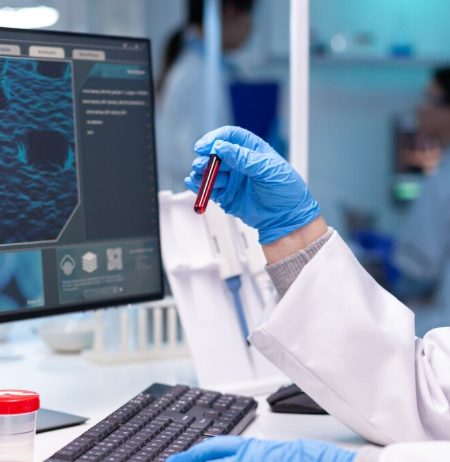
Ultra-Sensitive Hormone Monitoring represents the highest level of precision in reproductive endocrinology. It involves the use of advanced laboratory technologies — such as high-sensitivity immunoassays and mass spectrometry — to measure even minute changes in key reproductive hormones like estradiol, progesterone, LH, FSH, AMH, and thyroid hormones.
In fertility and IVF settings, ultra-sensitive hormone testing allows clinicians to make micro-level adjustments to treatment protocols in real time. By detecting hormonal fluctuations earlier and more accurately than standard assays, fertility specialists can fine-tune stimulation, trigger timing, and luteal support with unprecedented accuracy.
Korean fertility centers have emerged as global leaders in this approach by integrating state-of-the-art hormone labs, AI-supported analysis, and rapid data feedback systems into patient care. This synergy between technology and endocrinology forms the backbone of modern reproductive precision medicine in Korea.
Purpose & Benefits
The goal of ultra-sensitive hormone monitoring is to provide real-time, high-accuracy endocrine data to optimize treatment at every step of the reproductive process.
Key benefits include:
- Higher diagnostic precision: Detects subtle hormone variations that standard tests might miss.
- Early intervention capability: Identifies potential ovulatory or luteal issues before they impact cycle success.
- Improved stimulation control: Allows dose adjustments tailored to follicular growth and hormone feedback.
- Better trigger timing: Ensures the ovulation trigger is given at the optimal hormonal window.
- Enhanced luteal support: Enables fine-tuning of progesterone therapy after embryo transfer.
- Reduced medication waste: Minimizes overstimulation or under-response through accurate hormone readings.
- Higher pregnancy rates: Improved synchronization between hormonal signals, follicular development, and uterine readiness.
Korean clinics use ultra-sensitive hormone assays not only for IVF but also for diagnosing irregular cycles, hormonal imbalance, and early-stage reproductive disorders in women’s health.
Ideal Candidates
Ultra-Sensitive Hormone Monitoring is suitable for a broad range of patients but is particularly beneficial for:
- Women undergoing IVF or ICSI who require tight hormonal control.
- Low responders or older patients, where small hormone changes can impact egg yield and quality.
- PCOS or endocrine disorder patients, whose hormone fluctuations are complex and unpredictable.
- Patients with repeated IVF failures, to identify subtle hormonal asynchronies.
- Women pursuing fertility preservation or egg freezing, where every cycle day matters.
- Patients undergoing mild or progestin-primed stimulation, which requires delicate hormonal balance.
- Individuals with luteal phase defects or recurrent pregnancy loss, where progesterone dynamics are critical.
For these patients, even micro-variations in hormone levels can determine whether a cycle succeeds or fails.
Possible Risks & Challenges
Although ultra-sensitive monitoring offers superior accuracy, it also comes with practical considerations:
- Frequent testing: Multiple blood draws can be mildly uncomfortable and time-consuming.
- Emotional stress: Patients may become anxious over minor fluctuations.
- Cost considerations: High-precision assays are more expensive than standard tests.
- Data overload: Interpreting micro-fluctuations requires experienced clinicians to avoid overreaction.
- Timing sensitivity: Delays in sampling or processing can affect results.
Korean fertility centers manage these challenges with automated lab systems, immediate sample analysis, and streamlined patient scheduling, ensuring both comfort and accuracy.
Techniques & Diagnostic Methods Used
Ultra-Sensitive Hormone Monitoring in Korea combines laboratory excellence with digital integration.
1. Advanced Hormone Assays
- High-sensitivity immunoassays: Detect ultra-low hormone concentrations in real time.
- Liquid chromatography–tandem mass spectrometry (LC-MS/MS): Provides superior specificity for steroid hormones such as estradiol and progesterone.
- Multiplex testing platforms: Analyze multiple hormones from a single sample with minimal error margin.
2. Dynamic Serial Monitoring
- Hormones are tested at multiple time points across the cycle rather than a single static measurement.
- Detects real-time shifts in estradiol, progesterone, and LH to guide medication adjustments.
3. AI-Enhanced Data Interpretation
- Korean centers integrate machine-learning models that analyze patterns and predict ovulatory or luteal trends.
- Algorithms flag deviations that could affect egg maturity or endometrial receptivity.
4. Integrated Imaging & Lab Correlation
- Hormone data is analyzed alongside ultrasound follicle tracking, ensuring each follicle’s growth corresponds to its hormonal environment.
- Endometrial thickness and blood flow patterns are correlated with estradiol and progesterone levels for precise timing.
5. Real-Time Feedback Loop
- Automated systems deliver hormone results to clinicians within hours.
- Dosage changes, trigger scheduling, or additional support are immediately implemented.
Recovery & Aftercare
As ultra-sensitive hormone monitoring is purely diagnostic, there is no physical recovery needed. However, optimal aftercare focuses on patient comfort and follow-through:
- Hydration and nutrition: Recommended after repeated blood draws.
- Counseling sessions: Help patients understand hormone trends and maintain emotional balance.
- Cycle mapping reports: Provided at the end of monitoring, summarizing hormone patterns and recommendations for next steps.
- Adjustments in therapy: Based on analysis, clinicians fine-tune stimulation, luteal support, or supplementation for future cycles.
Korean fertility clinics emphasize patient education, ensuring individuals understand their hormonal profiles and treatment implications clearly.
Results & Effectiveness
Ultra-sensitive hormone monitoring has transformed the precision and predictability of fertility treatments.
Measured outcomes include:
- Higher egg maturity rates: More mature oocytes retrieved at the correct timing.
- Improved embryo quality: Enhanced synchronization between stimulation and oocyte development.
- Reduced cycle cancellations: Early detection of hormone deviations prevents wasted cycles.
- Optimized endometrial receptivity: Luteal adjustments ensure perfect embryo transfer timing.
- Better cumulative pregnancy rates: Over several cycles, data-driven optimization leads to sustained success.
In Korean IVF programs, where hormone monitoring and data analysis are tightly integrated, patients experience increased efficiency, reduced risk, and improved reproductive outcomes.
Treatment Process in Korea
Step 1 – Consultation & Baseline Testing
- Detailed assessment of menstrual cycle, hormone history, and reproductive goals.
- Baseline hormone panel conducted with ultra-sensitive assays.
Step 2 – Dynamic Hormone Tracking
- Serial testing of estradiol, LH, and progesterone during follicular and luteal phases.
- Data fed into digital patient management systems for same-day analysis.
Step 3 – Correlation with Imaging
- Hormone results cross-checked with ultrasound data to evaluate follicular and endometrial development.
Step 4 – Precision Adjustments
- Medication doses and trigger timing adjusted according to hormonal data.
- If levels deviate, corrective interventions (dose modulation, added support) are applied instantly.
Step 5 – Post-Cycle Review
- Comprehensive report of hormone dynamics prepared for patient review.
- Personalized fertility strategy outlined based on results and cycle response.
Why Korea Leads in Ultra-Sensitive Hormone Monitoring
- State-of-the-art laboratories: Equipped with high-accuracy mass spectrometry and automated analyzers.
- Rapid results: Many Korean centers deliver same-day hormone feedback for immediate protocol decisions.
- Integrated digital systems: AI platforms linking lab, imaging, and patient data for total endocrine visualization.
- Expert endocrinologists: Clinicians with advanced training in reproductive hormone physiology.
- Focus on personalization: Each cycle monitored as a unique hormonal fingerprint rather than a generic protocol.
- High patient satisfaction: Due to comfort, transparency, and measurable success rates.
This precision-based approach is one of the hallmarks of Korean reproductive medicine, aligning science, technology, and patient-centered care.
Cost Range
The cost of ultra-sensitive hormone monitoring depends on the number of hormones tested, sampling frequency, and technology used. In Korean fertility centers, approximate ranges include:
- Basic high-precision hormone panel: USD 200 – 400
- Comprehensive cycle mapping with serial assays: USD 400 – 800
- Integrated monitoring with IVF stimulation: Often included in IVF packages ranging from USD 4,000 – 7,000
While the individual tests are more advanced than standard assays, their ability to prevent failed cycles and optimize outcomes makes them cost-effective in the long run.
Popular Clinics in Korea
- CHA Fertility Center: Pioneers in AI-supported hormone diagnostics and individualized IVF.
- Maria Fertility Hospital: Offers dynamic hormone mapping integrated with stimulation cycles.
- MizMedi Women’s Hospital: Specializes in precise endocrine monitoring and reproductive endocrinology.
- Hamchoon Women’s Clinic: Renowned for advanced hormone evaluation and fertility analytics.
- Seoul Women’s Hospital: Provides international-standard fertility care with rapid hormone testing.


