
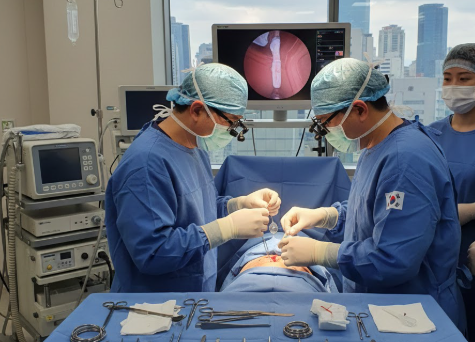
Treatment Overview
Ultrasound-Guided Epididymal Cyst Removal in Korea is a minimally invasive procedure designed to excise cysts in the epididymis using real-time ultrasound imaging. The epididymis is the coiled tube located behind the testicle responsible for storing and transporting sperm. Ultrasound guidance allows precise localization of the cyst, ensuring safe and effective removal while preserving epididymal and testicular function.
This technique is particularly beneficial for international patients seeking minimally invasive, accurate, and safe treatment. Korean urologists combine advanced imaging, microsurgical skills, and modern hospital facilities to provide high-quality care.
Purpose & Benefits
The primary purpose of ultrasound-guided epididymal cyst removal is to achieve precise excision while minimizing trauma.
Key benefits include:
- Accurate cyst localization and complete removal
- Minimal scrotal tissue disruption
- Reduced postoperative pain and swelling
- Preservation of epididymal and testicular function
- Lower risk of recurrence
- Faster recovery compared to traditional surgery
- Minimally invasive approach with small incisions
- Improved cosmetic results with minimal scarring
- Enhanced comfort during daily and sexual activities
Korean clinics prioritize precision, functional preservation, and patient satisfaction.
Ideal Candidates
Ultrasound-guided epididymal cyst removal in Korea is suitable for men who:
- Have symptomatic epididymal cysts causing discomfort, heaviness, or swelling
- Prefer minimally invasive surgical approaches
- Require fertility-preserving surgery
- Are international patients seeking high-quality urological care
- Desire precise cyst removal with minimal risk of recurrence
- Have cysts that are difficult to locate manually
Preoperative assessment typically includes scrotal ultrasound, physical examination, and semen analysis if fertility preservation is a concern.
Possible Risks & Complications
While generally safe, potential risks include:
- Mild swelling, bruising, or tenderness at the surgical site
- Rare infection (minimized by Korea’s strict hygiene protocols)
- Scar formation or adhesion
- Rare recurrence if cyst excision is incomplete
- Rare injury to the testicle or spermatic cord
- Temporary numbness or altered sensation
- Anesthesia-related complications (extremely rare)
Ultrasound guidance and microsurgical techniques significantly reduce these risks, ensuring safe outcomes.
Techniques & Technology Used
Korean hospitals utilize advanced techniques for ultrasound-guided epididymal cyst removal:
Ultrasound Imaging Guidance
Real-time high-resolution imaging allows precise localization of the cyst and guides safe excision.
Microsurgical Excision
Magnification and delicate instruments ensure complete cyst removal while preserving epididymal ducts.
Minimally Invasive Incisions
Small, precise incisions reduce tissue trauma, postoperative pain, and recovery time.
Spermatic and Epididymal Preservation
Careful dissection ensures fertility preservation and normal epididymal function.
Histopathological Analysis
Excised tissue is analyzed to confirm benign nature and rule out malignancy.
These advanced techniques provide accuracy, safety, and optimal long-term results.
Treatment Process in Korea
The treatment process for ultrasound-guided epididymal cyst removal is designed for patient convenience and safety:
Consultation & Evaluation
A urologist reviews symptoms, performs physical examination, and analyzes imaging results.
Preoperative Preparation
Routine blood tests, anesthesia assessment, and preoperative instructions are provided.
Surgical Procedure
Under local or general anesthesia, ultrasound guides the microsurgical removal of the cyst. The procedure typically lasts 30–60 minutes depending on cyst size.
Postoperative Observation
Patients are monitored for swelling, bleeding, or infection and usually return home the same day or after a short hospital stay.
Follow-Up
Follow-up appointments assess wound healing, symptom relief, and fertility preservation. Telemedicine follow-ups are available for international patients.
Recovery & After-Care
Recovery after ultrasound-guided epididymal cyst removal is generally quick and smooth.
Recommended after-care includes:
- Wearing supportive underwear to reduce swelling and protect the scrotum
- Keeping the surgical site clean and dry
- Taking prescribed medications for pain or inflammation
- Avoiding heavy lifting, strenuous activity, and sexual activity for 1–2 weeks
- Monitoring for signs of infection, bleeding, or recurrence
Most patients can resume light activities within 2–3 days, with full recovery and functional assessment in 2–4 weeks.
Results & Longevity
Ultrasound-guided epididymal cyst removal in Korea provides safe, effective, and long-lasting outcomes.
Expected results include:
- Complete cyst removal with minimal tissue disruption
- Preservation of epididymal and testicular function
- Minimal visible scarring due to minimally invasive technique
- Low recurrence rates when performed by skilled specialists
- Improved daily comfort and quality of life
- Maintained sexual and reproductive function
Korean hospitals combine precise imaging, microsurgical skills, and patient-centered care for optimal and durable results.
Why Korea Is a Top Destination
Korea is a preferred destination for ultrasound-guided epididymal cyst removal due to:
- Highly skilled urologists specializing in microsurgery and male reproductive health
- Advanced imaging and minimally invasive surgical technology
- Low complication and recurrence rates
- Comprehensive international patient services including translators, transport, and coordinators
- Affordable, high-quality care compared to Western countries
- Fast scheduling and outpatient-friendly procedures
- Thorough postoperative follow-up and fertility preservation support
Medical tourists choose Korea for precise, safe, and fertility-preserving treatment of epididymal cysts.
Cost Range
The cost of ultrasound-guided epididymal cyst removal in Korea varies depending on complexity:
- Standard procedure: $3,500 – $5,500
- Complex or high-precision microsurgical cases: $5,500 – $8,000
Costs typically include consultation, imaging, anesthesia, surgery, medications, and follow-up care. Many hospitals provide medical tourism packages including accommodation and airport transfers.
Popular Clinics in Korea
Some of the top hospitals and clinics for ultrasound-guided epididymal cyst removal include:
- Seoul National University Hospital – Urology & Male Fertility Center
- Asan Medical Center – Male Reproductive & Urology Division
- Samsung Medical Center – Microsurgery & Andrology Clinic
- Severance Hospital (Yonsei University) – Urology & Andrology Center
- Wooridul Urology Clinic
- Hana Urology Clinic (Seoul)
- Korea University Hospital – Male Fertility & Urology Center
These facilities are known for advanced microsurgical care, precise ultrasound guidance, fertility preservation, and comprehensive support for international patients.


