
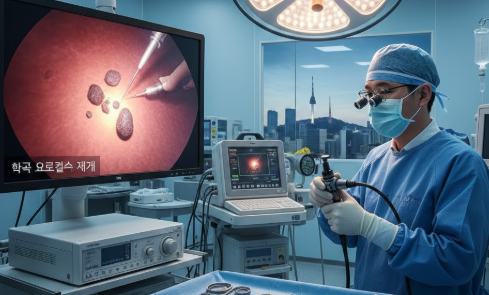
Treatment Overview
Ureteral Stone Removal is a minimally invasive procedure designed to remove stones located in the ureter, the tube connecting the kidney to the bladder. Stones in the ureter can cause severe pain, urinary obstruction, infections, and potential kidney damage if left untreated.
Korean hospitals are internationally recognized for advanced endourology technology, highly skilled urologists, and excellent success rates, making Korea a preferred destination for patients seeking safe and effective ureteral stone treatment.
Purpose & Benefits
The primary purpose of ureteral stone removal is to eliminate stones, relieve obstruction, and restore normal urine flow.
Key benefits include:
- Minimally invasive procedure using ureteroscopy or laser lithotripsy
- Rapid relief from severe pain and urinary obstruction
- High success rate for stones of various sizes and locations
- Short hospital stay and quick recovery
- Reduced risk of complications compared to open surgery
- Prevention of kidney damage and recurrent infections
Korean urology centers focus on precision, patient safety, and optimal stone clearance during ureteral stone removal procedures.
Ideal Candidates
Ureteral stone removal is suitable for patients who:
- Have stones in the ureter causing pain, obstruction, or recurrent infections
- Cannot pass stones naturally or require urgent relief
- Prefer minimally invasive treatment with rapid recovery
- Are in good overall health and fit for anesthesia
- Require highly precise stone removal using modern technology
Korean hospitals provide personalized evaluation and treatment plans for both domestic and international patients.
Possible Risks & Complications
Although ureteral stone removal is generally safe, potential risks include:
- Mild bleeding or hematuria (blood in urine)
- Urinary tract infection
- Ureteral injury or perforation (rare)
- Pain or discomfort during urination
- Residual stone fragments requiring additional treatment
- Anesthesia-related complications
Korean hospitals minimize risks using advanced endoscopic instruments, laser lithotripsy, and precise imaging guidance.
Techniques & Technology Used
Korean hospitals employ state-of-the-art ureteral stone removal techniques:
- Flexible Ureteroscopy (fURS): Accesses stones throughout the ureter and kidney
- Rigid Ureteroscopy (URS): Ideal for lower ureter stones
- Laser Lithotripsy: Efficiently fragments stones for removal
- Stone Retrieval Devices: Baskets and forceps for extracting fragments
- High-Resolution Imaging (Fluoroscopy, Ultrasound): Guides precise stone targeting
- Temporary Ureteral Stents: Facilitate urine flow and prevent obstruction after surgery
- Postoperative Monitoring Systems: Detect early complications for patient safety
These technologies ensure high success rates, minimal invasiveness, and rapid recovery.
Treatment Process in Korea
International patients experience a structured ureteral stone removal pathway:
1. Consultation and Evaluation
Urologists assess stone size, location, and urinary function using imaging studies and lab tests.
2. Preoperative Preparation
Patients receive fasting instructions, hydration guidance, and medication management. Hospitals provide translation support and admission assistance.
3. Surgical Procedure
- Performed under general or spinal anesthesia
- Flexible or rigid ureteroscope is inserted through the urethra into the ureter
- Stones are visualized, fragmented using laser lithotripsy, and extracted
- Temporary stents may be placed to facilitate urine drainage
4. Postoperative Monitoring
Patients are monitored for bleeding, infection, or discomfort. Hospital stay typically ranges from 1–2 days.
5. Follow-Up Care
Follow-up imaging ensures complete stone removal. Stents are removed after 1–2 weeks. Patients receive guidance on hydration, diet, and lifestyle to prevent recurrence. Telemedicine support is available for international patients.
Recovery & After-Care
Recovery after ureteral stone removal is generally quick:
- Mild discomfort or burning sensation during urination for a few days
- Temporary hematuria is common
- Avoid strenuous activity for 1–2 weeks
- Maintain adequate hydration to flush residual fragments
- Follow dietary and medication guidance to prevent stone recurrence
- Attend follow-up appointments for imaging and stent removal
Korean hospitals provide detailed discharge instructions and remote support for international patients.
Results & Longevity
Ureteral stone removal provides effective and long-lasting results:
- Immediate relief from pain and urinary obstruction
- High success rate for complete stone removal
- Minimally invasive with rapid recovery
- Short hospital stay and quick return to daily activities
- Long-term urinary tract health and prevention of kidney damage
- Reduced risk of recurrent stones with preventive care
Korean urologists ensure high patient satisfaction and durable outcomes.
Why Korea Is a Top Destination
Korea is a leading destination for ureteral stone removal due to:
- Highly skilled urologists specializing in endourology and laser lithotripsy
- Advanced flexible and rigid ureteroscopes with real-time imaging
- State-of-the-art hospitals with strict infection control
- Short hospital stays and convenient outpatient procedures
- Multilingual support for international medical tourists
- Competitive and transparent cost structures
- Comprehensive pre- and post-operative care, including telemedicine follow-up
These factors make Korea ideal for safe, efficient, and high-quality ureteral stone removal procedures.
Cost Range
Estimated costs for ureteral stone removal in Korea:
- Consultation and imaging: USD 100–250
- Procedure (ureteroscopy with laser lithotripsy): USD 3,000–6,500
- Hospital stay (1–2 days): USD 200–500
- Postoperative care and medications: USD 100–200
- Total estimated package: USD 3,400–7,450
Costs may vary depending on stone size, procedure complexity, hospital, and additional services. Coordinated international patient packages are available.
Popular Clinics in Korea
Top hospitals and clinics providing ureteral stone removal include:
- Seoul National University Hospital – Urology Department
- Asan Medical Center – Advanced Endourology Unit
- Samsung Medical Center – Urology & Stone Management
- Severance Hospital – Urology and Minimally Invasive Surgery
- Korea University Hospital – Endourology and Laser Lithotripsy
- Bundang CHA Medical Center – Urology & Stone Clinic
These centers are known for expert surgeons, advanced technology, and comprehensive patient care, making them ideal for international medical tourists.


