
Treatment Overview
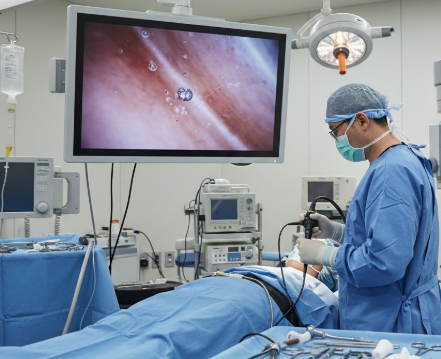
Ureteroscopy Stone Removal in Korea is a minimally invasive procedure for removing stones located in the ureter or kidney. Using a thin, flexible ureteroscope, urologists can visualize, fragment, and extract stones safely and precisely, minimizing tissue trauma.
Korean hospitals are internationally recognized for advanced endourology techniques, experienced urologists, and cutting-edge equipment, making Korea a top destination for patients seeking safe and effective ureteroscopy stone removal.
Purpose & Benefits
The main purpose of ureteroscopy stone removal is to eliminate obstructive stones, relieve pain, prevent infection, and preserve kidney function.
Key benefits include:
- Rapid relief from ureteral and kidney stone-related pain
- Minimally invasive procedure with high success rates
- Reduced risk of complications such as infection or kidney damage
- Short hospital stay and faster recovery compared to open surgery
- Precision stone removal with laser fragmentation and retrieval tools
- Preparation for long-term prevention and follow-up
Korean hospitals combine expert surgical skills with advanced technology to ensure optimal outcomes.
Ideal Candidates
Ureteroscopy stone removal is suitable for patients who:
- Have stones lodged in the ureter or kidney causing obstruction or pain
- Experience recurrent urinary tract infections due to stones
- Cannot pass stones naturally
- Require rapid, minimally invasive intervention
- Seek high success rates with minimal complications
Korean hospitals provide personalized evaluation and treatment plans for both domestic and international patients.
Possible Risks & Complications
Although ureteroscopy is generally safe, potential risks include:
- Temporary hematuria (blood in urine)
- Urinary tract infection
- Injury to the ureter or kidney tissue (rare)
- Residual stone fragments requiring additional procedures
- Discomfort or mild pain during urination after surgery
- Anesthesia-related complications
Korean hospitals minimize risks through expert surgical technique, high-resolution imaging, and thorough postoperative care.
Techniques & Technology Used
Korean hospitals employ advanced technologies for ureteroscopy stone removal:
- Flexible and Rigid Ureteroscopy: Endoscopic access to locate and remove stones
- Laser Lithotripsy (Holmium or Thulium): Fragment stones into small pieces for easy removal
- Stone Retrieval Baskets and Forceps: Ensure complete stone extraction
- Ureteral Stenting: Temporary stent to maintain urine flow and prevent obstruction
- Imaging Guidance (CT, Ultrasound, Fluoroscopy): Accurate stone localization during surgery
- Minimally Invasive Approach: Reduces tissue trauma and shortens recovery time
- Pain Management and Postoperative Care: Ensures patient comfort and safety
These technologies ensure high stone clearance rates with minimal invasiveness.
Treatment Process in Korea
International patients can access a structured ureteroscopy procedure:
1. Initial Consultation and Assessment
- Review of medical history, symptoms, and previous stone events
- Imaging and lab tests to evaluate stone size, location, and kidney function
2. Preoperative Preparation
- Fasting, hydration, and preoperative medications as required
- Multilingual support for international patients
3. Surgical Procedure
- Performed under general or regional anesthesia
- Flexible or rigid ureteroscope is used to locate and remove stones
- Laser lithotripsy may be performed to fragment larger stones
- Temporary ureteral stent placement may be used to maintain urine flow
4. Postoperative Monitoring
- Patients are monitored for bleeding, infection, and urine output
- Hospital stay typically ranges from a few hours (day surgery) to 1–2 days
5. Follow-Up Care
- Imaging confirms complete stone removal
- Guidance on hydration, diet, and lifestyle to prevent recurrence
- Stent removal (if used) and telemedicine support for international patients
Recovery & After-Care
Recovery after ureteroscopy stone removal is generally smooth:
- Mild discomfort or hematuria may persist for a few days
- Avoid heavy lifting or strenuous activity for 1–2 weeks
- Maintain high fluid intake to flush out residual stone fragments
- Follow dietary and medication guidance to prevent recurrence
- Attend follow-up appointments for stent removal and imaging
Korean hospitals provide comprehensive discharge instructions and remote support for international patients.
Results & Longevity
Ureteroscopy stone removal provides effective and long-term outcomes:
- Rapid relief from pain and obstruction
- High success rates in stone removal
- Minimally invasive procedure with reduced recovery time
- Preservation of kidney function and urinary health
- Long-term prevention of recurrent stones through follow-up care
Korean urologists ensure durable results and high patient satisfaction.
Why Korea Is a Top Destination
Korea is a leading destination for ureteroscopy stone removal due to:
- Highly skilled urologists specializing in flexible and rigid ureteroscopy
- Advanced laser, endoscopic, and imaging technologies
- State-of-the-art hospitals with rapid intervention and emergency care
- Short hospital stays and quick recovery protocols
- Multilingual support for international patients
- Competitive and transparent cost structures
- Comprehensive pre- and post-operative care, including telemedicine follow-up
These factors make Korea ideal for safe, precise, and high-quality ureteroscopy stone removal.
Cost Range
Estimated costs for ureteroscopy stone removal in Korea:
- Consultation and imaging: USD 150–400
- Ureteroscopy with laser lithotripsy: USD 3,000–6,500
- Hospital stay (1–2 days): USD 200–800
- Postoperative care and medications: USD 100–300
- Total estimated package: USD 3,450–7,500
Costs may vary depending on stone size, hospital, and additional services. International patient packages are available.
Popular Clinics in Korea
Top hospitals providing ureteroscopy stone removal include:
- Seoul National University Hospital – Urology & Endourology Department
- Asan Medical Center – Minimally Invasive Stone Surgery Unit
- Samsung Medical Center – Urology & Endourology Clinic
- Severance Hospital – Endourology and Stone Management Program
- Korea University Hospital – Flexible RIRS & Ureteroscopy Unit
- Bundang CHA Medical Center – Urology & Stone Removal Clinic
These centers are known for expert surgeons, advanced technology, and comprehensive care, making them ideal for international medical tourists.


