
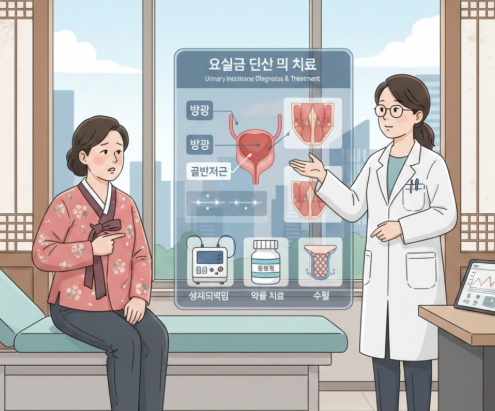
Treatment Overview
Urinary incontinence is the involuntary loss of urine, a condition affecting millions of men and women worldwide. It can occur due to weakened pelvic floor muscles, nerve damage, hormonal changes, childbirth, aging, or underlying medical conditions. In Korea, urinary incontinence is diagnosed and treated with world-class medical standards, advanced technology, and highly experienced urology specialists. Korean hospitals offer comprehensive evaluation systems that allow fast, accurate diagnosis and effective personalized treatment for both local and international patients. With a focus on comfort, efficiency, and long-term outcomes, Korea has become one of the top global destinations for urinary incontinence care.
Purpose & Benefits
The purpose of urinary incontinence treatment is to identify the specific cause of leakage and restore control over bladder function. Treatment helps patients regain confidence, improve mobility, and maintain a higher quality of life. The benefits of receiving treatment in Korea include:
- Accurate diagnosis using advanced imaging and functional studies
- Access to minimally invasive procedures
- Highly trained urologists and pelvic health specialists
- Customized treatment plans
- Quick appointments and short waiting times
- Supportive services for international patients
These advantages make Korea an excellent choice for patients seeking effective and long-lasting relief.
Ideal Candidates
Ideal candidates for urinary incontinence diagnosis and treatment include:
- Individuals experiencing frequent urine leakage
- Patients with stress incontinence (leakage from coughing, sneezing, or lifting)
- Patients with urge incontinence (sudden urge followed by leakage)
- Those with mixed incontinence
- People with neurogenic bladder conditions
- Postpartum women
- Men after prostate surgery
- Adults with chronic illnesses such as diabetes or neurological disorders
Anyone whose lifestyle, confidence, sleep, or mobility is affected by urinary leakage can benefit from evaluation and treatment in Korea.
Possible Risks & Complications
While most urinary incontinence treatments are safe, some risks may occur depending on the method used:
- Mild discomfort during diagnostic testing
- Temporary urinary urgency after certain procedures
- Minor bleeding or infection after minimally invasive interventions
- Allergic reaction or side effects from medications
- Rare complications such as mesh-related discomfort in sling surgeries
Korean hospitals follow strict safety protocols and international standards to minimize these risks. Patients receive detailed counseling before undergoing any test or treatment.
Techniques & Technology Used
Korea is known for adopting the latest medical technology to diagnose and treat urinary incontinence with precision. Common diagnostic tools include:
- Urodynamic studies to measure bladder pressure and flow
- Cystoscopy to examine the urethra and bladder
- Pelvic ultrasound imaging
- Urinalysis and culture
- Electromyography (EMG) for nerve evaluation
- Bladder diaries and behavioral assessments
For treatment, Korean clinics offer a wide range of advanced options:
- Pelvic floor rehabilitation and biofeedback
- Physical therapy guided by pelvic health specialists
- Medications for overactive bladder
- Botox injections for severe urge incontinence
- Percutaneous tibial nerve stimulation (PTNS)
- Sacral nerve modulation
- Urethral bulking agents
- Minimally invasive mid-urethral sling surgery
- Laser therapy for pelvic floor tightening (in some women’s clinics)
These techniques allow patients to receive treatment that matches both their condition and lifestyle needs.
Treatment Process in Korea
The treatment process is streamlined and patient-friendly, especially for medical tourists:
- Initial Consultation – Review of medical history, symptoms, and health conditions.
- Comprehensive Testing – Urodynamic tests, imaging, and lab work are performed for accurate diagnosis.
- Customized Plan – Specialists explain treatment options based on test results and patient goals.
- Step-by-Step Treatment – Starting with conservative approaches such as physical therapy or medication.
- Advanced or Minimally Invasive Procedures – Performed if initial treatments are not sufficient.
- Monitoring & Follow-Up – Regular appointments ensure treatment effectiveness and long-term improvement.
- International Patient Care – Translation support, scheduling assistance, and post-treatment guidance are provided.
Korea’s efficient healthcare system ensures minimal waiting times and smooth coordination for foreign patients.
Recovery & After-Care
Recovery varies depending on the treatment approach. Non-invasive therapies like pelvic floor exercises or medications require no downtime. Botox injections and nerve stimulation therapy also allow immediate return to normal activities.
For minimally invasive procedures, patients generally recover within 1–2 weeks. Korean clinics provide detailed after-care instructions such as:
- Avoiding heavy lifting
- Maintaining proper hydration
- Practicing bladder training techniques
- Continuing pelvic floor exercises
- Taking prescribed medications
- Attending follow-up appointments
Long-term lifestyle guidance is also shared to support continued bladder health.
Results & Longevity
Most patients see significant improvement after completing their personalized treatment plan. Results depend on the treatment type:
- Pelvic floor therapy provides steady improvement with ongoing practice
- Medications offer relief as long as they are taken
- Botox injections last 6–12 months
- Nerve stimulation therapy results improve over several sessions
- Sling surgeries offer durable results lasting 5–10 years or more
Korean clinics track patient progress closely, ensuring that results are stable and long-lasting.
Why Korea Is a Top Destination
South Korea has earned global recognition for excellence in urology and pelvic health care. Reasons medical tourists choose Korea include:
- Advanced diagnostic equipment
- Skilled urologists with global training
- Clean, modern facilities
- Affordable treatment packages
- Support for international patients
- High success rates with minimally invasive procedures
- Fast and efficient healthcare services
Korea’s focus on precision, patient comfort, and innovation makes it one of the best places worldwide for urinary incontinence treatment.
Cost Range
Costs vary according to the severity of the condition and required procedures:
- Basic diagnostics: USD 100–400
- Medications & rehabilitation: USD 50–250
- Botox for OAB: USD 500–900
- PTNS nerve therapy: USD 800–1,500
- Urethral bulking injections: USD 1,000–2,500
- Sling surgery: USD 3,000–7,000
Compared to Western countries, Korea offers competitive prices with higher technological standards and premium patient care.
Popular Clinics in Korea
Some of the most reputable hospitals and clinics for urinary incontinence diagnosis and treatment include:
- Seoul National University Hospital (SNUH)
- Samsung Medical Center
- Asan Medical Center
- Severance Hospital (Yonsei University Health System)
- CHA Women’s Hospital
- Wooridul Hospital
- Gangnam-based urology and women’s health clinics specializing in pelvic floor care
These clinics provide reliable, safe, and effective treatment options for international patients seeking quality care in Korea.


