
Treatment Overview
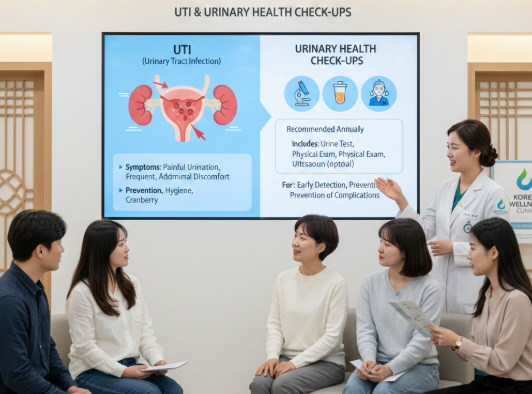
Routine urinary health check-ups are essential for preventing and managing urinary tract infections (UTIs). Korea is renowned for its comprehensive UTI and urinary health screening programs, which combine modern diagnostics, preventive care, and expert medical guidance. These check-ups allow early detection of infections, structural abnormalities, and risk factors, minimizing the chances of recurrent or complicated UTIs.
Korean hospitals provide personalized screening plans that include laboratory tests, imaging studies, and lifestyle assessments to ensure complete urinary tract health. International patients benefit from efficient services, English-speaking staff, and rapid results.
Purpose & Benefits
The primary purpose of urinary health check-ups is to monitor urinary tract function, detect infections early, and prevent long-term complications.
Benefits of UTI and urinary health check-ups in Korea include:
- Early detection of asymptomatic UTIs or recurrent infections
- Identification of kidney stones, blockages, or anatomical issues
- Comprehensive evaluation of bladder and kidney function
- Preventive advice to reduce UTI recurrence
- Reduced risk of kidney damage and chronic urinary problems
- Personalized guidance on hydration, diet, and lifestyle
- Access to advanced diagnostic technology for accurate assessment
Ideal Candidates
Urinary health check-ups in Korea are suitable for a wide range of individuals, including:
- People with a history of recurrent UTIs
- Women prone to bladder infections
- Men with urinary retention or prostate enlargement
- Seniors or individuals with chronic health conditions like diabetes
- Patients with kidney stones or structural urinary abnormalities
- Pregnant women requiring preventive care
- International travelers seeking preventive health screenings
- Anyone seeking comprehensive urinary tract evaluation
Possible Risks & Complications
Routine urinary health check-ups are generally safe, non-invasive, and risk-free. Potential minor risks may include:
- Mild discomfort during urine sample collection
- Temporary bladder irritation during imaging or cystoscopy
- Allergic reaction to contrast dye in rare cases during CT scans
Korean hospitals follow strict safety protocols to ensure patient comfort and safety during all diagnostic procedures.
Techniques & Technology Used
Korean hospitals utilize advanced technology for accurate urinary health evaluation and UTI detection.
Diagnostic tools include:
- Urinalysis for detecting bacteria, white blood cells, and hematuria
- Urine culture and PCR testing for identifying specific bacteria and antibiotic sensitivity
- Blood tests to evaluate kidney function and infection markers
- Ultrasound to detect kidney stones, blockages, or swelling
- CT scan for detailed imaging of the urinary tract
- Cystoscopy for chronic or recurrent cases to examine the bladder lining
- Urodynamic testing for functional assessment of bladder and urethra
Preventive and Supportive Tools:
- Hydration guidance and lifestyle counseling
- Dietary recommendations to prevent stone formation and bladder irritation
- Pelvic floor exercises and bladder training programs
- Probiotics and supplements to support urinary tract health
Treatment Process in Korea
UTI and urinary health check-ups in Korea follow a structured, patient-friendly process:
- Initial Consultation & Medical History – A urologist evaluates the patient’s past urinary problems, lifestyle, and risk factors.
- Sample Collection – Urine and blood samples are collected for analysis.
- Diagnostic Testing – Tests include urinalysis, urine culture, PCR testing, and imaging studies such as ultrasound or CT scan.
- Specialized Assessments – Cystoscopy or urodynamic testing is performed if recurrent or complicated infections are suspected.
- Results Review & Guidance – Doctors explain findings and provide personalized recommendations for treatment, preventive strategies, or further evaluation.
- Follow-Up Planning – Patients receive a schedule for periodic check-ups or monitoring, especially for recurrent UTI cases.
Recovery & After-Care
Since most urinary health check-ups are non-invasive, patients can resume normal activities immediately.
After-care includes:
- Following doctor’s recommendations for preventive measures
- Maintaining proper hydration and urinary hygiene
- Implementing dietary or lifestyle adjustments
- Taking prescribed supplements or probiotics if recommended
- Scheduling follow-up check-ups to monitor urinary tract health
- Reporting any symptoms of infection early for prompt treatment
Results & Longevity
Regular urinary health check-ups in Korea provide long-term benefits, including:
- Early detection and treatment of UTIs before they worsen
- Prevention of recurrent infections and kidney complications
- Improved overall urinary tract function and health
- Long-term guidance on lifestyle changes to support bladder and kidney health
- Reduced healthcare costs by avoiding severe or chronic urinary conditions
Why Korea Is a Top Destination
Korea is recognized globally for its excellence in urinary health and UTI management due to:
- Advanced diagnostic technology with fast, accurate results
- Highly trained urologists and infection specialists
- Comprehensive preventive and monitoring programs
- Multilingual services and international patient support
- Affordable healthcare with transparent pricing
- Efficient hospital systems ensuring minimal waiting times
- Proven track record in managing recurrent or complicated urinary conditions
Cost Range
The cost of a UTI and urinary health check-up in Korea varies based on tests performed:
- Consultation: $20–$50
- Urinalysis & urine culture: $20–$50
- PCR bacterial testing: $30–$90
- Blood tests: $20–$60
- Ultrasound: $40–$80
- CT scan: $120–$250
- Cystoscopy (if needed): $150–$250
- Urodynamic testing (if needed): $150–$300
Estimated total: $100–$400 depending on the complexity of testing and patient needs.
Popular Clinics in Korea
- Seoul National University Hospital – Urology & Preventive Care
- Samsung Medical Center – Urinary Health Screening Program
- Asan Medical Center – Urology & Infection Prevention
- Yonsei Severance Hospital – International Urology Services
- Wooridul Urology Clinic – Preventive UTI & Urinary Health
- Bumin Hospital – Recurrent UTI & Urinary Health Management
These clinics are internationally recognized for their advanced diagnostics, preventive care, and patient-centered services.


