
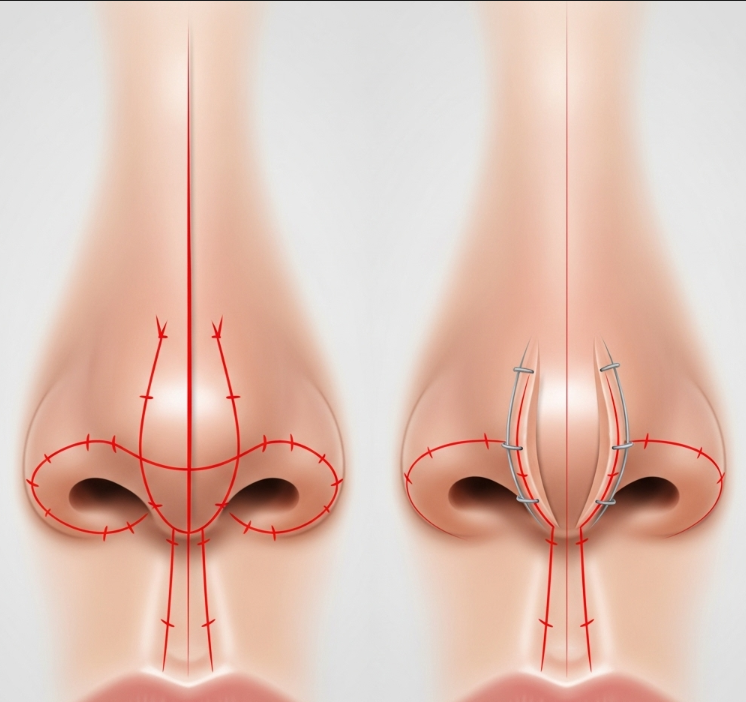
Treatment Overview
Nasal valve reconstruction is a specialized functional rhinoplasty procedure that corrects nasal valve collapse, one of the most common causes of chronic nasal obstruction and breathing difficulties. The nasal valve is the narrowest part of the nasal airway, and when weakened or collapsed, it restricts airflow, leading to congestion, mouth breathing, snoring, and even sleep disturbances.
In Korea, expert ENT surgeons and plastic surgeons use advanced surgical techniques such as spreader grafts, batten grafts, and suture suspension methods to reconstruct and strengthen the nasal valve area. This procedure not only restores natural breathing but also helps maintain nasal aesthetics, making it a crucial element of functional rhinoplasty.
Purpose & Benefits
- Corrects nasal valve collapse to restore unobstructed airflow
- Improves breathing function during rest, exercise, and sleep
- Reduces snoring and sleep-related breathing issues
- Prevents chronic sinus problems linked to poor airflow
- Enhances overall quality of life by improving oxygen intake
- Often combined with aesthetic rhinoplasty for balanced results
Ideal Candidates
- Patients with nasal obstruction not relieved by medication
- Individuals experiencing valve collapse after trauma or previous rhinoplasty
- Those with congenital weakness of nasal structures causing functional issues
- People with sleep apnea, snoring, or mouth breathing related to airflow restriction
- Patients seeking a combined functional and cosmetic nasal correction
Possible Risks & Complications
Though safe in Korea when performed by skilled surgeons, some risks may include:
- Temporary swelling, bruising, or mild bleeding
- Asymmetry or irregular contour if grafting shifts (rare)
- Scar tissue formation inside the nose
- Infection (very rare with proper aftercare)
- In some cases, revision surgery may be required for optimal long-term results
Surgical Techniques Used
Korean surgeons tailor the surgical approach depending on the cause and severity of nasal valve collapse:
- Spreader Grafts – Cartilage grafts placed between the septum and upper lateral cartilages to widen the internal valve angle
- Batten Grafts – Reinforcing grafts added to the sidewall to prevent external valve collapse
- Alar Rim Grafts – Supportive grafts placed along the nostril edge to strengthen airway structure
- Suture Suspension Techniques – Lifting and securing weak cartilage with precise sutures
- Combination with Septoplasty or Aesthetic Rhinoplasty – For comprehensive correction of both function and appearance
Recovery & Aftercare
- Downtime: 7–10 days, with swelling and bruising gradually improving
- Splint/cast: May be applied for 5–7 days for stabilization
- Return to work: Usually within 1–2 weeks depending on complexity
- Breathing improvement: Noticeable within 2–4 weeks as swelling decreases
- Full healing: 3–6 months for final functional and aesthetic results
- Aftercare: Saline rinses, avoiding strenuous exercise for 2–3 weeks, protecting the nose from trauma
Results & Longevity
- Significant and permanent improvement in nasal breathing
- Reduced snoring and improved sleep quality
- Long-lasting support of nasal structure with grafts
- Balanced, natural appearance when combined with cosmetic rhinoplasty
- Results typically last a lifetime, provided proper healing and care
Treatment Process in Korea
- Consultation & Diagnostics – Nasal endoscopy, breathing tests, and 3D imaging used to assess valve function.
- Surgical Planning – Customized plan including graft selection (septal, ear, or rib cartilage).
- Surgery (1.5–3 hours) – Performed under general anesthesia, often combined with septoplasty or cosmetic rhinoplasty.
- Initial Recovery (1–2 weeks) – Swelling, congestion, and splint protection.
- Follow-Up Care – Cast/splint removed after 5–7 days, breathing checked.
- Final Healing (3–6 months) – Stable, natural results for both function and appearance.
Cost Range in Korea
The price varies based on complexity, graft type, and whether combined with aesthetic rhinoplasty:
- Standalone Valve Reconstruction:
₩4,500,000 – ₩7,000,000 KRW ($3,400 – $5,300 USD) - Valve Repair + Septoplasty:
₩6,000,000 – ₩9,000,000 KRW ($4,500 – $6,800 USD) - Valve Reconstruction + Functional & Aesthetic Rhinoplasty:
₩9,000,000 – ₩14,000,000 KRW ($6,800 – $10,500 USD)
Popular Clinics in Korea for Valve Reconstruction
- Seoul National University Hospital (ENT Division) – Known for advanced functional rhinoplasty procedures
- Asan Medical Center – Leading hospital for complex nasal airway surgeries
- ID Hospital – Specializes in combined cosmetic and functional rhinoplasty
- Banobagi Plastic Surgery – Offers advanced cartilage grafting techniques for valve repair
- JW Plastic Surgery – Experienced in revision rhinoplasty and functional reconstruction


