
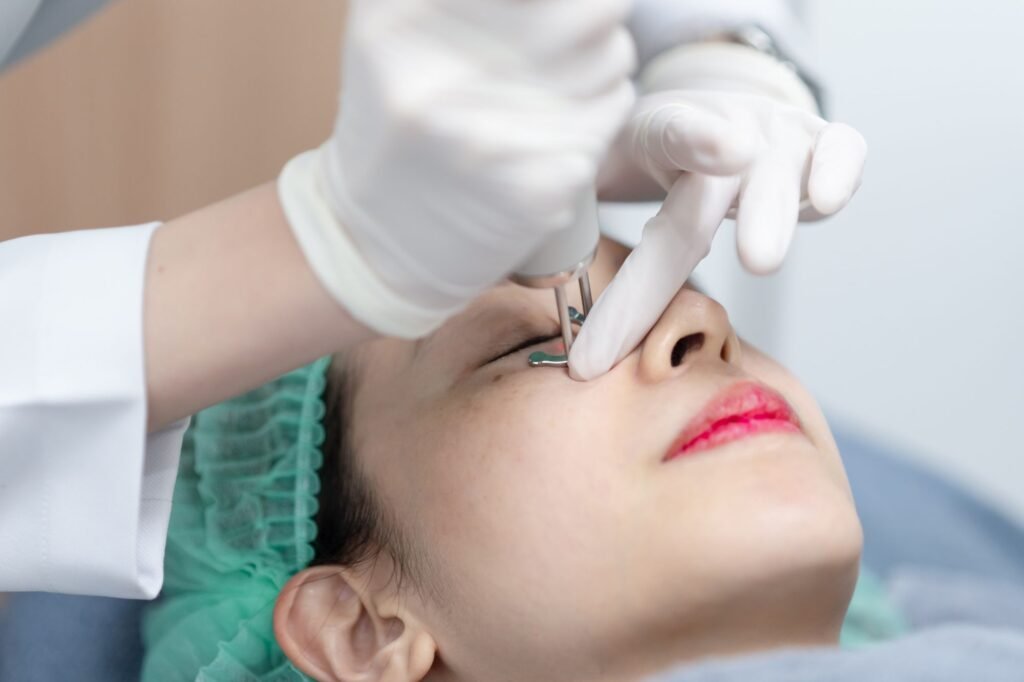
Pico laser is a powerful and precise treatment used to target pigmentation issues like melasma, sunspots, freckles, and post-inflammatory hyperpigmentation (PIH). While the procedure is non-invasive and typically requires little downtime, post-treatment care—including when to safely wear makeup—is crucial to avoid irritation, infection, or delayed healing.
This guide will walk you through when it’s safe to wear makeup after Pico laser treatment, what types of makeup are best, what to avoid, and how to protect your skin while wearing cosmetics during recovery.
🕒 How Soon Can You Wear Makeup After Pico Laser?
✅ Typical Wait Time: 24–72 Hours
In most cases, you can safely apply makeup 24 to 72 hours after a Pico laser treatment, depending on the intensity of the session and your skin’s response.
- Mild redness or warmth only: Light makeup (like mineral foundation) may be applied as early as 24 hours after treatment.
- More aggressive treatments or sensitive skin: Wait 48–72 hours, or until the skin is no longer red, irritated, or tender to the touch.
- If there’s flaking or scabbing: Avoid makeup entirely until the skin has healed to prevent infection or pigmentation issues.
Always follow your dermatologist’s specific guidance, as individual recovery times may vary.
🚫 Why You Shouldn’t Apply Makeup Immediately After Treatment
Immediately after your Pico laser session, the skin’s protective barrier is temporarily compromised. Applying makeup too soon can:
- Clog pores and lead to breakouts or irritation
- Introduce bacteria and increase the risk of infection
- Disrupt healing and delay pigment clearance
- Trigger post-inflammatory hyperpigmentation (PIH)—especially in darker skin tones
🧴 What Type of Makeup Is Safe to Use After Pico Laser?
Once your skin has calmed down, choosing non-irritating, breathable makeup is key. Look for the following:
✅ Best Types of Post-Laser Makeup
- Mineral Makeup
- Non-comedogenic and gentle
- Often free from fragrance, talc, and preservatives
- Brands to consider: Jane Iredale, Colorescience, BareMinerals
- BB or CC Creams with SPF
- Provide light coverage and sun protection
- Look for formulas with soothing ingredients like niacinamide or hyaluronic acid
- Non-Comedogenic Liquid Foundations
- Choose lightweight, fragrance-free formulas
- Avoid full-coverage or long-wear products that may be harder to remove
- Tinted Sunscreens
- Great for color correction with added sun protection
- Brands like EltaMD, ISDIN, La Roche-Posay Anthelios offer tinted options ideal for post-laser care
❌ Makeup Products to Avoid Right After Treatment
- Heavy or full-coverage foundations
- Powders that may cling to dry patches or flaking skin
- Products with fragrance, alcohol, parabens, or essential oils
- Waterproof makeup that requires harsh cleansers to remove
- Expired or old makeup that could harbor bacteria
🧼 How to Safely Apply and Remove Makeup Post-Treatment
Application Tips:
- Wash hands thoroughly before touching your face
- Use clean brushes or disposable sponges to avoid contamination
- Apply a light layer—don’t cake on products
- Always use sunscreen underneath makeup, even if the makeup contains SPF
Removal Tips:
- Use a gentle, fragrance-free cleanser (e.g., CeraVe, La Roche-Posay)
- Avoid makeup wipes or micellar water with alcohol
- Follow with a hydrating toner and moisturizer
- Never scrub or exfoliate the treated area for at least 5–7 days
🛡️ Protecting Treated Skin While Wearing Makeup
- Reapply sunscreen every 2–3 hours, even over makeup — use powder sunscreen or SPF sprays
- Avoid direct sun exposure, heat, and sweating as much as possible
- Don’t layer on too many products — keep your makeup and skincare simple and soothing
🌟 Expert Advice: When in Doubt, Go Without
If your skin is still red, dry, or sensitive after your treatment, it’s better to wait an extra day or two before applying makeup. Your skin’s health and healing should come before cosmetic coverage — and the clearer, brighter skin you’re aiming for will be worth the short wait.
✅ Final Takeaway
You can typically wear makeup 24–72 hours after Pico laser for pigmentation, depending on your skin’s sensitivity and the intensity of the treatment. When you do, prioritize mineral-based, non-comedogenic, and gentle makeup to avoid irritation or delayed healing. And always, always wear broad-spectrum sunscreen underneath!


