
Treatment Overview
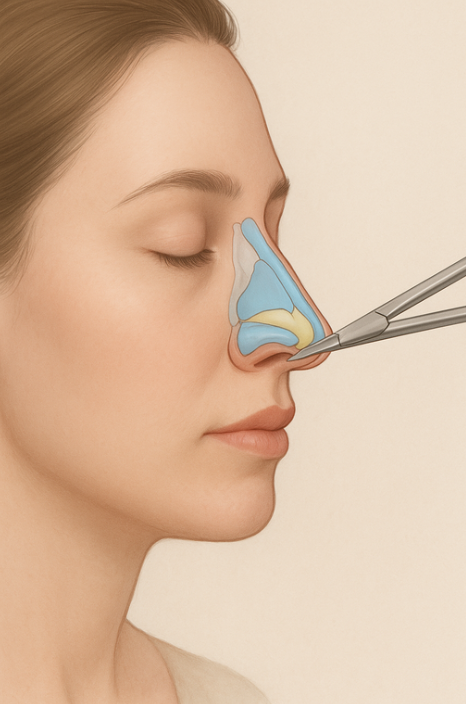
Wide Nostril Reduction is a rhinoplasty procedure designed to reduce the size and flare of the nostrils, creating a more balanced and refined nasal appearance. In Korea, this treatment is performed with high precision to achieve natural-looking, scar-minimized results while preserving the patient’s ethnic identity.
The most common surgical method involves alar base reduction, where excess tissue at the base of the nostrils is removed and reshaped to make the nostrils narrower and more proportionate to the nose and face. Korean clinics use advanced suturing techniques to ensure minimal scarring and fast recovery.
Purpose & Benefits
- Reduces flared or wide nostrils.
- Narrows the nasal base for improved balance.
- Enhances overall nose definition and harmony.
- Creates a softer, more refined look without altering natural ethnicity.
- Improves self-confidence by refining facial proportions.
Ideal Candidates
- Patients with wide, rounded, or flared nostrils.
- Individuals with a broad nasal base.
- Those seeking subtle yet noticeable refinement.
- Patients who had previous rhinoplasty but still have wide nostrils.
- People in good health, with realistic expectations.
Possible Risks & Complications
- Temporary swelling and bruising.
- Mild pain or discomfort during recovery.
- Visible scarring (rare with expert Korean suturing techniques).
- Asymmetry if not properly corrected.
- Breathing difficulties (extremely rare when performed correctly).
Surgical Techniques Used
- Alar Base Reduction: Removes and reshapes tissue at the nostril base to narrow nostrils.
- Weir Excision Technique: Excises small wedge-shaped tissue to reduce nostril flare.
- Combined Approach: Sometimes combined with tip refinement or bridge augmentation for overall balance.
- Scar-Minimizing Sutures: Advanced Korean suturing ensures scars are hidden in natural creases.
Recovery & Aftercare
- Downtime: Most patients return to daily activities within 5–7 days.
- Stitches Removal: Usually after 5–7 days.
- Swelling & Bruising: Minimal and improves within 1–2 weeks.
- Final Results: Visible within 1–2 months, with continued refinement up to 6 months.
- Avoid smoking, alcohol, and heavy exercise during early healing.
Results & Longevity
- Permanent nostril size reduction.
- Subtle, natural-looking refinement.
- Balanced facial proportions without looking “overdone.”
- High patient satisfaction due to minimal scarring and natural results.
Treatment Process in Korea
- Initial Consultation: Digital analysis and 3D simulation used to plan nostril refinement.
- Surgical Planning: Surgeon determines the degree of alar base reduction or wedge excision.
- Surgery: Performed under local anesthesia with sedation (30 minutes – 1 hour).
- Post-Surgery Care: Splint or tape applied for support; follow-up checks ensure smooth healing.
- Final Outcome: Nostril width gradually refines as swelling decreases, revealing a slimmer, balanced nose.
Why Korea?
- Expertise in Subtle Refinement: Korean surgeons specialize in nostril reduction with natural results.
- Scar-Minimizing Techniques: Advanced suturing ensures nearly invisible scars.
- Ethnic Sensitivity: Results enhance appearance while respecting natural identity.
- International Clinics: English-speaking staff, customized care, and advanced facilities.
Cost Range
The cost of Wide Nostril Reduction in Korea depends on complexity and whether it’s a standalone or combined procedure:
- Basic Alar Base Reduction: ₩2,500,000 – ₩4,500,000 KRW ($1,900 – $3,500 USD)
- Wedge Excision + Alar Base Refinement: ₩4,000,000 – ₩6,500,000 KRW ($3,100 – $5,000 USD)
- Comprehensive Nostril + Tip/Bridge Refinement: ₩6,000,000 – ₩9,000,000 KRW ($4,600 – $7,000 USD)
Top Clinics in Korea for Wide Nostril Reduction
- ID Hospital – Known for precise alar base reduction.
- Banobagi Plastic Surgery – Expertise in scar-minimizing nostril correction.
- JW Plastic Surgery – Tailors nostril reduction to facial proportions.
- View Plastic Surgery – Popular for nostril reshaping among international patients.
- MINE Plastic Surgery – Specializes in subtle nostril and nasal base refinement.


