
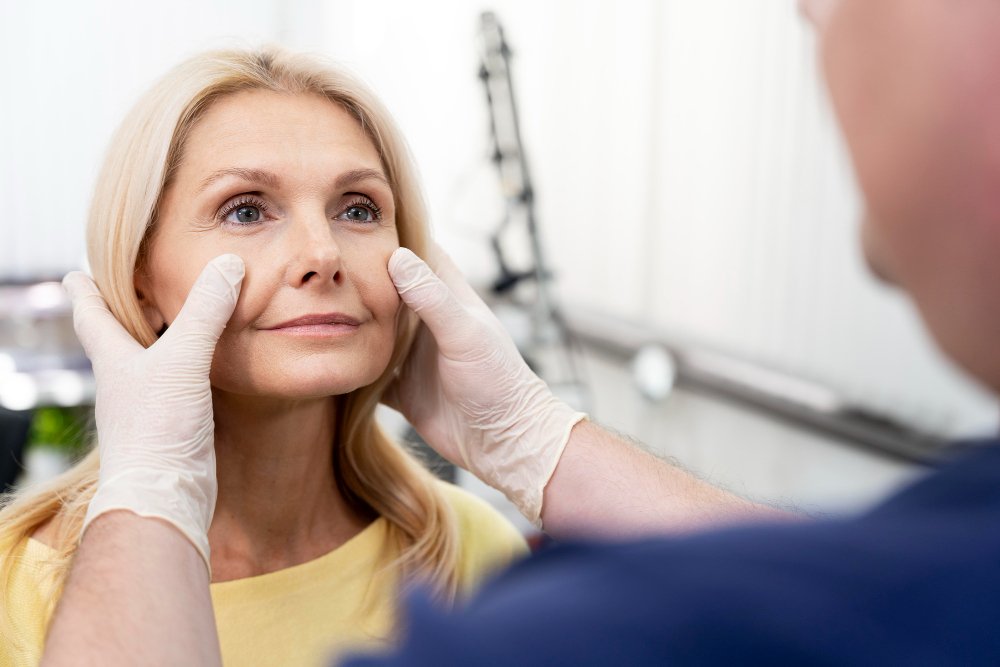
Treatment Overview
Wrinkle-Reduction Lower Blepharoplasty is a specialized procedure that focuses on smoothing fine lines and wrinkles under the eyes while improving skin texture and tightness. Unlike traditional blepharoplasty that mainly addresses fat removal, this approach emphasizes skin and muscle rejuvenation. In Korea, surgeons combine advanced surgical techniques with laser resurfacing, skin tightening, or fat repositioning for natural, youthful results.
Purpose & Benefits
- Reduces fine lines and deep wrinkles under the eyes
- Tightens sagging skin and weak muscles
- Improves skin quality, elasticity, and smoothness
- Can be combined with fat repositioning for a fuller under-eye look
- Provides long-lasting wrinkle correction compared to non-surgical treatments
- Creates a younger, refreshed, and more awake appearance
Ideal Candidates
- Patients with wrinkled, crepey, or loose skin under the eyes
- Individuals experiencing fine lines, crow’s feet, or muscle laxity
- Middle-aged to older patients seeking a surgical solution for under-eye aging
- Those who have tried fillers or Botox but want longer-lasting results
- People who want skin tightening in addition to puffiness correction
Possible Risks & Complications
- Temporary swelling and bruising
- Mild discomfort, dryness, or irritation
- Rare risk of infection or bleeding
- Slight asymmetry or over-tightening of skin
- Risk of eyelid retraction in rare cases if excessive tissue is removed
Surgical Techniques Used
- Skin & Muscle Tightening: Removes excess skin and tightens weakened orbicularis muscle
- Laser-Assisted Resurfacing: Stimulates collagen for smoother texture
- Fat Repositioning or Removal: Balances puffiness and hollows under the eyes
- Combined Procedures: Often paired with Botox, fillers, or fractional lasers for wrinkle refinement
Recovery & Aftercare
- Initial swelling and bruising last 7–10 days
- Stitches (if placed) are removed after 5–7 days
- Cold compresses and prescribed ointments aid healing
- Avoid strenuous activities for 2 weeks
- Final results typically settle within 1–2 months
Results & Longevity
- Significant reduction of under-eye wrinkles
- Smoother, tighter, and more youthful lower eyelid skin
- Natural improvement in under-eye contour
- Results typically last 7–10 years, with maintenance possible through skin care and non-surgical treatments
Treatment Process in Korea
Korea is considered a top destination for Wrinkle-Reduction Lower Blepharoplasty because of:
- Advanced Techniques: Korean surgeons combine surgical excision with laser resurfacing and fat repositioning for comprehensive wrinkle removal.
- Minimally Invasive Approaches: Techniques are refined to preserve eyelid function and avoid an “overdone” look.
- Customization: Each patient’s wrinkle severity, skin type, and eye shape are carefully evaluated.
- Innovative Technology: Clinics use fractional CO₂ lasers, RF devices, and regenerative therapies to enhance results.
- Natural-Looking Outcomes: Korean surgery focuses on soft, youthful rejuvenation instead of overly tight results.
Cost Range
The cost of Wrinkle-Reduction Lower Blepharoplasty in Korea generally ranges from:
- ₩3,000,000 – ₩6,000,000 KRW (approx. $2,300 – $4,600 USD)
Factors that affect pricing include: - Surgeon’s expertise and clinic reputation
- Use of laser or RF skin tightening in combination
- Whether fat repositioning or grafting is included
Popular Clinics
Top clinics in Korea for Wrinkle-Reduction Lower Blepharoplasty include:
- ID Hospital
- Banobagi Plastic Surgery
- Dream Medical Group
- TL Plastic Surgery
- Regen Plastic Surgery
- View Plastic Surgery
- Wonjin Beauty Medical Group
- The PLUS Plastic Surgery
- BIO Plastic Surgery
- JK Plastic Surgery Center


