
Nerve-Sparing Radical Prostatectomy in Korea
Treatment Overview Nerve-Sparing Radical Prostatectomy (NSRP) is a specialized surgical procedure aimed at removing the prostate gland in men with localized prostate cancer while preserving

Treatment Overview Nerve-Sparing Radical Prostatectomy (NSRP) is a specialized surgical procedure aimed at removing the prostate gland in men with localized prostate cancer while preserving
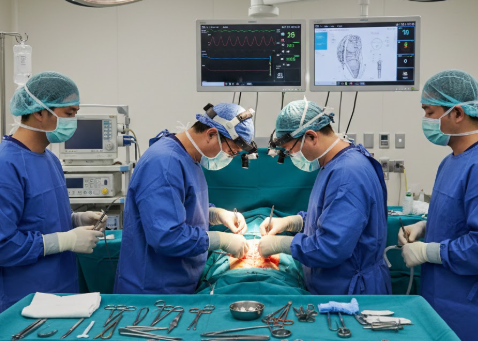
Treatment Overview Open Radical Prostatectomy (ORP) is a traditional surgical procedure to remove the prostate gland in men diagnosed with localized prostate cancer. Unlike minimally
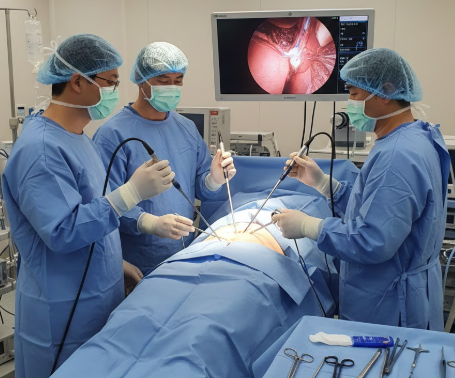
Treatment Overview Laparoscopic Radical Prostatectomy (LRP) is a minimally invasive surgical procedure for the removal of the prostate gland in patients with localized prostate cancer.
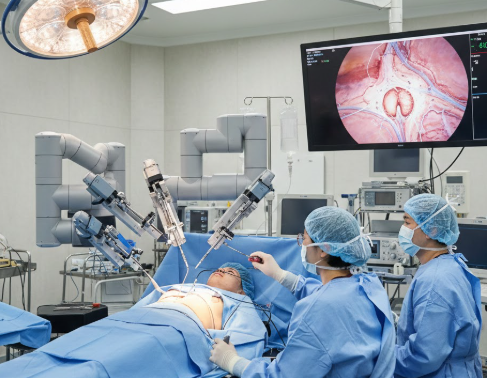
Treatment Overview Robotic-Assisted Radical Prostatectomy (RARP) is a minimally invasive surgical procedure used to remove the prostate gland in patients diagnosed with localized prostate cancer.

Treatment Overview A PSA screening program in Korea is a structured approach to prostate cancer early detection. It involves measuring prostate-specific antigen (PSA) levels in

Treatment Overview The PSA test for early detection is a preventive screening procedure that measures prostate-specific antigen (PSA) levels in the blood. It is designed

Treatment Overview PSA monitoring for elderly men is a preventive and diagnostic approach to assess prostate-specific antigen (PSA) levels in men typically aged 65 and
Treatment Overview A PSA test in an outpatient clinic is a convenient and minimally invasive procedure to measure prostate-specific antigen (PSA) levels in the blood.
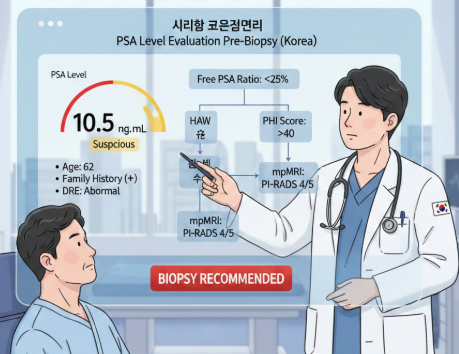
Treatment Overview PSA level evaluation pre-biopsy is an essential diagnostic step performed before a prostate biopsy to assess the risk of prostate cancer. By measuring

Treatment Overview PSA recurrence surveillance is a critical follow-up process for men who have undergone prostate cancer treatment, such as surgery or radiation therapy. It
Treatment Overview Nerve-Sparing Radical Prostatectomy (NSRP) is a specialized surgical procedure aimed at removing the prostate gland in men with localized prostate cancer while preserving
Treatment Overview Open Radical Prostatectomy (ORP) is a traditional surgical procedure to remove the prostate gland in men diagnosed with localized prostate cancer. Unlike minimally
Treatment Overview Laparoscopic Radical Prostatectomy (LRP) is a minimally invasive surgical procedure for the removal of the prostate gland in patients with localized prostate cancer.
Treatment Overview Robotic-Assisted Radical Prostatectomy (RARP) is a minimally invasive surgical procedure used to remove the prostate gland in patients diagnosed with localized prostate cancer.
Treatment Overview A PSA screening program in Korea is a structured approach to prostate cancer early detection. It involves measuring prostate-specific antigen (PSA) levels in
Treatment Overview The PSA test for early detection is a preventive screening procedure that measures prostate-specific antigen (PSA) levels in the blood. It is designed
Treatment Overview PSA monitoring for elderly men is a preventive and diagnostic approach to assess prostate-specific antigen (PSA) levels in men typically aged 65 and
Treatment Overview A PSA test in an outpatient clinic is a convenient and minimally invasive procedure to measure prostate-specific antigen (PSA) levels in the blood.
Treatment Overview PSA level evaluation pre-biopsy is an essential diagnostic step performed before a prostate biopsy to assess the risk of prostate cancer. By measuring
Treatment Overview PSA recurrence surveillance is a critical follow-up process for men who have undergone prostate cancer treatment, such as surgery or radiation therapy. It