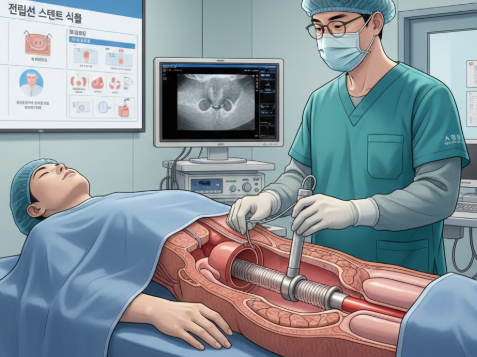
Prostatic Stent Placement in Korea
Treatment Overview Prostatic stent placement is a minimally invasive procedure used to treat urinary obstruction caused by Benign Prostatic Hyperplasia (BPH) or other prostate-related conditions.

Treatment Overview Prostatic stent placement is a minimally invasive procedure used to treat urinary obstruction caused by Benign Prostatic Hyperplasia (BPH) or other prostate-related conditions.

Treatment Overview A PSA (Prostate-Specific Antigen) Blood Test is a simple, minimally invasive diagnostic test used to screen for prostate abnormalities, including prostate cancer, benign

Treatment Overview A PSA (Prostate-Specific Antigen) Blood Test is a key diagnostic tool for assessing prostate health. It measures the level of PSA in the

Treatment Overview PSA Density (PSAD) Evaluation is a diagnostic approach that measures the level of prostate-specific antigen (PSA) relative to the size of the prostate
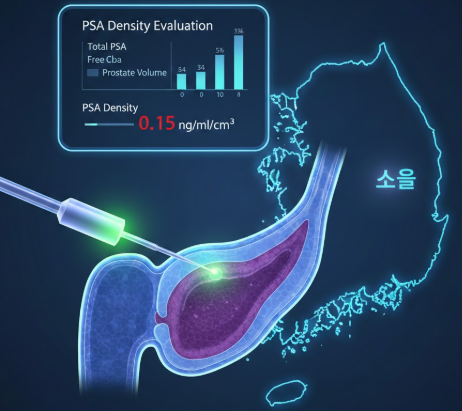
Treatment Overview PSA density evaluation is an advanced diagnostic method that measures the ratio of total PSA levels to prostate volume. This assessment helps distinguish
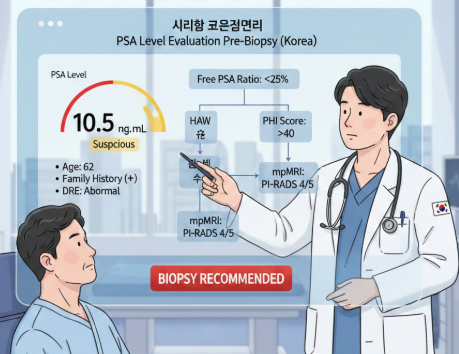
Treatment Overview PSA level evaluation pre-biopsy is an essential diagnostic step performed before a prostate biopsy to assess the risk of prostate cancer. By measuring

Treatment Overview PSA monitoring for elderly men is a preventive and diagnostic approach to assess prostate-specific antigen (PSA) levels in men typically aged 65 and

Treatment Overview PSA recurrence surveillance is a critical follow-up process for men who have undergone prostate cancer treatment, such as surgery or radiation therapy. It

Treatment Overview PSA screening for high-risk men is a proactive diagnostic approach to detect early-stage prostate cancer in men with increased risk factors. High-risk individuals

Treatment Overview A PSA screening program in Korea is a structured approach to prostate cancer early detection. It involves measuring prostate-specific antigen (PSA) levels in
Treatment Overview Prostatic stent placement is a minimally invasive procedure used to treat urinary obstruction caused by Benign Prostatic Hyperplasia (BPH) or other prostate-related conditions.
Treatment Overview A PSA (Prostate-Specific Antigen) Blood Test is a simple, minimally invasive diagnostic test used to screen for prostate abnormalities, including prostate cancer, benign
Treatment Overview A PSA (Prostate-Specific Antigen) Blood Test is a key diagnostic tool for assessing prostate health. It measures the level of PSA in the
Treatment Overview PSA Density (PSAD) Evaluation is a diagnostic approach that measures the level of prostate-specific antigen (PSA) relative to the size of the prostate
Treatment Overview PSA density evaluation is an advanced diagnostic method that measures the ratio of total PSA levels to prostate volume. This assessment helps distinguish
Treatment Overview PSA level evaluation pre-biopsy is an essential diagnostic step performed before a prostate biopsy to assess the risk of prostate cancer. By measuring
Treatment Overview PSA monitoring for elderly men is a preventive and diagnostic approach to assess prostate-specific antigen (PSA) levels in men typically aged 65 and
Treatment Overview PSA recurrence surveillance is a critical follow-up process for men who have undergone prostate cancer treatment, such as surgery or radiation therapy. It
Treatment Overview PSA screening for high-risk men is a proactive diagnostic approach to detect early-stage prostate cancer in men with increased risk factors. High-risk individuals
Treatment Overview A PSA screening program in Korea is a structured approach to prostate cancer early detection. It involves measuring prostate-specific antigen (PSA) levels in