
Pain Relief Options in Korea
Treatment Overview Chronic bladder pain and pelvic discomfort, often caused by Interstitial Cystitis (IC), overactive bladder (OAB), or other urinary disorders, can significantly affect quality

Treatment Overview Chronic bladder pain and pelvic discomfort, often caused by Interstitial Cystitis (IC), overactive bladder (OAB), or other urinary disorders, can significantly affect quality

Treatment Overview Painful kidney stones are mineral and salt deposits in the kidneys that cause severe flank pain, hematuria, nausea, and urinary obstruction. Prompt evaluation

Treatment Overview Painless hematuria refers to the presence of blood in the urine without any accompanying discomfort. Although it may seem harmless, it can indicate

Treatment Overview Bladder stones in children are hard mineral deposits that form in the bladder due to urinary tract infections, dehydration, metabolic disorders, or anatomical

Treatment Overview Hematuria, or blood in the urine, can affect children for a variety of reasons, ranging from minor infections to more serious kidney or

Treatment Overview Kidney stones, though less common in children than adults, can cause significant pain, hematuria, urinary tract obstruction, and recurrent infections in pediatric patients.

Treatment Overview Pediatric management in Korea focuses on diagnosis, treatment, and long-term care of children with urological, urinary, and bladder conditions. Specialized pediatric urology programs

Treatment Overview Overactive bladder (OAB) in children is a condition characterized by frequent urination, urgency, daytime incontinence, and sometimes nighttime wetting (nocturnal enuresis). Pediatric OAB

Treatment Overview Pediatric urodynamic testing is a specialized diagnostic procedure designed to evaluate bladder, urethra, and pelvic floor function in children. It is used to
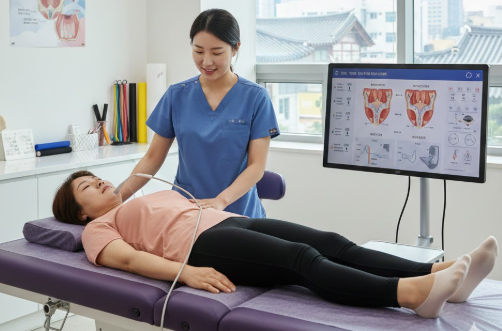
Treatment Overview Pelvic floor therapy is a non-surgical, evidence-based treatment designed to strengthen the muscles supporting the bladder, urethra, and pelvic organs. It is one
Treatment Overview Chronic bladder pain and pelvic discomfort, often caused by Interstitial Cystitis (IC), overactive bladder (OAB), or other urinary disorders, can significantly affect quality
Treatment Overview Painful kidney stones are mineral and salt deposits in the kidneys that cause severe flank pain, hematuria, nausea, and urinary obstruction. Prompt evaluation
Treatment Overview Painless hematuria refers to the presence of blood in the urine without any accompanying discomfort. Although it may seem harmless, it can indicate
Treatment Overview Bladder stones in children are hard mineral deposits that form in the bladder due to urinary tract infections, dehydration, metabolic disorders, or anatomical
Treatment Overview Hematuria, or blood in the urine, can affect children for a variety of reasons, ranging from minor infections to more serious kidney or
Treatment Overview Kidney stones, though less common in children than adults, can cause significant pain, hematuria, urinary tract obstruction, and recurrent infections in pediatric patients.
Treatment Overview Pediatric management in Korea focuses on diagnosis, treatment, and long-term care of children with urological, urinary, and bladder conditions. Specialized pediatric urology programs
Treatment Overview Overactive bladder (OAB) in children is a condition characterized by frequent urination, urgency, daytime incontinence, and sometimes nighttime wetting (nocturnal enuresis). Pediatric OAB
Treatment Overview Pediatric urodynamic testing is a specialized diagnostic procedure designed to evaluate bladder, urethra, and pelvic floor function in children. It is used to
Treatment Overview Pelvic floor therapy is a non-surgical, evidence-based treatment designed to strengthen the muscles supporting the bladder, urethra, and pelvic organs. It is one